









THE SILENT 20
The Unsaid Stuff Secretly Shaping Our Lives
- Atilla Tiriyaki
- Average Reading Time: 24 minutes
- Community
- articles, atillat, guides
It is often challenging to stay informed, to notice what is going on around us, and to distinguish between what is real and what is fake. We seem to be living in a time and world where it appears extreme events are occurring daily, and where many people are becoming desensitised to tragic events that historically would have elicited a stronger emotional response. As we enter 2026, let us explore the silent 20, twenty factors, cultural phenomena, social movements, and economic mismanagement taking place in many countries that affect everyone but that no one wants to talk about. All the factors shaping our communities and environments and having an adverse impact on our daily lives.
DISCLAIMER
All published articles are intended for an audience aged 18 years and over and have been written by members of the general public. Many will likely not be journalists nor be affiliated with any professional bodies associated with members of the media. The articles will likely be based on the authors' own opinions, views, and experiences...more
Today, it can often be hard to read the news. Not only are we becoming desensitised to the many horrific things happening around the world, but the social, political and economic order also seems to be crumbling around us. Unemployment, especially amongst the youth, the perceived threat of technology and adoption of AI, all with rising costs and what seems like society is being attacked on all fronts. It is often hard to read and engage with stories and articles, because it frequently affects people’s mental health. It is understandable why many are choosing to switch off to protect their well-being and outlook.
To the younger generation, the outlook is not as bleak, as many do not have a reference point to compare against; however, even with it being all they know, society seems to be changing, with many being influenced by anti-social behaviour, such as the manisphere and far-right conservatism globally, the need for belonging and that money and fame, prioritised over forming meaningful connections, happiness and well-being.
With all this in mind, let us explore 20 unspoken realities we face today that many do not want to discuss or have come to light. Now, for a precursor to this is that many of these points are complicated, and there is much more to them than just a soundbite; however, what we will explore are high-level points designed to make you think, not to form or solidify a position. Simply put, they are for your entertainment; to make you think and may not always be fully rounded arguments or points that take everything into account.
Let’s now look at 20 things affecting everyone, but that no one wants to talk about.
To the younger generation, the outlook is not as bleak, as many do not have a reference point to compare against; however, even with it being all they know, society seems to be changing, with many being influenced by anti-social behaviour, such as the manisphere and far-right conservatism globally, the need for belonging and that money and fame, prioritised over forming meaningful connections, happiness and well-being.
With all this in mind, let us explore 20 unspoken realities we face today that many do not want to discuss or have come to light. Now, for a precursor to this is that many of these points are complicated, and there is much more to them than just a soundbite; however, what we will explore are high-level points designed to make you think, not to form or solidify a position. Simply put, they are for your entertainment; to make you think and may not always be fully rounded arguments or points that take everything into account.
Let’s now look at 20 things affecting everyone, but that no one wants to talk about.
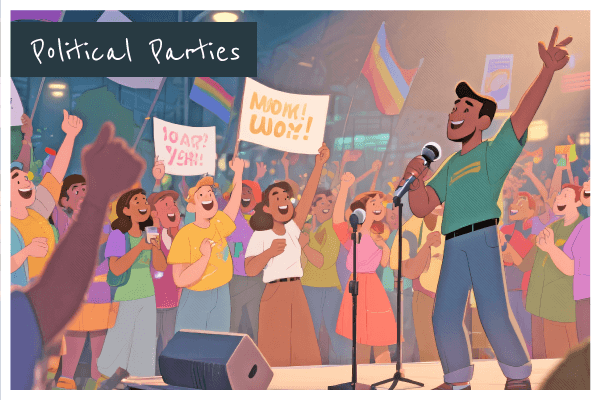
Many like to think that cult-like behaviour in politics is a new phenomenon; however, the political class has exploited it for centuries. The way it works is that a political party creates a narrative —a so-called ‘what they stand for’ —that taps into the consciousness of specific groups, and one where they constantly repeat their agenda or re-emphasise their talking points to engage, and often motivate, their targeted audience or base. Though it has been highly effective over the years, the approach is showing cracks due to the speed of information and voices on social media, as well as inconsistencies in their policies, another reason for the fractured societies that exist in many countries today. The reality is that many follow a party without fully understanding its mandate, the policies it hopes to implement if elected, or its approach to maintaining the power it currently holds. Quoting often outdated mantras, like the party of order or the working man’s party, when in reality these parties have long moved away from particular stances or priorities.
Money is simply a specialised piece of paper, or, in more modern times, a polymer or other robust material, but ultimately it represents a contract or commitment that what you receive has and maintains value, one that you can use to purchase assets, goods, and services. The commitment is that the currency is government-backed and, as such, its value is based on the health of that country and the demand for it. Since ancient times, to maintain the value of a given currency, governments or the ruling power of that time have used a process known as gold backing. A process in which, when money is printed, an amount of gold is purchased and held in a reserve by that country. Gold backing was stopped and started to become abandoned as a process from the 1930s right up until the 1970s; however, many of the countries that held substantial gold reserves began selling off and reducing the amount of gold within their vaults, ultimately meaning that when money is printed, especially when large amounts are printed, it is more like an IOU, and makes it and previously issued money worth even less, rather than historically when it was backed by something of global value.
Since the end of the Second World War, many countries have formed political and social alliances with other nations. Creating international groups like the United Nations and NATO to ensure that those within alliances are not only using their words, but also taking action when it comes to helping their allies. These close relationships have made countries like America key strategic and political partners with the United Kingdom, and both have forged strong ties. Alliances that actively encouraged investment by their allies, agreed to use certain currencies in all international trade, provided support in conflicts, and dominated key sectors, such as technology and finance, even when it was not always in that country’s national interest. All of these were based on the unspoken rule that, whatever, we are in it together. Today, we are seeing a rise in protectionism, a breaking down of those unspoken rules, and even countries aligning with those unheard of 30 years ago.
It is fascinating to watch and search for stories within a specific date or time period. Looking closely at online news sources and commentators, especially at a national level, you will start to see themes emerging. Public relations is part of it, meaning a company or government official releasing a press release, conference, or statement, but it is also more about ones that look like an agenda. Articles from different stories relating to complex societal challenges, such as immigration or gender identity, where the number of stories and sources reporting on them is likely reaching all parts of society, young and old. Narratives and talking points that influence how people think and even distract them are directly affecting them, prompting them to hold those in power to account. It might not be all political parties or even organisations pushing a specific agenda; however, once it becomes mainstream, it becomes difficult for people to ignore, forcing them to form a position or discuss complex problems.
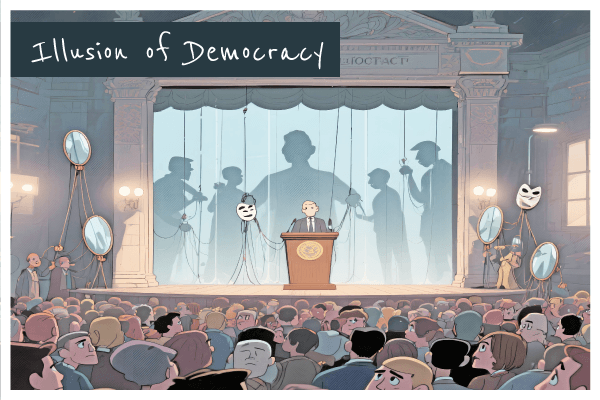
Democracy is a system of government in which the whole population, or all eligible members of a state, is represented through elected representatives. Meaning, people living within a country vote for people they feel will best represent them. In reality, the system has changed to the point where it is less about individuals who represent you and more about you being told that it should be people from a specific background. When elected, individuals with no knowledge or experience in key sectors of government are given the role of leading them, and the decisions they take that affect everyone have no personal consequences to them. Think about that for a moment: you hire someone to do a job, they fail to do it, and you cannot get rid of them for 4 years. And whatever they do—even when it is not good and adversely affects everyone in your area—they are not held accountable. Not only that, by political parties also call out problems and blame their opponents when they have the power to fix them. Simply put, representation should have limits, and certain fundamental human rights should trigger a referendum, not the vote of a member of the political class. As well as short and long-term objectives that representatives should commit to, and failing to deliver over half of them in say half the term, should trigger a midterm election.
When it comes to what we spend our money on, some things are luxuries or nice-to-haves, while others are fundamental for our health, well-being, and survival. Food, utilities like water and electricity, and the way we communicate are typically necessities and essential to the quality of our lives. In a global, capitalist country, it is not unheard of for international companies to own, either a majority stake or outright, state infrastructure—often influencing consumer prices, whether directly or indirectly —and usually citing rising costs above inflation as a necessity to support investment and unforeseen infrastructure costs. Justifications that are shortly followed by announcements of record profits; however, at the same time, people face the dilemma of having to pay costs that strain their finances. When it comes to fundamental infrastructure and the necessities of everyday life, should not the government hold majority stakes in such companies, monitor investments, and ensure cost increases are kept to a minimum? In addition, it is not uncommon to hear of a price hike due to a problem or situation, such as wildfires, poor crops, or supply issues, with the price never going down or only dropping slightly after the issue has been resolved.
Many industries over the years have been implementing cost-saving, automated processes that have moved or replaced jobs and skills, requiring people to either work overseas or be automated by technology. Many unskilled and skilled jobs have been dramatically reduced, and it is not uncommon to see self-checkouts in supermarkets, online AI chatbots to help with your questions and problems, and manufacturing being fully automated. With global powerhouses like China mass-producing many key components and items, the simple reality is that many countries and people are unable to keep up with changes in industries and sectors. To someone in the 1760s who was a weaver, the introduction of the spinning jenny seemed to signal an uncertain future. In reality, society and the roles we occupy within it have dramatically changed over the centuries. Though this revolution is very different, it likely means taking a different approach and reevaluating our purpose, our contribution to society, and our own self-worth.
Today, there are many conflicts and full-out wars taking place around the world. Though people often avoid using the term’ world war,’ in reality, what we are seeing is a world proxy war. The term proxy war in the dictionary refers to a war fought between two separate states or countries, where the third party itself are not officially involved. For example, take the conflict in Ukraine, on one-side you have the European Union, the United Kingdom, the United States, Japan, Australia, Switzerland, South Korea and Türkiye providing aid and support to Ukraine and on the other side you have countries such as China, India, Belarus, Iran, Cuba, Venezuela, Nicaragua, North Korea, Myanmar, and many African nations supporting Russia. In reality, we are all feeling the effects of war, such as political instability, attacks on infrastructure, rising costs, and large amounts of aid being given. It is a world war, but just different to the conventional definitions.
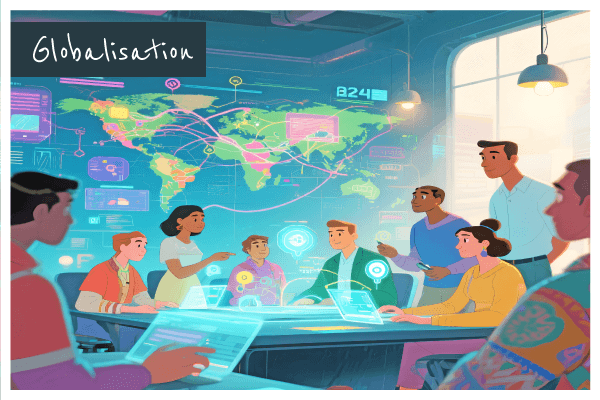
Often, you will hear narratives about countries that were historically close allies, now discussed in a more combative tone and exhibiting protectionist behaviour. We are seeing changes worldwide, and long-held views and relationships need to be reevaluated, with a focus on collaboration rather than closed groups. In the United Kingdom, there has long been a narrative that appears anti-China. Often, forgetting that China was a longtime ally of the United Kingdom, and yes, though it has its problems, China is not an enemy or a problem to be solved. Working with countries —building relationships —ones where you can celebrate what they do well and call them out on what you disagree with —is very different when you are friends, compared to when you are perceived as enemies—an approach in which those same countries need to expect to receive similar praise or suggestions in reverse. With technology and the speed of information the way they are, a new way of thinking is needed for how rules and laws are governed. What might be legal and acceptable in one country might not be the same in another. Freedom of speech is essential; however, when what you say crosses regions and territories, there can be no excuse: “Well, it is legal in my country, so it is okay,” especially when it is misinformation or propaganda designed to take down and influence overseas populations.
It is commonplace in political campaigns to hear parties cite their suitability for the business sector and the importance of supporting companies and ensuring they have the right environment to thrive. All very valid and positive aspirations; however, you also hear a type of threat, often called out. If we do this, companies will leave, sectors which will significantly affect jobs and revenues for the country. Policies, tariffs, and rules designed to hurt companies are one thing, but when governments are being held hostage and threatened to take a specific position, that’s another. Realising that many of the people who represent the population, often coming from the same sectors, have friends and family still within and benefiting from those sectors, and that those same companies fund many political campaigns. The simple economic truth people frequently forget is that companies operate in industries and sectors because they are profitable. They are not always doing it out of love for their staff or their country, but because they can make or save money. If a company were to leave, someone else would likely step in to capitalise on the available profits. Governments need to balance environmental protection with helping companies remain competitive, without sacrificing people, infrastructure, or the nation’s interests.
When it comes to political ideologies, the world seems more polarised than ever before. Depending on what side of the scale you fall, often many good ideas are discounted because they do not neatly fit in a person’s political values and beliefs. The simple truth is that bordering on fanaticism or being an extreme devotee of any ideology is dangerous. The reality is that a good idea can come from anywhere, and for those who claim to love their country, they should put the needs of their country and its people first, followed by their ideology or party. Whether it is universal healthcare or welfare programs, though they are often labelled socialist, regardless of what you call them, they ensure no one is left behind, and everyone can have a basic level of care and protection.
In 2025, it is estimated that the world’s life expectancy will be around 73 years, compared to 1975, when it was around 60. That means people are living, on average, 13 years longer than their parents or grandparents. Many welfare systems, such as state-provided pensions and healthcare, are seeing their populations grow and the number of people over 60 increase. Many first-world countries are seeing even higher life expectancies, leading governments to struggle to fund the ageing population. Many have been incrementally increasing the age of retirement, and younger generations are concerned that they might not be able to retire or that these welfare systems will still exist when they reach the current retirement age, leaving them unhappy to fund those currently in retirement.
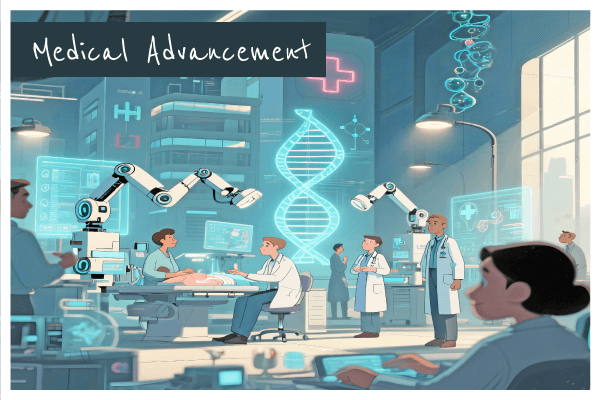
Today, numerous medical trials are underway worldwide, with the potential to revolutionise medicine and combat deadly diseases. One significant development occurred during the COVID-19 pandemic, when medical researchers worldwide collaborated to create an effective vaccine. This collective effort led to breakthroughs in messenger RNA (mRNA) technology, which involves a single-stranded molecule that plays a vital role in protein synthesis by carrying genetic information from DNA to the cell’s machinery. This information helps regulate and maintain the structure and function of cells in accordance with the encoded DNA. The success of COVID-19 vaccines has opened new opportunities to develop vaccines and potential cures for retroviruses such as HIV, as well as flaviviruses such as yellow fever and dengue fever. Additionally, advancements in clinical trials include innovative gene-editing therapies for sickle cell disease and other genetic disorders, as well as promising new drugs and diagnostics targeting Alzheimer’s and Parkinson’s diseases.
For many years, we have seen more industries, especially in retail, consolidate, with smaller retailers disappearing, often replaced by larger conglomerates that offer competitive pricing and efficient business models, making it difficult for smaller vendors to compete. These silent monopolies have changed many sectors; however, there are many more that people might not necessarily be aware of taking place around the world. A recent example occurred in Brazil, which came under attack for implementing Pix, a payment platform developed and released by the country’s Central Bank (Banco Central do Brasil – BCB) in November 2020. The platform has grown and become extremely popular across the country, and processes payments and transfers in Brazilian Reais (BRL) within seconds, 24/7. The system means that many banks and payments across the country are no longer using the United States Visa or Mastercard systems, leading to a reduction in the fees these companies have historically received from payments made in Brazil. A reality that has seen the US government threaten to impose greater tariffs if the Pix platform remains.
With many far-right conservative movements now gaining popularity, which has seen many related political parties winning elections and forming governments, there has been an increase in religious adjacent speech and narratives featured in the media and in campaigns. Far-right movements typically heavily feature religion, as the movements focus on conservative or traditional values, and many within their base follow conventional religious groups and organisations. Though many politicians promote their faith and beliefs, there are many examples of their actions not aligning with what they claim to believe. Religious texts used to enforce policy or to justify scripture are misrepresented or selectively chosen to support a position. Though many of these groups and politicians may seem to place their faith as a central pillar of their motivations and beliefs, in reality, they are often weaponising religion and religious groups to gain or sustain power. When debated, especially with people well versed in theology, many of these same politicians show a lack of understanding, or even that they have studied the faith they frequently cite in their positions and policies.
If you follow the news, a large proportion of the stories will either mention or feature Artificial Intelligence. Whether it’s about the companies behind the AI revolution or the risks it poses to industries, people, or simply our way of life. The reality is neither AI nor technology is the problem. We cannot stop human development; however, what is needed is greater controls, safeguards, and structures that factor in new ways of working. For example, if a company makes pens and it currently costs 1 dollar to produce 100 pens. If using technology and automated systems, not only will there be a reduction in their workforce, but also a reduction in production costs to, say, 20 cents per 100 pens, then two things will need to happen. Firstly, the cost of purchasing pens should go down, as the unit cost has dramatically reduced, and staff laid off, whether directly or through government intervention, should be financially supported. Suppose automation and AI reduce the workforce by, say, 50% or more, in reality. In that case, the cost of living should decrease dramatically, allowing people to need less money to live and ultimately be able to job-share or work fewer hours to cover the costs of everything they might need.
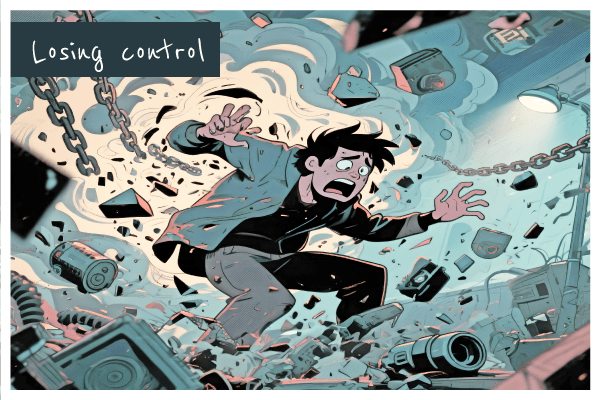
Much of what we see — and what influences our lives — is about the fear of those who hold power, whether political or economic, of losing control. Throughout history, there have been countless examples of a ruling class—a powerful few—that, though seemingly unstoppable or too powerful to stop, were brought down by the masses. Whether through democratic processes or by sheer force, the simple reality is, no matter how powerful or how wealthy someone is, if they are within the minority, or the 1% their control or hold over power comes to an abrupt end when the majority or the 99% decide they have had enough that they cannot take it anymore. Many of those who hold the power push their agenda and seemingly get away with often corrupt or disproportionate policies; however, when people’s quality of life degrades to a point where they feel they cannot go on anymore living under these conditions, it is hard for those in power to control or retain their hold on power. Simply put, when people are treated well, those in power can generally get away with a lot more; when times are hard, everyone is held to account.
Over the past 10 years, often borne out of frustration and a feeling of not being heard or represented, there have been a number of landmark referendums, official and not, that have taken place in many countries around the world. Whether constitutional reform in countries like Italy and Türkiye, or membership of the European Union (EU). Though many of these landmark referendums have had varying degrees of success, one theme that seems consistent is the defence of the norm, an approach that results in fear-based rhetoric rather than in explaining why you are better off maintaining and working to improve what exists. No group, country, party, or governing body is perfect, and many need to constantly reform and change to keep up with shifting political and social climates. Reverting to fear, why your life will be worse, things you will lose and why the circumstances that led to the referendum should be ignored. Take Brexit: the UK faced fundamental challenges within the EU; however, many ignored or did not fully understand the full benefits of membership. Access to the single market, established trade deals, foreign investment from other member states, freedom of movement, policies that helped improve the country and collaboration with the wider continent, to name a few. The negatives cited include mass migration, guidelines and standards that primarily affected UK sectors, and the EU’s public position, which seemed to many as ignoring or refusing to engage with genuine concerns. The result was a razor-thin win for those wanting to leave, known as Brexit, leaving the UK and the EU worse off as a result of the process. Many in the UK were told a narrative that was not true, but the EU did not help itself with an often-negative rhetoric rather than selling the benefits the EU offers everyone. A simple way to look at it is when you have something good, you just need to show why being part of it benefits you and your future, not what will happen to you if you leave.
When I was younger, I had a very different view of health, medical care, and treatments. With people close to me personally affected by illness, it is clear that often within the medical profession that the focus is on curing rather than maintaining. An approach that makes sense; however, two things can frequently be overlooked until all paths and approaches have been exhausted. The first is whether there are ways to maintain or slow the illness. It might be through medicine, lifestyle changes, or holistic treatments. If the disease can be controlled and slowed, then any cure might be more effective when applied. The second relates to the approach to the cure. If any treatment is done incrementally — from a mild, gradually increasing dose to higher doses — it likely means not only that your body remains stronger for longer, but also that the dose can be adjusted based on how the illness responds to the treatment. The reality is that medical professionals will be looking out for your interests, and it is always advisable to discuss and listen to any advice you receive; however, it does not hurt to ask the question, are there ways I could maintain or slow down the progression of the disease without aggressive treatments and what would likely be the treatment plan?
Societies and countries are changing around us. Not always positively, as some countries are using age-old, well-tested strategies to control the masses (divide, distract, and conquer). In reality, most people and nations around the world are seeing a change, mostly positive. Though we are seeing more protectionism and nationalism borne of economic hardship and wealth disparity, there is so much more. Younger generations seem not only to strive to build careers and find their fortunes, but also to do so ethically, not celebrating success but asking how it was achieved. There is greater concern for the environment and the impact we are having on our societies and the well-being of their communities. Very little is hidden or goes under the radar; some crucial issues can be ignored, though most will exist or be highlighted somewhere. However, it is not always easy to predict what will go viral. The media is changing: people no longer rely on traditional press and media; instead, they look to influencers and social media. Human relationships are changing, though people are better connected than ever before; many seem to prioritise career over relationships, and much of the status quo is being challenged. Though for some, all of this seems alien, even daunting, much of it is positive: people focusing on what is important, working on what they can change, and trying to build a better environment for themselves and future generations.
Hopefully, many of the points raised on this list are things you are aware of, but hearing them called out in this way might make you think. Many of those listed may seem like problems, but instead, they are more challenges. I work on the simple belief that all problems and issues have a solution or a series of solutions. Many are opportunities to fix what is broken and build something better. It is easy to lose hope and remain pessimistic about the future, but that is to assume you are powerless, that you and your views, opinions, and, in many cases, your vote do not matter. All of which is not true.
If you feel a certain way, there are likely others who do too. The more people you find who think as you do and can share feelings openly, the more likely you are to enact real change. For younger generations, if you look at the systems and people who represent you, and they do not look and feel right, be the change you want to see. Take a risk, run for office, propose alternatives, and find the solutions needed to make it better and fairer — not only for you, but also for those in your wider community. It is better to try and fail than to have never tried at all.
Societies that work are less about the I, but more about the us. Working together, looking out for your neighbours, and treating everyone as if they are your friends or family. If we all worked together, even if we provided solutions that may not directly affect us, the effects would be felt worldwide. Whilst you are helping someone over there, someone might be finding solutions that help you without you even realising it. There are countless examples throughout history of societies supporting and working together, thriving, and providing safer, more productive environments where no one feels isolated or excluded.
It is always important to remember that you are part of a global community, that you are the change you want to see, that you matter, and that there is real power and reward in working collaboratively with people to make the world a better place for everyone.
Stay safe, and until the next time.
If you feel a certain way, there are likely others who do too. The more people you find who think as you do and can share feelings openly, the more likely you are to enact real change. For younger generations, if you look at the systems and people who represent you, and they do not look and feel right, be the change you want to see. Take a risk, run for office, propose alternatives, and find the solutions needed to make it better and fairer — not only for you, but also for those in your wider community. It is better to try and fail than to have never tried at all.
Societies that work are less about the I, but more about the us. Working together, looking out for your neighbours, and treating everyone as if they are your friends or family. If we all worked together, even if we provided solutions that may not directly affect us, the effects would be felt worldwide. Whilst you are helping someone over there, someone might be finding solutions that help you without you even realising it. There are countless examples throughout history of societies supporting and working together, thriving, and providing safer, more productive environments where no one feels isolated or excluded.
It is always important to remember that you are part of a global community, that you are the change you want to see, that you matter, and that there is real power and reward in working collaboratively with people to make the world a better place for everyone.
Stay safe, and until the next time.
Learn more about the exceptional LGBTQIA+ community, discover the community’s history, the ongoing movement for equality, the size of the community and how much it contributes to the world economy, frequently asked questions and much more.

Acceptance and coming to terms with a part of what makes you can be challenging for many people. The Gayther pride in series is about celebrating all things relating to sexualities, gender identities and special groups. Showcasing the exceptional people, interesting facts and ways to connect with those unique communities

Discover all of the topical articles and the latest community news. Whether you are looking for news stories, articles reflecting topical subjects written by people from the community or the latest trends. Gayther is here to provide you with the information you need when you need it.




IMPORTANT DISCLAIMER: All published articles have been written by members of the general public. Many will likely not be journalists nor be affiliated with any professional bodies associated with members of the media. The articles will likely be based on the authors’ own opinions, views, and experiences. Gayther does not endorse or accept any responsibility or liability regarding any materials within the news and media pages. This page may contain external links to third party websites; Gayther provides these links for your convenience and does not endorse, warrant or recommend any particular products or services. By clicking on any external links, you will leave Gayther and be taken to the third-party website, which you do so at your own risk and by accessing the site, you will be required to comply with the external third party’s terms and conditions of use and privacy policies
Discover all of the topical articles written by people from across the community and friends, all sharing their stories, opinions and experiences