









From Revolution to Footnote:
REBRANDING QUEER AND BLACK LIVES IN HISTORY
- Atilla Tiriyaki
- Average Reading Time: 16 minutes
- Community
- articles, atillat, guides
In history, much of what we know comes from books, written accounts, and all that we are taught at school. A type of collection narration that is frequently repeated and perpetuated in society, one that often changes, even ignores specific groups, whether in a bid to protect the legacies of historical figures or to shift the narrative to suit a particular perspective or worldview. Much of what we know is influenced by those who tell the stories, those who share the facts, and those who pass down heritage through the generations. Many cultures have long portrayed an image of heteronormative, white and male-centric history; however, thousands of years of cultures, countries and civilisations have meant that the stories and accomplishments are often being ignored or overlooked, facts are being omitted about important figures, or they are simply becoming forgotten in history. Let us explore how history has been rebranded in some cases, why representation is important, and how it has changed over the years.
DISCLAIMER
All published articles are intended for an audience aged 18 years and over and have been written by members of the general public. Many will likely not be journalists nor be affiliated with any professional bodies associated with members of the media. The articles will likely be based on the authors' own opinions, views, and experiences...more
When it comes to history, we often think of periods and build images in our minds. For example, when you think of 16th century Tudor England, often what might come to mind might be the grand clothing, the religious persecution taking hold in society, Queen Elizabeth I, the virgin queen, and other common and known facts about the period known as the Golden Age; however, did you know that there was a highly skilled black dressmaker in Tudor London? What about high society during the late 18th and early 19th centuries, maybe the image of grand parties, stately homes and long-established aristocratic families; however, did you know there was a biracial woman who was part of the British gentry? The reality is that much of what we know and think about history comes from stories told, accounts, and the selective narration of what life was like or how the narrator wants to depict it.
There is a saying that history is written by the victor, meaning that the one telling the story, popularising it, and spreading it widely amongst society is the one in control of the narrative. The person who decides how the story is told, the details, what is said, and any additional information relating to the characters or all those other people involved. Whether the story is about war, culture or life, throughout the centuries, the stories we are told and learn help us build an understanding of the lives of people from different periods and how events unfolded. Most stories are often built upon single perspectives, limited accounts and recollections, with many unflattering facts, and genders, races, sexualities, and identities left out or changed according to the narrators’ own desires and preferences.
Not only the authors or the people creating the stories, but also historians, the media, and the estates responsible for maintaining the person’s legacy, it is not uncommon to find out that facts and certain aspects have been changed or suppressed. Hiding inconvenient truths or the telling of events through a specific lens. It does not diminish the success or achievements of the people involved or the overall outcome of the events; however, the changes are often more about shifting public perceptions and maintaining what they believe to be that person’s legacy.
It is not only about the stories, but also about who they are about or who is narrating them. If you were asked to think of a poet or author who lived more than 100 years ago, or a member of the LGBTQIA+ community known in the early 20th century, you would likely list people who were possibly male and of European descent. It is not to say these people were not exception and deserved recognition, but there are also likely many more extraordinary people who have long been forgotten in history.
For centuries, the history of events and people around the world was conveyed through films, books, and stories passed down through the generations, and many of these tended to focus on people of white European descent. Heroic stories of people beating immense odds, overcoming adversity, performing impressive acts of bravery, and accomplishing feats that often changed the world and our understanding of it. Though many of these achievements are worth acknowledging and celebrating, many more people and events are being forgotten in history, especially relating to those relating to people from minority groups.
There is a saying that history is written by the victor, meaning that the one telling the story, popularising it, and spreading it widely amongst society is the one in control of the narrative. The person who decides how the story is told, the details, what is said, and any additional information relating to the characters or all those other people involved. Whether the story is about war, culture or life, throughout the centuries, the stories we are told and learn help us build an understanding of the lives of people from different periods and how events unfolded. Most stories are often built upon single perspectives, limited accounts and recollections, with many unflattering facts, and genders, races, sexualities, and identities left out or changed according to the narrators’ own desires and preferences.
Not only the authors or the people creating the stories, but also historians, the media, and the estates responsible for maintaining the person’s legacy, it is not uncommon to find out that facts and certain aspects have been changed or suppressed. Hiding inconvenient truths or the telling of events through a specific lens. It does not diminish the success or achievements of the people involved or the overall outcome of the events; however, the changes are often more about shifting public perceptions and maintaining what they believe to be that person’s legacy.
It is not only about the stories, but also about who they are about or who is narrating them. If you were asked to think of a poet or author who lived more than 100 years ago, or a member of the LGBTQIA+ community known in the early 20th century, you would likely list people who were possibly male and of European descent. It is not to say these people were not exception and deserved recognition, but there are also likely many more extraordinary people who have long been forgotten in history.
For centuries, the history of events and people around the world was conveyed through films, books, and stories passed down through the generations, and many of these tended to focus on people of white European descent. Heroic stories of people beating immense odds, overcoming adversity, performing impressive acts of bravery, and accomplishing feats that often changed the world and our understanding of it. Though many of these achievements are worth acknowledging and celebrating, many more people and events are being forgotten in history, especially relating to those relating to people from minority groups.
If history is written by the narrator and shaped by both societal demand and interest, then context and accuracy are crucial, but are often sadly overlooked. In modern entertainment, you often hear two terms used to refer to actual events. The first is “based on a true story”, where the story being told is likely based on anything from 70-90% of real events, to the second, which is “loosely based on true events”, which is expected to be based on 50-60% of real-life events. The two terms reflect human desires and characteristics, with a desire to be entertained and to have the story or recollection changed to fit the narrative.
Thinking back to the many films shown in Western cultures before the 1960s, the majority of the stars and portrayals were white men and women. Though Caucasians may have been considered the majority within many communities and countries, diversity was real and existed even then. Diversity and representation are often grouped under the left agenda or within the woke label, but in reality, it is much simpler. Art imitates life, so if you look around you and you see a diverse range of people, of different ethnicities, relationships that are not just in a heterosexual context or people who identify differently on the gender identity scale, then television and films should reflect that. So not an agenda, but a desire for art to show reality, not a fantasy portrayed as real life.
The mention of representation and accurate portrayals by some is seen as a betrayal, an assault on specific cultures, like those seeking it are looking to suppress or tarnish people or ethnic groups. In reality, the desire is only to show and acknowledge that human diversity has existed throughout time, and that the difference and exclusion of people and groups were more of a relatively modern concept. For example, before the 15th century, though differences existed and might have sometimes been feared, it was often not about a person’s sexuality or race, but rather about wealth and social standing. In Ancient Rome, enslaved people were not exclusively from a particular race or socioeconomic background; instead, they were individuals whose lives the Romans spared each time they conquered a country or region and now considered them their property.
When looking at art and sculptures from different periods of time, you will often typically see significant collections featuring Caucasian individuals, mainly due in part to the fact that art or early photography, commissioning portraits, sculptures, and photographs was often expensive and likely available only to those with means, those who held power, or those revered by society. Ordinary, everyday people from previous centuries are less likely to have a portrait hanging in a gallery today. For those people from minorities, looking at many of the portraits in galleries and private collections, there are many instances where enslaved people were drawn in the background of paintings; hidden in plain sight, with no reference to who they were or their life stories told. For those people from ethnic backgrounds who were part of or loved by wealthy and notable families, who might have been included in paintings and artworks, there have been instances of future generations painting over and erasing those same individuals from their family histories.
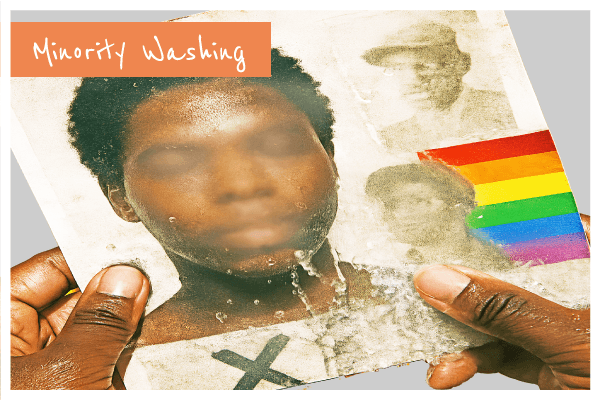
Minority washing is not exclusively about race or ethnicity; it can also relate to sexuality and gender identities. For centuries in many parts of the world, same-sex relationships were criminalised, and for people, being seen as different or identifying with a different gender might have resulted in them being sent to a sanatorium and classified as insane. For LGBTQIA+ people, the risk and consequences of being publicly exposed or outed were high, often resulting in imprisonment, exile or even worse, death. Most people throughout these difficult periods of history learnt to hide in plain sight, publicly living a heterosexual nominative life; however, privately creating communities and surrounding themselves with people they could trust and be themselves with.
Socioeconomic backgrounds also played a significant role; simply put, working-class people would likely have fewer opportunities to be themselves or would often take greater risks for connection, such as cottaging and the use of secret visual codes and languages. Those with power and influence were usually more insulated and protected. The insulation of those with power and influence meant that many were aware that someone might be different, even that they were LGBTQIA+, but it was never said or shared publicly. Instead, phrases or terms were used, like “a confirmed bachelor” for a man or “a spinster” or “independent” for a woman. It does not mean that every man or woman who never married was LGBTQIA+, but it was a language often used to describe people who may have been part of the community.
Thinking back to the many films shown in Western cultures before the 1960s, the majority of the stars and portrayals were white men and women. Though Caucasians may have been considered the majority within many communities and countries, diversity was real and existed even then. Diversity and representation are often grouped under the left agenda or within the woke label, but in reality, it is much simpler. Art imitates life, so if you look around you and you see a diverse range of people, of different ethnicities, relationships that are not just in a heterosexual context or people who identify differently on the gender identity scale, then television and films should reflect that. So not an agenda, but a desire for art to show reality, not a fantasy portrayed as real life.
The mention of representation and accurate portrayals by some is seen as a betrayal, an assault on specific cultures, like those seeking it are looking to suppress or tarnish people or ethnic groups. In reality, the desire is only to show and acknowledge that human diversity has existed throughout time, and that the difference and exclusion of people and groups were more of a relatively modern concept. For example, before the 15th century, though differences existed and might have sometimes been feared, it was often not about a person’s sexuality or race, but rather about wealth and social standing. In Ancient Rome, enslaved people were not exclusively from a particular race or socioeconomic background; instead, they were individuals whose lives the Romans spared each time they conquered a country or region and now considered them their property.
When looking at art and sculptures from different periods of time, you will often typically see significant collections featuring Caucasian individuals, mainly due in part to the fact that art or early photography, commissioning portraits, sculptures, and photographs was often expensive and likely available only to those with means, those who held power, or those revered by society. Ordinary, everyday people from previous centuries are less likely to have a portrait hanging in a gallery today. For those people from minorities, looking at many of the portraits in galleries and private collections, there are many instances where enslaved people were drawn in the background of paintings; hidden in plain sight, with no reference to who they were or their life stories told. For those people from ethnic backgrounds who were part of or loved by wealthy and notable families, who might have been included in paintings and artworks, there have been instances of future generations painting over and erasing those same individuals from their family histories.
Minority washing is not exclusively about race or ethnicity; it can also relate to sexuality and gender identities. For centuries in many parts of the world, same-sex relationships were criminalised, and for people, being seen as different or identifying with a different gender might have resulted in them being sent to a sanatorium and classified as insane. For LGBTQIA+ people, the risk and consequences of being publicly exposed or outed were high, often resulting in imprisonment, exile or even worse, death. Most people throughout these difficult periods of history learnt to hide in plain sight, publicly living a heterosexual nominative life; however, privately creating communities and surrounding themselves with people they could trust and be themselves with.
Socioeconomic backgrounds also played a significant role; simply put, working-class people would likely have fewer opportunities to be themselves or would often take greater risks for connection, such as cottaging and the use of secret visual codes and languages. Those with power and influence were usually more insulated and protected. The insulation of those with power and influence meant that many were aware that someone might be different, even that they were LGBTQIA+, but it was never said or shared publicly. Instead, phrases or terms were used, like “a confirmed bachelor” for a man or “a spinster” or “independent” for a woman. It does not mean that every man or woman who never married was LGBTQIA+, but it was a language often used to describe people who may have been part of the community.
When looking at notable and influential people throughout history, especially those who had a significant impact on a country or the world, you will often find an estate, a trust, and even a museum dedicated to them. Organisations and groups of historians, and individuals with a connection or interest in the person, help tell and often protect the story and legacy of that person. When a very public figure was very private about their personal life, and information comes to light that might change public perception, these estates and organisations may try to shape or suppress this new narrative. Secret love letters between people of the same sex, past lovers coming forward to tell their stories, or simply, long-unanswered questions resurfacing about how a person lived their life. Some might be exaggerated, fabricated, or made up; however, some might also be dismissed or discredited not because of the facts but because of their impact on legacy.
Identity, representation, and legacy are important to all of us, and for many in history, their truth might have been seen as shameful, something that could ruin their lives if it came to light, or simply change the way people thought of them during their lifetime. To illustrate this, think of someone you respect in history, maybe a political leader, a celebrity, or author, now imagine something that would seem counter opposite to their public persona, like a British politician who was an early member of the Nazi party or a famous actress who identified as a communist, it would likely change how you thought about them, maybe even the way you feel about them. Legacy matters, but so does the truth.
A new revelation suppressed is often worse than the reality. It might be that the politician liked some of the early Nazi principles and changed their views as the party ramped up, or that the actress liked the idea of a classless, moneyless, and stateless society but did not like how it was often implemented or adapted. The context matters as it frames the revelation and may enhance your view rather than completely change your perspective on that person. The revelations for minority groups often become really important because when you have people from history, especially those who have achieved great things and think and feel like you do, it helps you feel that you belong and that you are not unique or alone.
When you have notable sports persons, people in power, rulers, entertainers, authors and all those that shape the world around us coming out and sharing a truth about themselves, it does not change who they are or who they have always been, but it helps us connect with them on a more personal, more intimate level. A young man struggling with his sexuality, hearing his favourite sports star living as an openly gay man, might make his journey to self-acceptance a little easier, or a politician running for office, who happens to identify as lesbian, calling for fairness and progressive policies, helps people connect based on identity and understanding.
In modern times, many film and television production companies have become much more aware of representation and have often conscientiously recast roles in adaptations of older films with actors from minority groups. When Disney cast the role of Ariel with the talented actress Halle Bailey in the 2023 adaptation of The Little Mermaid, you saw scenes of young black girls crying, feeling seen and that there was someone who looked like them in a popular Disney role. At the same time, you had more conservative groups crying out in frustration that it was part of the woke agenda and trying to rewrite history. The reality is that both points can be valid for those involved. Representation is important, but is there not an opportunity to create new positive Disney films, stories and characters featuring ethnically diverse people to reduce the perception that Disney and other companies are changing history?
With growing acceptance and hopefully more tolerance and understanding of minority groups, especially around race, religion, cultures, sexuality and gender identities, learning that someone from history might have actually had darker skin or loved someone of the same gender, the question to ask is, more, why does it matter? It only really matters when you are trying to create division, elevate one group over another, highlight differences, or feel seen and represented. Though conservatives cry out that representative is a woke agenda, if that point is true, then it would also be relevant even within Caucasian history: a trend became more popular in the Renaissance period, or from the 15th century onward, when artists began to depict Jesus and other Christian figures as white, portraying them in their own image. Highlighting the representation matters to us all.
Identity, representation, and legacy are important to all of us, and for many in history, their truth might have been seen as shameful, something that could ruin their lives if it came to light, or simply change the way people thought of them during their lifetime. To illustrate this, think of someone you respect in history, maybe a political leader, a celebrity, or author, now imagine something that would seem counter opposite to their public persona, like a British politician who was an early member of the Nazi party or a famous actress who identified as a communist, it would likely change how you thought about them, maybe even the way you feel about them. Legacy matters, but so does the truth.
A new revelation suppressed is often worse than the reality. It might be that the politician liked some of the early Nazi principles and changed their views as the party ramped up, or that the actress liked the idea of a classless, moneyless, and stateless society but did not like how it was often implemented or adapted. The context matters as it frames the revelation and may enhance your view rather than completely change your perspective on that person. The revelations for minority groups often become really important because when you have people from history, especially those who have achieved great things and think and feel like you do, it helps you feel that you belong and that you are not unique or alone.
When you have notable sports persons, people in power, rulers, entertainers, authors and all those that shape the world around us coming out and sharing a truth about themselves, it does not change who they are or who they have always been, but it helps us connect with them on a more personal, more intimate level. A young man struggling with his sexuality, hearing his favourite sports star living as an openly gay man, might make his journey to self-acceptance a little easier, or a politician running for office, who happens to identify as lesbian, calling for fairness and progressive policies, helps people connect based on identity and understanding.
In modern times, many film and television production companies have become much more aware of representation and have often conscientiously recast roles in adaptations of older films with actors from minority groups. When Disney cast the role of Ariel with the talented actress Halle Bailey in the 2023 adaptation of The Little Mermaid, you saw scenes of young black girls crying, feeling seen and that there was someone who looked like them in a popular Disney role. At the same time, you had more conservative groups crying out in frustration that it was part of the woke agenda and trying to rewrite history. The reality is that both points can be valid for those involved. Representation is important, but is there not an opportunity to create new positive Disney films, stories and characters featuring ethnically diverse people to reduce the perception that Disney and other companies are changing history?
With growing acceptance and hopefully more tolerance and understanding of minority groups, especially around race, religion, cultures, sexuality and gender identities, learning that someone from history might have actually had darker skin or loved someone of the same gender, the question to ask is, more, why does it matter? It only really matters when you are trying to create division, elevate one group over another, highlight differences, or feel seen and represented. Though conservatives cry out that representative is a woke agenda, if that point is true, then it would also be relevant even within Caucasian history: a trend became more popular in the Renaissance period, or from the 15th century onward, when artists began to depict Jesus and other Christian figures as white, portraying them in their own image. Highlighting the representation matters to us all.
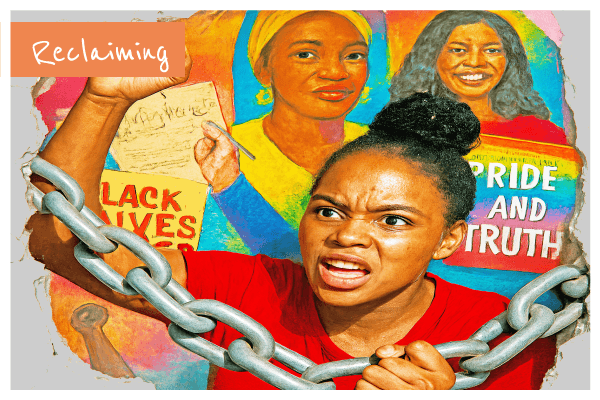
Even though the world seems, in recent years, to have become more focused on nationalism and protectionism, there has been a movement since the 1960s to broaden the historical narrative, exploring stories and enriching what we already know. Many of those known for achieving incredible feats are still that, there legacy remains unchanged. However, now we are learning about new people, individuals who might have things in common or achieved things we never thought possible in challenging times in history.
An example of a changing perspective concerns flight and well-known pilots. Orville Wright, of the Wright brothers, is considered the first pilot of a powered flight in 1903. Seven years later, Raymonde de Laroche of France became the first licensed female pilot in 1910, and Harriet Quimby the first in America in 1911. When we talk about famous aviators, most people think of Amelia Earhart, who became the first woman to fly solo across the Atlantic in 1932; however, did you know that Bessie Coleman, in 1921, became the first Black and Native American woman pilot in the world?
A similar challenge occurs when it comes to identifying members of the LGBTQIA+ community. Many well-known and notable individuals throughout history would today be recognised as LGBTQIA+. From Roman Emperors who did not hide their sexuality or gender identity, to those who hid who they were for fear of prosecution or how it might affect their career, there have been many people who were long suspected of being different, but for whom there is little or no supporting evidence. Love letters from a person where the estate claim has not been verified, or where two men or two women living together are referenced as friends and companions rather than as something romantic.
The reality is that though a person’s sexuality or gender identity is only part of who they are, it does not change who they are, or all that they have achieved; instead, what it does is to help people, those from minorities and marginalised group feel like they belong in society, and they too might be able to achieve great things. When a famous inventor happens to be gay, a young man might feel he, too, can reach great heights, or a female business leader might inspire a young woman to become a future leader.
Identifying and recalling people from history is important, especially those from different cultures. The importance of inclusive and accurate historical narratives, as well as strategies for ensuring marginalised histories are preserved, is clear. Accepting that human beings can achieve amazing things, but that they, too, are human, that aspects of their personality or identity should not distract or become the sole definition of who they are; instead, they are part of the story that led them to become and achieve what they did.
Custodians, gallery curators and art collectors are also seeking authenticity in history. For example, there have been instances of art collectors who specialise in black history, restoring paintings where black people were painted over and erased. Historians are revisiting collections and examining correspondence and third-person accounts that may have previously been hidden or overlooked to highlight disparities in the history and the telling of the story. These reviews and recounts are not meant to diminish or sway public opinion, but rather to show that some people may have been forced to hide part of who they are, and that, when it comes to light, this adds a new dimension to their lives, deepening our understanding of them.
An example of a changing perspective concerns flight and well-known pilots. Orville Wright, of the Wright brothers, is considered the first pilot of a powered flight in 1903. Seven years later, Raymonde de Laroche of France became the first licensed female pilot in 1910, and Harriet Quimby the first in America in 1911. When we talk about famous aviators, most people think of Amelia Earhart, who became the first woman to fly solo across the Atlantic in 1932; however, did you know that Bessie Coleman, in 1921, became the first Black and Native American woman pilot in the world?
A similar challenge occurs when it comes to identifying members of the LGBTQIA+ community. Many well-known and notable individuals throughout history would today be recognised as LGBTQIA+. From Roman Emperors who did not hide their sexuality or gender identity, to those who hid who they were for fear of prosecution or how it might affect their career, there have been many people who were long suspected of being different, but for whom there is little or no supporting evidence. Love letters from a person where the estate claim has not been verified, or where two men or two women living together are referenced as friends and companions rather than as something romantic.
The reality is that though a person’s sexuality or gender identity is only part of who they are, it does not change who they are, or all that they have achieved; instead, what it does is to help people, those from minorities and marginalised group feel like they belong in society, and they too might be able to achieve great things. When a famous inventor happens to be gay, a young man might feel he, too, can reach great heights, or a female business leader might inspire a young woman to become a future leader.
Identifying and recalling people from history is important, especially those from different cultures. The importance of inclusive and accurate historical narratives, as well as strategies for ensuring marginalised histories are preserved, is clear. Accepting that human beings can achieve amazing things, but that they, too, are human, that aspects of their personality or identity should not distract or become the sole definition of who they are; instead, they are part of the story that led them to become and achieve what they did.
Custodians, gallery curators and art collectors are also seeking authenticity in history. For example, there have been instances of art collectors who specialise in black history, restoring paintings where black people were painted over and erased. Historians are revisiting collections and examining correspondence and third-person accounts that may have previously been hidden or overlooked to highlight disparities in the history and the telling of the story. These reviews and recounts are not meant to diminish or sway public opinion, but rather to show that some people may have been forced to hide part of who they are, and that, when it comes to light, this adds a new dimension to their lives, deepening our understanding of them.
The telling of stories, the sharing of cultural traditions, and the maintenance of accurate records and accounts of human history are essential, as they not only serve as a memorial to the past but also help us learn from history, the good and the bad. Critical thinking is also essential when it comes to people from history. Evaluating who they were, not by weighing aspects but by looking at all of it. A bad person can achieve amazing things, but that does not mean they did not do bad things. Rewriting their history to cut out the bad and leaving only the good serves only one purpose: to distort reality, to present an image that was not true, or to provide an opportunity to learn from a person’s mistake.
Learning more about people from history, people from different countries and cultures, provides unique insight and expands our understanding of the world around us. Like the fact that the nation of Sudan has more pyramids than Egypt, that the wealthiest man in history was Mansa Musa of the Mali Empire, or that the Haudenosaunee (Iroquois) Confederacy is one of the oldest living participatory democracies in the world.
History should be about recording, preserving and learning from the past. Not about one area, region or ethnicity, but a shared story and accounts that span all of the thousands of years of human history. Accepting that humans are flawed, yet even with those flaws, can achieve such amazing things, and finally remembering a person not by their ethnicity, gender, or sexuality, but instead for what they contributed to humanity.
Stay safe and until the next time.
Learning more about people from history, people from different countries and cultures, provides unique insight and expands our understanding of the world around us. Like the fact that the nation of Sudan has more pyramids than Egypt, that the wealthiest man in history was Mansa Musa of the Mali Empire, or that the Haudenosaunee (Iroquois) Confederacy is one of the oldest living participatory democracies in the world.
History should be about recording, preserving and learning from the past. Not about one area, region or ethnicity, but a shared story and accounts that span all of the thousands of years of human history. Accepting that humans are flawed, yet even with those flaws, can achieve such amazing things, and finally remembering a person not by their ethnicity, gender, or sexuality, but instead for what they contributed to humanity.
Stay safe and until the next time.
Learn more about the exceptional LGBTQIA+ community, discover the community’s history, the ongoing movement for equality, the size of the community and how much it contributes to the world economy, frequently asked questions and much more.
Learn more about the exceptional individuals and groups that advocated and fought hard throughout history to improve LGBTQIA+ rights and conditions across the world
Learn more about how individual countries and regions around the world treat members of the LGBTQIA+ community. From the status and laws of same-sex marriages to gender identity recognition, this easy-to-use equality index provides a score and breakdown for every country worldwide.




IMPORTANT DISCLAIMER: All published articles have been written by members of the general public. Many will likely not be journalists nor be affiliated with any professional bodies associated with members of the media. The articles will likely be based on the authors’ own opinions, views, and experiences. Gayther does not endorse or accept any responsibility or liability regarding any materials within the news and media pages. This page may contain external links to third party websites; Gayther provides these links for your convenience and does not endorse, warrant or recommend any particular products or services. By clicking on any external links, you will leave Gayther and be taken to the third-party website, which you do so at your own risk and by accessing the site, you will be required to comply with the external third party’s terms and conditions of use and privacy policies
Discover all of the topical articles written by people from across the community and friends, all sharing their stories, opinions and experiences