









Echoes Across Cultures:
THE MIDDLE EAST'S HARD LINE ON LGBTQIA+ RIGHTS
- Atilla Tiriyaki
- Average Reading Time: 12 minutes
- Community
- articles, atillat, guides
Within the media and widely acknowledged globally, the Middle East’s stance on LGBTQIA+ rights is often portrayed as ancient, immovable, and inherently cultural. Yet the region’s history is far more complex. Centuries of relative tolerance towards the community, as reflected in records, literature, art, and law, were gradually eroded by religious conservatism and European colonial influence. Today, as activists quietly resist and governments double down, the region stands at a crossroads between a complex past and an uncertain future. With over 60% of the population under 25, a generation far more aware of the world, is the Middle East starting to see shifts in societal attitudes among its youth, and is a new wave of tolerance coming of age? The question is no longer simply whether the Middle East will change, but whether it already is.
DISCLAIMER
All published articles are intended for an audience aged 18 years and over and have been written by members of the general public. Many will likely not be journalists nor be affiliated with any professional bodies associated with members of the media. The articles will likely be based on the authors' own opinions, views, and experiences...more
For many, seeing the term LGBTQIA+ used in reference to the Middle East often conjures images of intolerance, contradiction, or even active targeting and persecution of community members living in those countries. Trawling through news stories or parliamentary sessions, you will often hear of the implementation or proposed implementation of harsher laws targeting the community. Typically, such laws are defended on the grounds that they are based on an interpretation of a religious doctrine or a bid to protect traditional family values. Often, however, this is a contradiction. When looking into the histories of many of those countries that cite this position, the argument seems at odds with a once more tolerant region that, for many, today is leading the charge and wave of intolerance and persecution towards the LGBTQIA+ community.
Before we explore this further, it is important to clarify that the term “Middle East” refers to a region comprising 17 countries spanning parts of Western Asia and North Africa. The region, today home to the nations of Bahrain, Cyprus, Egypt, Iran, Iraq, Israel, Jordan, Kuwait, Lebanon, Oman, Palestine, Qatar, Saudi Arabia, Syria, Türkiye, UAE and Yemen, has long been seen as the cradle of civilisation and the corridor of the world.
The Middle East is home to the world’s oldest known civilisation and is the birthplace of three major religious denominations, Judaism, Christianity and Islam. Today, Arabic is the most widely spoken language within the region, followed by Persian, Turkish, Hebrew, Greek and Kurdish. The region is ancient, from the Western Wall in Jerusalem to three of the ancient wonders of the world, and has profoundly shaped the world.
Today, it is estimated that 26% of the world’s population identifies as Muslim, and across the region, around 60% of the population is under the age of 25. For the LGBTQIA+ community living in many of these countries, life is often lived in secret, within discreet, hidden communities kept from public view. With the availability and affordability of international travel, those with the means and opportunity are likely to travel abroad for hook-ups, connections, and even to form relationships, without facing the risks they face at home. Activists and advocates living within those countries and calling for change have been reclaiming many previously derogatory terms, replacing them with terms like “Mithli”, which means many like me, to describe LGBTQIA+ identities.
Given the long and complex history with the LGBTQIA+ community and the slow pace of change, let us explore the background and history behind the Middle East’s apparent hard-line position on LGBTQIA+ rights.
Before we explore this further, it is important to clarify that the term “Middle East” refers to a region comprising 17 countries spanning parts of Western Asia and North Africa. The region, today home to the nations of Bahrain, Cyprus, Egypt, Iran, Iraq, Israel, Jordan, Kuwait, Lebanon, Oman, Palestine, Qatar, Saudi Arabia, Syria, Türkiye, UAE and Yemen, has long been seen as the cradle of civilisation and the corridor of the world.
The Middle East is home to the world’s oldest known civilisation and is the birthplace of three major religious denominations, Judaism, Christianity and Islam. Today, Arabic is the most widely spoken language within the region, followed by Persian, Turkish, Hebrew, Greek and Kurdish. The region is ancient, from the Western Wall in Jerusalem to three of the ancient wonders of the world, and has profoundly shaped the world.
Today, it is estimated that 26% of the world’s population identifies as Muslim, and across the region, around 60% of the population is under the age of 25. For the LGBTQIA+ community living in many of these countries, life is often lived in secret, within discreet, hidden communities kept from public view. With the availability and affordability of international travel, those with the means and opportunity are likely to travel abroad for hook-ups, connections, and even to form relationships, without facing the risks they face at home. Activists and advocates living within those countries and calling for change have been reclaiming many previously derogatory terms, replacing them with terms like “Mithli”, which means many like me, to describe LGBTQIA+ identities.
Given the long and complex history with the LGBTQIA+ community and the slow pace of change, let us explore the background and history behind the Middle East’s apparent hard-line position on LGBTQIA+ rights.
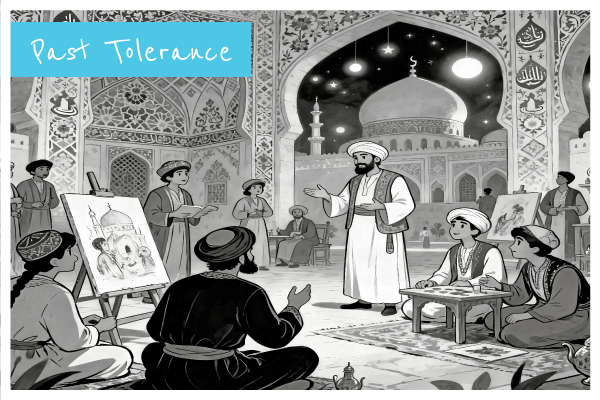
Today, it is hard to imagine, given the religious conservatism and rhetoric often directed at the community, that life for community members in the region was very different throughout the centuries. Throughout history, it is fair to say that the region has never advocated full equality or provided community members with the rights and freedoms; rather, it has traditionally avoided active persecution and often shown tolerance, albeit with limited acceptance.
There are countless examples of tolerance throughout the centuries, including among many of the region’s rulers, such as Umayyad Caliph Al-Walid II and later Abbasid Caliph Al-Amin, who were known for preferring male partners. During the early Safavid era, male houses of prostitution were legally recognised and paid taxes, demonstrating the formalisation of male same-sex activity. More recently, in Iran, following a fatwa by Ayatollah Khomeini in 1987, the country allowed and continues to allow transgender individuals to undergo sex reassignment surgery, even with state financial support, taking the position that transgender identities are a medical condition rather than a sin.
During the Golden Age of tolerance, from the 8th to the 13th century CE, homoerotic poetry and literature flourished. In the 1800s, European travellers like Gustave Flaubert were often shocked by the openness of same-sex desire in Egypt and North Africa. The Ottoman Empire, which once dominated the region and spanned multiple continents for over 600 years, was known to have complicated yet often tolerant attitudes towards the community, even decriminalising same-sex acts in 1858.
So, how did it go from tolerance to active persecution?
There are countless examples of tolerance throughout the centuries, including among many of the region’s rulers, such as Umayyad Caliph Al-Walid II and later Abbasid Caliph Al-Amin, who were known for preferring male partners. During the early Safavid era, male houses of prostitution were legally recognised and paid taxes, demonstrating the formalisation of male same-sex activity. More recently, in Iran, following a fatwa by Ayatollah Khomeini in 1987, the country allowed and continues to allow transgender individuals to undergo sex reassignment surgery, even with state financial support, taking the position that transgender identities are a medical condition rather than a sin.
During the Golden Age of tolerance, from the 8th to the 13th century CE, homoerotic poetry and literature flourished. In the 1800s, European travellers like Gustave Flaubert were often shocked by the openness of same-sex desire in Egypt and North Africa. The Ottoman Empire, which once dominated the region and spanned multiple continents for over 600 years, was known to have complicated yet often tolerant attitudes towards the community, even decriminalising same-sex acts in 1858.
So, how did it go from tolerance to active persecution?
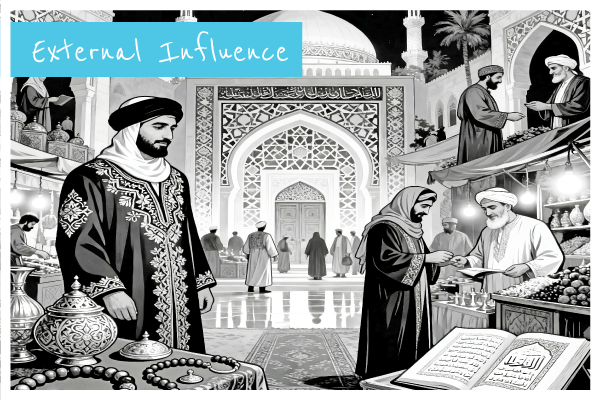
Today, many laws relating to same-sex acts are referred to as Liwat, derived from the name of the Prophet Lut. The story relating to the prophet forms the basis for the treatment of the LGBTQIA+ community, including severe punishments. Lawmakers cite the Quran and the hadiths to determine the level of punishment to be imposed.
A fact often ignored or omitted is that the Qur’an does not directly address homosexuality as a sexual orientation, nor does it prescribe specific penalties for same-sex acts. References to such behaviours come primarily from the story of Prophet Lut, which appears in multiple Surahs and highlights the moral transgressions of the people of Sodom. While later Islamic jurists, those experts in Sharia law, sometimes interpreted these verses to inform legal punishments, including through principles such as qisas, the Qur’an itself presents the story as a moral and spiritual lesson rather than a legal position or mandate.
The basis is based around the Prophet Lut, who was the nephew of the Prophet Ibrahim. Prophet Lut was sent to the city of Sodom, near the Dead Sea, to preach and help combat the immorality there. For years, the Prophet preached in the hope that the citizens would recognise the immorality of their sinful actions, such as robbery, public indecency, and approaching a man with the same lust as they would a woman, and would embrace God. The people ignored him and even grew hostile towards him. God (Allah) sent angels in the form of beautiful young men to Lut.
Upon their arrival, Lut was concerned for their safety; however, the city’s inhabitants quickly learned of their arrival, and a mob gathered at the Prophet’s home, demanding the men. The angels revealed their true identities, declared that they could not be harmed, and instructed the Prophet and his family to leave the city that night and not to look back. Shortly after they departed from the city, Sodom was destroyed by a massive storm of stones and an earthquake that consumed the land on which the city was built.
The teachings of Prophet Lut have long been interpreted as condemning the LGBTQIA+ community, with some referring to the community as the people of Lut; however, some scholars believe that the teachings are not about same-sex relationships but rather about condemning rape, coercion and intimidation.
Interpretations of the hadith, the recorded sayings, actions, and approvals of the Prophet Muhammad and his early followers in the 7th century CE, addressed sexual ethics, including prohibitions against same-sex acts. While some hadiths express disapproval or prescribe consequences, there is no definitive evidence that the Prophet explicitly mandated severe punishments for individuals. Over the centuries, both Sunni and Shia scholars developed legal and moral interpretations that sometimes broadened the scope of these prohibitions, creating a scholarly consensus on the intended ethical guidance.
Though Sharia, or Islamic law, is based on the Quran and hadiths, the Quran serves as the foundation, which is why the story of the Prophet Lut is often cited. In the religious context, for centuries, people lived without fear, without active persecution, even though the hadiths and the Quran were well known and followed by the people at the time. So, when did it all change?
Early Christian crusaders, missionaries, and European colonisers in the region brought with them what we consider today to be extreme Christian values and beliefs, and they also introduced laws such as the British Penal Codes, which introduced Section 377 across their territories. These codes also became the blueprint for laws in Iraq, Egypt, and Jordan, and France introduced the Napoleonic Code’s concepts of public indecency in Syria, Lebanon, and the Maghreb. In addition to these laws, many colonial rulers viewed local sexual permissiveness as a sign of uncivilised and backwardness. They sought to modernise the region by enforcing strict Victorian-Christian sexual standards. After gaining independence, many Middle Eastern nations kept these colonial-era laws, but for different reasons, such as nationalist identity, cultural wars, and the great erasure in the 20th century, in which authorities censored, reinterpreted, or suppressed their country’s history, including homoerotic art and literature.
The influence and shifts in attitudes towards the community likely led scholars and religious leaders to revisit the Quran and hadiths to develop positions and treatments that persist in many countries today.
A fact often ignored or omitted is that the Qur’an does not directly address homosexuality as a sexual orientation, nor does it prescribe specific penalties for same-sex acts. References to such behaviours come primarily from the story of Prophet Lut, which appears in multiple Surahs and highlights the moral transgressions of the people of Sodom. While later Islamic jurists, those experts in Sharia law, sometimes interpreted these verses to inform legal punishments, including through principles such as qisas, the Qur’an itself presents the story as a moral and spiritual lesson rather than a legal position or mandate.
The basis is based around the Prophet Lut, who was the nephew of the Prophet Ibrahim. Prophet Lut was sent to the city of Sodom, near the Dead Sea, to preach and help combat the immorality there. For years, the Prophet preached in the hope that the citizens would recognise the immorality of their sinful actions, such as robbery, public indecency, and approaching a man with the same lust as they would a woman, and would embrace God. The people ignored him and even grew hostile towards him. God (Allah) sent angels in the form of beautiful young men to Lut.
Upon their arrival, Lut was concerned for their safety; however, the city’s inhabitants quickly learned of their arrival, and a mob gathered at the Prophet’s home, demanding the men. The angels revealed their true identities, declared that they could not be harmed, and instructed the Prophet and his family to leave the city that night and not to look back. Shortly after they departed from the city, Sodom was destroyed by a massive storm of stones and an earthquake that consumed the land on which the city was built.
The teachings of Prophet Lut have long been interpreted as condemning the LGBTQIA+ community, with some referring to the community as the people of Lut; however, some scholars believe that the teachings are not about same-sex relationships but rather about condemning rape, coercion and intimidation.
Interpretations of the hadith, the recorded sayings, actions, and approvals of the Prophet Muhammad and his early followers in the 7th century CE, addressed sexual ethics, including prohibitions against same-sex acts. While some hadiths express disapproval or prescribe consequences, there is no definitive evidence that the Prophet explicitly mandated severe punishments for individuals. Over the centuries, both Sunni and Shia scholars developed legal and moral interpretations that sometimes broadened the scope of these prohibitions, creating a scholarly consensus on the intended ethical guidance.
Though Sharia, or Islamic law, is based on the Quran and hadiths, the Quran serves as the foundation, which is why the story of the Prophet Lut is often cited. In the religious context, for centuries, people lived without fear, without active persecution, even though the hadiths and the Quran were well known and followed by the people at the time. So, when did it all change?
Early Christian crusaders, missionaries, and European colonisers in the region brought with them what we consider today to be extreme Christian values and beliefs, and they also introduced laws such as the British Penal Codes, which introduced Section 377 across their territories. These codes also became the blueprint for laws in Iraq, Egypt, and Jordan, and France introduced the Napoleonic Code’s concepts of public indecency in Syria, Lebanon, and the Maghreb. In addition to these laws, many colonial rulers viewed local sexual permissiveness as a sign of uncivilised and backwardness. They sought to modernise the region by enforcing strict Victorian-Christian sexual standards. After gaining independence, many Middle Eastern nations kept these colonial-era laws, but for different reasons, such as nationalist identity, cultural wars, and the great erasure in the 20th century, in which authorities censored, reinterpreted, or suppressed their country’s history, including homoerotic art and literature.
The influence and shifts in attitudes towards the community likely led scholars and religious leaders to revisit the Quran and hadiths to develop positions and treatments that persist in many countries today.
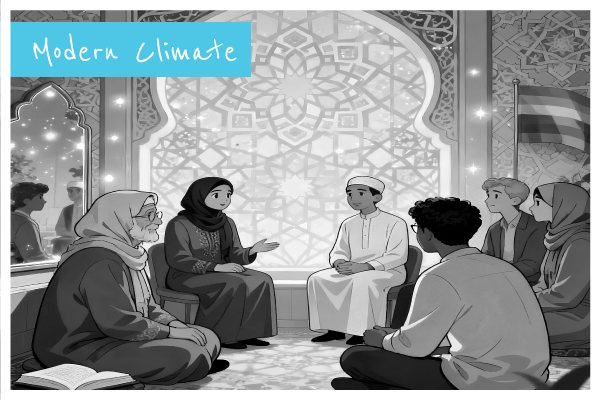
In 2026, 12, or 71%, of the 17 countries still criminalise same-sex relationships, with 1 imposing a penalty of up to 2 years in prison, 7 imposing penalties from 2 to life imprisonment, and 4 imposing the maximum penalty of death. Though public authorities often cite a narrative that LGBTQIA+ individuals do not exist in the region or are in low numbers, in reality, the community does exist; however, it is often both secretive and discreet, typically hiding in plain sight. Many LGBTQIA+ individuals are publicly seen living ordinary lives, but privately connecting with like-minded people. The availability and use of LGBTQIA+ apps help people find connections, with many users hiding their faces and other distinguishing features, often using an alias rather than anything that could identify them. Typically, people share personal and intimate details only when they trust the person they are speaking to. The caution the community exhibits in many of these countries is well-founded. In recent times, authorities in countries like Egypt, Iraq, Jordan, Lebanon, Qatar and Iran have been known to use gay apps to ensnare and entrap the local community in honey-pot-like sting operations, talking to users and arranging meet-ups, only to arrest them on indecency charges.
Within the region, five countries have decriminalised same-sex relationships; as a result, people from the community in those countries are often more visible and vocal; however, many will still face hostility and homophobia, as attitudes towards the community have been shifting slowly across society, especially in more rural parts of any given country. Often, cities act as safe havens where people from rural communities flock to experience slightly more freedom and access to a larger local community. Many of those living in the cities typically cluster on apps in specific neighbourhoods. Living within these communities, many will know others in the area, creating a tight-knit community that mutually protects one another, all with the aim of self-preservation.
Visiting or living in a Middle Eastern country, especially where same-sex individuals do not show public displays of affection (PDA) or are outwardly vocal or visible in society, as in wearing rainbow pins or LGBTQIA+ related identifiers, means that many go about their lives likely experiencing little to no discrimination, or even being targeted by the authorities. Anyone making public declarations about their sexuality or gender identity is more likely to experience some form of discrimination or worse.
The growing awareness of the size, purchasing power and influence of gay tourism has highlighted the fracture in the so-called morality arguments aimed toward the local community members. During the FIFA World Cup in Qatar in 2022, government officials were publicly promoting and welcoming everyone, including LGBTQIA+ people, confirming that no one would be arrested for public displays of affection or those who identify as gay or transgender would be safe and free from persecution. The same duality exists in Dubai, a major city and emirate in the United Arab Emirates. A city known for its extravagance, luxury and being a high-end shopper’s paradise. Seen as welcoming everyone, including the LGBTQIA+ community, in an approach like, don’t ask, don’t tell.
Simply put, the Middle East has a long way to go for people to feel free of persecution and be able to publicly and openly share their sexuality or gender identity, but with discretion and suppression of public declarations or paraphernalia about their sexuality or gender identity, many can live or visit, often trouble-free.
Within the region, five countries have decriminalised same-sex relationships; as a result, people from the community in those countries are often more visible and vocal; however, many will still face hostility and homophobia, as attitudes towards the community have been shifting slowly across society, especially in more rural parts of any given country. Often, cities act as safe havens where people from rural communities flock to experience slightly more freedom and access to a larger local community. Many of those living in the cities typically cluster on apps in specific neighbourhoods. Living within these communities, many will know others in the area, creating a tight-knit community that mutually protects one another, all with the aim of self-preservation.
Visiting or living in a Middle Eastern country, especially where same-sex individuals do not show public displays of affection (PDA) or are outwardly vocal or visible in society, as in wearing rainbow pins or LGBTQIA+ related identifiers, means that many go about their lives likely experiencing little to no discrimination, or even being targeted by the authorities. Anyone making public declarations about their sexuality or gender identity is more likely to experience some form of discrimination or worse.
The growing awareness of the size, purchasing power and influence of gay tourism has highlighted the fracture in the so-called morality arguments aimed toward the local community members. During the FIFA World Cup in Qatar in 2022, government officials were publicly promoting and welcoming everyone, including LGBTQIA+ people, confirming that no one would be arrested for public displays of affection or those who identify as gay or transgender would be safe and free from persecution. The same duality exists in Dubai, a major city and emirate in the United Arab Emirates. A city known for its extravagance, luxury and being a high-end shopper’s paradise. Seen as welcoming everyone, including the LGBTQIA+ community, in an approach like, don’t ask, don’t tell.
Simply put, the Middle East has a long way to go for people to feel free of persecution and be able to publicly and openly share their sexuality or gender identity, but with discretion and suppression of public declarations or paraphernalia about their sexuality or gender identity, many can live or visit, often trouble-free.
It is often omitted and rarely stated, but historically, Islam and many of its empires were far more tolerant and inclusive than we are made to believe today. The Ottoman Empire, which was often the face and sole point of contact with the religion for many people around the world, was known for allowing people within the empire to practice other faiths and often took a more tolerant approach towards the LGBTQIA+ community.
As with the history of Christianity, it is often not the faith or the scriptures that cause the more extreme positions, but rather the people who interpret them and how they apply those interpretations. Arguments, both positive and negative, can be made against any religious position; however, selective interpretations, used to target or persecute people, can never be justified.
Like the Western world, it highlights the importance of the separation between church and state. The followers of a religion can hold a belief, but beliefs should not be able to weaponise those beliefs and use them as a justification in state matters.
LGBTQIA+ people have existed in the Middle East since records began, and though many like to believe it was a Western import or problem, in reality, what the West brought was only homophobia and not how a person chooses to identify or love. What consenting adults do in the privacy of their own home or from public view should never be at the mercy of someone else’s beliefs or values; instead, all beliefs, rights and values should be respected and, most importantly, personal and affecting only them and how they choose to live their own lives.
Islam, and even Muslims themselves, are not the problem when it comes to the LGBTQIA+ community in the region; instead, it is those pushing a hard line based on their own twisted view of the world and beliefs without understanding their own nation’s history of tolerance and inclusion.
Stay safe and until the next time.
As with the history of Christianity, it is often not the faith or the scriptures that cause the more extreme positions, but rather the people who interpret them and how they apply those interpretations. Arguments, both positive and negative, can be made against any religious position; however, selective interpretations, used to target or persecute people, can never be justified.
Like the Western world, it highlights the importance of the separation between church and state. The followers of a religion can hold a belief, but beliefs should not be able to weaponise those beliefs and use them as a justification in state matters.
LGBTQIA+ people have existed in the Middle East since records began, and though many like to believe it was a Western import or problem, in reality, what the West brought was only homophobia and not how a person chooses to identify or love. What consenting adults do in the privacy of their own home or from public view should never be at the mercy of someone else’s beliefs or values; instead, all beliefs, rights and values should be respected and, most importantly, personal and affecting only them and how they choose to live their own lives.
Islam, and even Muslims themselves, are not the problem when it comes to the LGBTQIA+ community in the region; instead, it is those pushing a hard line based on their own twisted view of the world and beliefs without understanding their own nation’s history of tolerance and inclusion.
Stay safe and until the next time.
Learn more about the exceptional LGBTQIA+ community, discover the community’s history, the ongoing movement for equality, the size of the community and how much it contributes to the world economy, frequently asked questions and much more.

Acceptance and coming to terms with a part of what makes you can be challenging for many people. The Gayther pride in series is about celebrating all things relating to sexualities, gender identities and special groups. Showcasing the exceptional people, interesting facts and ways to connect with those unique communities
Learn more about how individual countries and regions around the world treat members of the LGBTQIA+ community. From the status and laws of same-sex marriages to gender identity recognition, this easy-to-use equality index provides a score and breakdown for every country worldwide.





IMPORTANT DISCLAIMER: All published articles have been written by members of the general public. Many will likely not be journalists nor be affiliated with any professional bodies associated with members of the media. The articles will likely be based on the authors’ own opinions, views, and experiences. Gayther does not endorse or accept any responsibility or liability regarding any materials within the news and media pages. This page may contain external links to third party websites; Gayther provides these links for your convenience and does not endorse, warrant or recommend any particular products or services. By clicking on any external links, you will leave Gayther and be taken to the third-party website, which you do so at your own risk and by accessing the site, you will be required to comply with the external third party’s terms and conditions of use and privacy policies
Discover all of the topical articles written by people from across the community and friends, all sharing their stories, opinions and experiences