









Across Borders and Bureaucracy:
Navigating Worldwide LGBTQIA+ Surrogacy
- Atilla Tiriyaki
- Average Reading Time: 10 minutes
- Community
- articles, atillat, guides
Surrogacy remains controversial in many countries and cultures, yet it is one of the world’s fastest-growing pathways to parenthood. But how much do you really know about it? Who are a child’s legal parents when they are born through a surrogate? Why is commercial surrogacy permitted in some countries but prohibited or criminalised in others? And why are thousands of intended parents travelling across borders every year to fulfil their dream of building a family? From billion-dollar fertility industries and evolving medical technologies to LGBTQIA+ rights, international legal disputes, and the ethical questions surrounding modern family creation, explore how surrogacy really works, why laws differ so dramatically around the world, and what the future may hold for one of the most rapidly evolving fields in reproductive healthcare and family law.
DISCLAIMER
All published articles are intended for an audience aged 18 years and over and have been written by members of the general public. Many will likely not be journalists nor be affiliated with any professional bodies associated with members of the media. The articles will likely be based on the authors' own opinions, views, and experiences...more
Today, there is a better understanding of surrogacy than in the past, yet it remains a topic rarely discussed in public or within the general population. It is most often brought into the public eye through the experiences of celebrities and other high-profile individuals, as reported in interviews, documentaries, and reality television. Despite this increased visibility, many people around the world still know little about what surrogacy involves or how it works in practice. As family structures evolve and reproductive medicine advances, surrogacy has become an increasingly visible option for those seeking to start or form a family.
Whether for individuals unable to carry a pregnancy to full term because of medical conditions or complications, same-sex couples wishing to have children, or others facing fertility challenges, surrogacy offers an alternative path to parenthood. Although forms of surrogacy have existed for centuries, modern surrogacy is supported by legal frameworks, medical advances, and formal agreements designed to protect all parties involved. Even so, surrogacy remains highly regulated across much of the world. In many countries, it is banned, even criminalised, while in other regions it is permitted only under strict legal and ethical conditions.
As more people choose to start families later in life and infertility becomes an increasingly common challenge, surrogacy offers hope to individuals and couples who might otherwise be unable to have children. For many, it offers an opportunity to experience parenthood while avoiding the significant medical risks associated with pregnancy.
Globally, commercial surrogacy has become a multibillion-dollar industry, while altruistic surrogacy continues to grow as public attitudes evolve and legal recognition expands across many jurisdictions. At the same time, debate over surrogacy remains centred on its ethical, legal, and social implications.
Let’s now explore how surrogacy works, examine the different legal approaches adopted worldwide, and consider the challenges and opportunities that may shape its future.
Whether for individuals unable to carry a pregnancy to full term because of medical conditions or complications, same-sex couples wishing to have children, or others facing fertility challenges, surrogacy offers an alternative path to parenthood. Although forms of surrogacy have existed for centuries, modern surrogacy is supported by legal frameworks, medical advances, and formal agreements designed to protect all parties involved. Even so, surrogacy remains highly regulated across much of the world. In many countries, it is banned, even criminalised, while in other regions it is permitted only under strict legal and ethical conditions.
As more people choose to start families later in life and infertility becomes an increasingly common challenge, surrogacy offers hope to individuals and couples who might otherwise be unable to have children. For many, it offers an opportunity to experience parenthood while avoiding the significant medical risks associated with pregnancy.
Globally, commercial surrogacy has become a multibillion-dollar industry, while altruistic surrogacy continues to grow as public attitudes evolve and legal recognition expands across many jurisdictions. At the same time, debate over surrogacy remains centred on its ethical, legal, and social implications.
Let’s now explore how surrogacy works, examine the different legal approaches adopted worldwide, and consider the challenges and opportunities that may shape its future.

Before exploring some of the main challenges of surrogacy, it is helpful to understand what surrogacy is and what it is not. Surrogacy is an arrangement in which a woman, known as a surrogate, carries and gives birth to a child on behalf of another person or couple, commonly referred to as the intended parent or parents. The legal recognition of the intended parents varies by jurisdiction. In some countries, they are recognised as the child’s legal parents from birth, while in others, legal parenthood is established only after birth through a court order, adoption, or another legal mechanism.
There are two principal forms of surrogacy: traditional surrogacy and gestational surrogacy. In traditional surrogacy, the surrogate uses her own egg, making her the child’s genetic mother. Fertilisation typically occurs with sperm from the intended father or a sperm donor. Gestational surrogacy, now the most common form, involves an embryo created through in vitro fertilisation (IVF) using the egg and sperm of the intended parents, donors, or a combination of both. Because the surrogate does not provide the egg, she has no genetic relationship to the child she carries.
Surrogacy may be considered by individuals and couples who are unable to carry a pregnancy due to infertility, medical conditions, recurrent pregnancy loss, or because pregnancy would pose a significant health risk. It is also an option for many same-sex couples and single intended parents who wish to have a child, although access to surrogacy varies considerably by country.
The terms altruistic and commercial refer not to the medical procedure itself but to the structure of the surrogacy arrangement. In altruistic surrogacy, the surrogate receives no payment beyond reimbursement for reasonable expenses, where permitted by law. In commercial surrogacy, the surrogate receives financial compensation in addition to reimbursement for approved expenses.
The legal regulation of surrogacy varies widely around the world. Some countries prohibit all forms of surrogacy, others permit only altruistic arrangements, and a relatively small number allow commercial surrogacy under regulated conditions. The legal process for recognising the intended parents also varies significantly and may involve pre-birth orders, post-birth parentage orders, adoption, or other legal procedures, depending on the jurisdiction.
There are two principal forms of surrogacy: traditional surrogacy and gestational surrogacy. In traditional surrogacy, the surrogate uses her own egg, making her the child’s genetic mother. Fertilisation typically occurs with sperm from the intended father or a sperm donor. Gestational surrogacy, now the most common form, involves an embryo created through in vitro fertilisation (IVF) using the egg and sperm of the intended parents, donors, or a combination of both. Because the surrogate does not provide the egg, she has no genetic relationship to the child she carries.
Surrogacy may be considered by individuals and couples who are unable to carry a pregnancy due to infertility, medical conditions, recurrent pregnancy loss, or because pregnancy would pose a significant health risk. It is also an option for many same-sex couples and single intended parents who wish to have a child, although access to surrogacy varies considerably by country.
The terms altruistic and commercial refer not to the medical procedure itself but to the structure of the surrogacy arrangement. In altruistic surrogacy, the surrogate receives no payment beyond reimbursement for reasonable expenses, where permitted by law. In commercial surrogacy, the surrogate receives financial compensation in addition to reimbursement for approved expenses.
The legal regulation of surrogacy varies widely around the world. Some countries prohibit all forms of surrogacy, others permit only altruistic arrangements, and a relatively small number allow commercial surrogacy under regulated conditions. The legal process for recognising the intended parents also varies significantly and may involve pre-birth orders, post-birth parentage orders, adoption, or other legal procedures, depending on the jurisdiction.
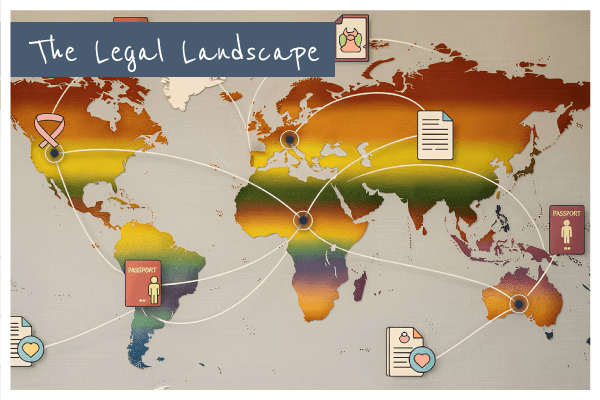
The legal landscape surrounding surrogacy is complex, particularly when intended parents, surrogates, and fertility clinics are located in different countries. The legal issues surrounding surrogacy can often be divided into three stages:
The first stage concerns whether surrogacy is legally permitted in a particular jurisdiction and, if so, on what terms. Some countries prohibit all forms of surrogacy, while others permit only altruistic arrangements or regulate commercial surrogacy through licensing and oversight. Even where surrogacy is prohibited domestically, some intended parents pursue surrogacy arrangements abroad, creating additional legal challenges upon returning home with their child.
In 2026, altruistic surrogacy was permitted in 28 of the 167 countries that did not criminalise same-sex relationships. Of those, only 15 allowed LGBTQIA+ individuals to access altruistic surrogacy, while 12 explicitly prohibited such arrangements. Commercial surrogacy was even less common, with only 10 countries permitting it. Of those, just three, Israel, the United States, and South Africa, allowed LGBTQIA+ individuals to access commercial surrogacy. By comparison, 18 countries expressly prohibited commercial surrogacy.
Sperm donation also plays an important role in many pathways to parenthood. Where payment for sperm donation and international export are permitted, donor sperm can significantly expand access for intended parents in countries with more restrictive laws. In 2026, six countries permitted payment for sperm donation, while only two allowed the international export of sperm. Many jurisdictions also impose limits on the number of families or children that may be created from a single donor.
While these statistics illustrate the diversity of national legal frameworks, they cover only the first stage of a surrogacy arrangement. Once conception has occurred, a separate set of legal principles governs the pregnancy.
The second stage concerns the pregnancy. Although surrogacy agreements set out the expectations of all parties, they generally cannot override the surrogate’s fundamental rights over her own body. In jurisdictions where surrogacy is lawful, the surrogate typically retains the right to make medical decisions throughout the pregnancy, including decisions about treatment and, where lawful, whether to continue or terminate the pregnancy. Intended parents may discuss birth plans and other aspects of the pregnancy with the surrogate, but the surrogate’s bodily autonomy remains a fundamental legal principle.
The final stage begins once the child is born. Depending on the jurisdiction, the intended parents may be recognised as the child’s legal parents immediately, or they may need to obtain a parentage order, a court declaration, an adoption order, or another form of legal recognition before parenthood is formally recognised. In international surrogacy arrangements, additional legal steps may also be required to secure citizenship, passports, and immigration status before the child can travel to the intended parents’ home country.
Cross-border surrogacy can pose particularly difficult legal and humanitarian challenges. Differences between national legal systems may leave children in legal uncertainty until questions of parentage, nationality, immigration status, and citizenship are resolved. There have also been exceptional cases in which intended parents have refused to assume responsibility for a child born with significant medical conditions, raising complex ethical and legal questions about parental responsibility. Armed conflicts have created further complications. During the early stages of the war in Ukraine, for example, many babies born through surrogacy remained in hospitals or temporary care because intended parents were unable to travel safely to collect them while hostilities were ongoing.
- Conception and surrogacy legislation
- Pregnancy
- Post-birth legal recognition
The first stage concerns whether surrogacy is legally permitted in a particular jurisdiction and, if so, on what terms. Some countries prohibit all forms of surrogacy, while others permit only altruistic arrangements or regulate commercial surrogacy through licensing and oversight. Even where surrogacy is prohibited domestically, some intended parents pursue surrogacy arrangements abroad, creating additional legal challenges upon returning home with their child.
In 2026, altruistic surrogacy was permitted in 28 of the 167 countries that did not criminalise same-sex relationships. Of those, only 15 allowed LGBTQIA+ individuals to access altruistic surrogacy, while 12 explicitly prohibited such arrangements. Commercial surrogacy was even less common, with only 10 countries permitting it. Of those, just three, Israel, the United States, and South Africa, allowed LGBTQIA+ individuals to access commercial surrogacy. By comparison, 18 countries expressly prohibited commercial surrogacy.
Sperm donation also plays an important role in many pathways to parenthood. Where payment for sperm donation and international export are permitted, donor sperm can significantly expand access for intended parents in countries with more restrictive laws. In 2026, six countries permitted payment for sperm donation, while only two allowed the international export of sperm. Many jurisdictions also impose limits on the number of families or children that may be created from a single donor.
While these statistics illustrate the diversity of national legal frameworks, they cover only the first stage of a surrogacy arrangement. Once conception has occurred, a separate set of legal principles governs the pregnancy.
The second stage concerns the pregnancy. Although surrogacy agreements set out the expectations of all parties, they generally cannot override the surrogate’s fundamental rights over her own body. In jurisdictions where surrogacy is lawful, the surrogate typically retains the right to make medical decisions throughout the pregnancy, including decisions about treatment and, where lawful, whether to continue or terminate the pregnancy. Intended parents may discuss birth plans and other aspects of the pregnancy with the surrogate, but the surrogate’s bodily autonomy remains a fundamental legal principle.
The final stage begins once the child is born. Depending on the jurisdiction, the intended parents may be recognised as the child’s legal parents immediately, or they may need to obtain a parentage order, a court declaration, an adoption order, or another form of legal recognition before parenthood is formally recognised. In international surrogacy arrangements, additional legal steps may also be required to secure citizenship, passports, and immigration status before the child can travel to the intended parents’ home country.
Cross-border surrogacy can pose particularly difficult legal and humanitarian challenges. Differences between national legal systems may leave children in legal uncertainty until questions of parentage, nationality, immigration status, and citizenship are resolved. There have also been exceptional cases in which intended parents have refused to assume responsibility for a child born with significant medical conditions, raising complex ethical and legal questions about parental responsibility. Armed conflicts have created further complications. During the early stages of the war in Ukraine, for example, many babies born through surrogacy remained in hospitals or temporary care because intended parents were unable to travel safely to collect them while hostilities were ongoing.
Over the past decade, surrogacy has become an increasingly established pathway to parenthood, with an estimated 200,000 surrogacy cycles worldwide each year. At the same time, domestic and international adoption have become more restricted in many parts of the world, with adoption numbers declining in numerous jurisdictions. Together, these trends have fuelled growing interest in assisted reproductive technologies, including surrogacy.
Social and economic factors are also reshaping when and how people choose to start families. Many individuals and couples are delaying parenthood because of career aspirations, financial pressures, housing costs, or a lack of a stable relationship. As more people choose to have children later in life, age-related infertility and other reproductive challenges are becoming more common, increasing demand for fertility treatment and alternative pathways to parenthood.
Public attitudes towards assisted reproductive technologies have also evolved in recent decades. As these technologies become more widely accepted and populations continue to decline in many countries, governments may increasingly revisit their surrogacy laws and policies to address changing demographic, social, and healthcare needs.
Legal reform is unlikely to be uniform worldwide, nor does greater acceptance of surrogacy necessarily translate into equal access for all. In many countries, debates about surrogacy remain closely intertwined with discussions of LGBTQIA+ rights, family law, and reproductive ethics. Religious organisations and socially conservative groups continue to oppose surrogacy and the expansion of LGBTQIA+ family rights in some jurisdictions. At the same time, other countries have expanded access regardless of sexual orientation or marital status. As a result, legal access to surrogacy for LGBTQIA+ individuals and couples is likely to remain uneven for the foreseeable future.
Affordability will also continue to shape access to surrogacy. Commercial surrogacy can cost anywhere from approximately US$45,000 to more than US$200,000, depending on the jurisdiction, legal framework, and medical requirements. These costs place surrogacy beyond the reach of many intended parents, particularly single individuals and same-sex couples, who may also require donor eggs or sperm in addition to surrogacy.
Alongside expanding access, protecting surrogates’ rights and welfare will remain a defining challenge for lawmakers. Strong legal safeguards are essential to ensure that women can make informed, voluntary decisions, receive appropriate medical care, and be protected from coercion, exploitation, or financial pressure. As more countries consider reforming their surrogacy laws, striking an appropriate balance between expanding opportunities for intended parents and protecting surrogates’ dignity, autonomy, and rights will remain central to the ongoing debate.
Ultimately, the future of surrogacy is likely to be shaped by advances in reproductive medicine, shifting family structures, evolving social attitudes, and ongoing legal reform. While access to surrogacy may expand in some parts of the world, significant legal, ethical, and financial differences between countries are likely to persist, making surrogacy one of the most complex and rapidly evolving areas of family law and reproductive healthcare.
Social and economic factors are also reshaping when and how people choose to start families. Many individuals and couples are delaying parenthood because of career aspirations, financial pressures, housing costs, or a lack of a stable relationship. As more people choose to have children later in life, age-related infertility and other reproductive challenges are becoming more common, increasing demand for fertility treatment and alternative pathways to parenthood.
Public attitudes towards assisted reproductive technologies have also evolved in recent decades. As these technologies become more widely accepted and populations continue to decline in many countries, governments may increasingly revisit their surrogacy laws and policies to address changing demographic, social, and healthcare needs.
Legal reform is unlikely to be uniform worldwide, nor does greater acceptance of surrogacy necessarily translate into equal access for all. In many countries, debates about surrogacy remain closely intertwined with discussions of LGBTQIA+ rights, family law, and reproductive ethics. Religious organisations and socially conservative groups continue to oppose surrogacy and the expansion of LGBTQIA+ family rights in some jurisdictions. At the same time, other countries have expanded access regardless of sexual orientation or marital status. As a result, legal access to surrogacy for LGBTQIA+ individuals and couples is likely to remain uneven for the foreseeable future.
Affordability will also continue to shape access to surrogacy. Commercial surrogacy can cost anywhere from approximately US$45,000 to more than US$200,000, depending on the jurisdiction, legal framework, and medical requirements. These costs place surrogacy beyond the reach of many intended parents, particularly single individuals and same-sex couples, who may also require donor eggs or sperm in addition to surrogacy.
Alongside expanding access, protecting surrogates’ rights and welfare will remain a defining challenge for lawmakers. Strong legal safeguards are essential to ensure that women can make informed, voluntary decisions, receive appropriate medical care, and be protected from coercion, exploitation, or financial pressure. As more countries consider reforming their surrogacy laws, striking an appropriate balance between expanding opportunities for intended parents and protecting surrogates’ dignity, autonomy, and rights will remain central to the ongoing debate.
Ultimately, the future of surrogacy is likely to be shaped by advances in reproductive medicine, shifting family structures, evolving social attitudes, and ongoing legal reform. While access to surrogacy may expand in some parts of the world, significant legal, ethical, and financial differences between countries are likely to persist, making surrogacy one of the most complex and rapidly evolving areas of family law and reproductive healthcare.
At the heart of every surrogacy arrangement is a story of hope, science, and law, often marked by extraordinary complexity. As more people turn to surrogacy to build families, governments around the world continue to grapple with difficult questions about ethics, parenthood, citizenship, and reproductive rights.
As public attitudes continue to evolve, particularly in many Western countries, an increasing number of LGBTQIA+ individuals and couples are exploring various pathways to parenthood. Surrogacy, once primarily associated with heterosexual couples experiencing infertility, has become an option for a much broader range of intended parents seeking to build their own families.
Where robust legal safeguards and appropriate medical oversight are in place, surrogacy can offer individuals and couples the opportunity to become parents when other pathways may not be available. At the same time, compensated surrogacy arrangements may provide financial support for surrogates, provided participation is voluntary, informed, and protected by effective legal and ethical safeguards.
Like many areas of reproductive healthcare, surrogacy poses genuine ethical and legal challenges, including concerns about exploitation, inequality, and cross-border arrangements. Rather than focusing solely on prohibition, many experts argue that clear legal frameworks, transparent regulation, and robust protections for all parties involved offer a more effective way to safeguard the rights and welfare of intended parents, surrogates, and children.
Ultimately, surrogacy is about more than reproductive technology or legal agreements. At its heart, it is one of several pathways people use to build loving, stable, and supportive families. As laws and social attitudes continue to evolve, policymakers will need to strike a balance between expanding access to parenthood and protecting the dignity, autonomy, and rights of all those involved.
The future of surrogacy will be shaped not only by how families are created, but also by how societies choose to protect everyone involved in the process.
Stay safe, and until next time.
As public attitudes continue to evolve, particularly in many Western countries, an increasing number of LGBTQIA+ individuals and couples are exploring various pathways to parenthood. Surrogacy, once primarily associated with heterosexual couples experiencing infertility, has become an option for a much broader range of intended parents seeking to build their own families.
Where robust legal safeguards and appropriate medical oversight are in place, surrogacy can offer individuals and couples the opportunity to become parents when other pathways may not be available. At the same time, compensated surrogacy arrangements may provide financial support for surrogates, provided participation is voluntary, informed, and protected by effective legal and ethical safeguards.
Like many areas of reproductive healthcare, surrogacy poses genuine ethical and legal challenges, including concerns about exploitation, inequality, and cross-border arrangements. Rather than focusing solely on prohibition, many experts argue that clear legal frameworks, transparent regulation, and robust protections for all parties involved offer a more effective way to safeguard the rights and welfare of intended parents, surrogates, and children.
Ultimately, surrogacy is about more than reproductive technology or legal agreements. At its heart, it is one of several pathways people use to build loving, stable, and supportive families. As laws and social attitudes continue to evolve, policymakers will need to strike a balance between expanding access to parenthood and protecting the dignity, autonomy, and rights of all those involved.
The future of surrogacy will be shaped not only by how families are created, but also by how societies choose to protect everyone involved in the process.
Stay safe, and until next time.

Learn more about the exceptional LGBTQIA+ community, discover the community’s history, the ongoing movement for equality, the size of the community and how much it contributes to the world economy, frequently asked questions and much more.

Learn more about the exceptional individuals and groups that advocated and fought hard throughout history to improve LGBTQIA+ rights and conditions across the world

Learn more about how individual countries and regions around the world treat members of the LGBTQIA+ community. From the status and laws of same-sex marriages to gender identity recognition, this easy-to-use equality index provides a score and breakdown for every country worldwide.






IMPORTANT DISCLAIMER: All published articles have been written by members of the general public. Many will likely not be journalists nor be affiliated with any professional bodies associated with members of the media. The articles will likely be based on the authors’ own opinions, views, and experiences. Gayther does not endorse or accept any responsibility or liability regarding any materials within the news and media pages. This page may contain external links to third party websites; Gayther provides these links for your convenience and does not endorse, warrant or recommend any particular products or services. By clicking on any external links, you will leave Gayther and be taken to the third-party website, which you do so at your own risk and by accessing the site, you will be required to comply with the external third party’s terms and conditions of use and privacy policies
Discover all of the topical articles written by people from across the community and friends, all sharing their stories, opinions and experiences