






FROM MAYBE TO ME:
The LGBTQIA+ Journey of Self-Discovery
- Atilla Tiriyaki
- Average Reading Time: 18 minutes
- Community
- articles, atillat, guides
What makes an LGBTQIA+ individual feel the way they do? At what point do they know, and is it okay to be unsure?
These and many more similar questions are often asked when it comes to LGBTQIA+ identities. Questions that are ultimately designed to help people learn and discover more, frequently about people perceived differently than them, but also to help some feel less alone and that what they are feeling is not unique to them.
Many LGBTQIA+ individuals will typically become more aware of their sexuality or gender identity at around puberty; however, many are often known to say that they knew they felt different to their peers and were aware of that difference at a much younger age.
For most, it is not an “a-ha” moment but something natural about themselves that is discovered over time, especially in the early years of life, through listening and learning from their environments. Listening to the media, to peers, friends and family members, not necessarily defining who they are, but more in helping them learn more about how they think and feel, comparing their lives, declarations of attraction and even desires of others, simply put, you cannot make someone LGBTQIA+ by telling them that they are, it is natural to them.
Historically, when LGBTQIA+ identities are suppressed, it only makes people feel isolated and like they are the only ones feeling like this. Though many LGBTQIA+ individuals, especially early in life, may play along to fit in, deep down, they know that they do not share the same aspirations as those around them, and what they hear and learn does not reflect how they think or feel.
For LGBTQIA+ individuals, how they think and feel is all they have ever known and will only feel different or undermine their value of self-worth from their environments, as well as from the behaviours of their family and support structures. If all they hear are negative remarks or the imposition of restrictive laws designed to discriminate against people who feel similarly to them, all of which will not only impact how they live their lives but also how they see themselves.
Throughout history, for thousands of years, even in some of the most brutal periods of human history, LGBTQIA+ individuals have risked their lives, even died in the pursuit of freedom, the freedom to live, love and identify in a way true to themselves. A narrative and fact that often is omitted or ignored, that, through the centuries, even with the severe treatments and penalties, people have risked it all due to the pull or drive for them to be themselves, to find connections, to be desired, to love, and to be loved.
In a changing world, with growing tolerance and acceptance, what does the journey of self-discovery look like, and how do people learn to identify? It is important to note that not all journeys of self-discovery are the same, as many will be impacted by society, culture, faiths and the laws imposed on them. The purpose of the article is to provide a general overview of the process and journey.
Imagine someone who is 13, going through puberty, who has, for a long time, suspected that they were different, but is still unsure of who they are. They might be attracted to people of the same sex or gender, but occasionally feel attraction to one or more people from the opposite sex. Curiosity and exploration, represented by the Q in LGBTQIA+ (Questioning), are natural human behaviours that help us understand our true feelings. The mixed feelings in these scenarios are making them feel unsure and confused.
The environments they live in and the people they are surrounded by will all have an impact on their journey of self-discovery and ultimately acceptance. Imagine now, their father, while watching a popular television programme, sees a same-sex couple kiss and makes a derogatory remark or a friend declaring that they would hate to be LGBTQIA+ during a conversation, and using name-calling, even jokingly, all can have a profound impact on them and their journey.
Fear of rejection, isolation and even homelessness are thoughts that many LGBTQIA+ individuals, especially young adolescents, may have, even if the scenarios are unlikely. The point is that it relates to the fear of the unknown, and of things changing around them, the fear not only of rejection but also of being seen and treated differently.
These fears may seem irrational to some, especially when they come from a loving and supportive environment, but for those on the journey, the fear can feel real, especially if they do not understand or have not fully come to terms with who they are themselves.
For some time, the only solution for many has been to suppress or hide who they are. Constantly living in fear that they might be found out, that they mistakenly left a clue of who they really are, but all the time living with anxiety, fear and denial.
The simple truth is that, for the majority, they might be able to suppress part or all of who they are, hide their true identity, but it cannot be changed, prayed away, or cured as some may believe. Instead, what they are doing is a form of self-harm, denying their true nature, instincts and desires for the fear of consequences to them and all those they love.
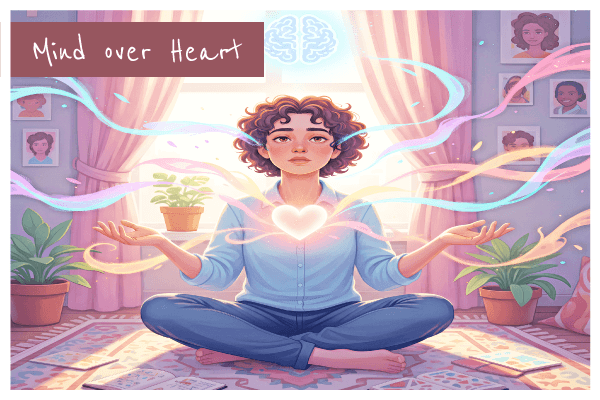
Effectively, they are willing their mind over the pull and desires of the heart.
Outing, especially in modern society, is never truly justified, except in only one nefarious scenario. When a person suppresses and hides who they are publicly, which often results in self-hatred and directing hate toward others who identify in a similar way to their true self. If they use that hatred to cause harm to others, to publicly call for persecution or use their position of power to target the community, and hypocritically at the same time secretly given into their urges, people have the right to call them out privately and publicly. For most, especially those who are just trying to come to terms with their identity, they should be given the time and space to discover and accept their true selves.
So, self-determination is just that: the right to choose for themselves, to define their labels, map out their life story, and to accept that nothing in life has to be fixed or permanent, even central to their identity. They are, as they have always been, themselves. Let us explore some common questions and challenges people face on the journey to self-acceptance.
What if I dreamt about being with someone of the same sex? Am I now gay?
For some people, especially if they repeatedly seek out same-sex encounters and relationships, they might be gay or another LGBTQIA+ identity; however, regardless of the attraction or groups sought out for connection, only they can decide their identity. There are scenarios in which people have thoughts which have not been acted on, which can often cause great confusion. An example is where a guy who is typically attracted to women and one day has a dream about his male best friend, even sexual, based on the dream alone, it might not be desire. The dream might be more about love and deep feelings; feelings expressed as the mind tries to understand how that person feels toward their friend. Strong feelings, love and attraction are not mutually exclusive, and a heterosexual male can experience love for his male friends, similar to the love of a family member, without any sexual desire or attraction.
The key point is that we create environments where people can be themselves, and where it does not matter what labels you use, as long as you are comfortable with who you are and use the identifiers that best represent you. For all scenarios, it is about finding those that best describe how you feel, but what labels a person uses ultimately do not matter; only that you come to terms with the real you, accept who you are, and find and connect with people like you.
I have always been attracted to women and have always identified as a Lesbian, but I have fallen in love with a man. What does that make me now?
People often like to think of sexualities and gender identities as binary and finite, meaning, you are straight, gay or bisexual, cisgender or transgender; however, in reality, life is not black and white, 0 or 1, instead, it is more like a sliding scale. Historically, you might have been more centre-right on the sexuality scale, meaning you were typically labelled as Lesbian, but who you are attracted to is not just about physical appearance or personality; it can also be about the individual and the connection you have with them.
So, if you meet someone who moves you further to the left, it does not change who you are or have always been. It also does not change what is important to you or your desire to find meaningful and lasting connections; only you are in control of the narrative of your life and who you love. So less about labels, more about connection.
I look at myself, and I feel like I am trapped in the wrong body. Am I transgender?
Gender identities have, for some time, challenged people’s understanding of anatomy and gender. When you think of anatomy, contrary to belief, there are male and female, as well as naturally occurring variance, known as Intersex. That is the physical or anatomic makeup; however, everything else we know about gender is societal and taught, such as how we should act, what we should wear, limitations we often, unfairly, place on ourselves, and how we should see ourselves. For many people that identity as transgender, they are unable to connect with their sex at birth or gender; instead, they feel like they are the opposite sex trapped in the wrong body.
A person’s identity is deeply personal and closely tied to their well-being, so it is something you will likely need to explore and further establish to be sure. Today, it might feel daunting to identify as transgender, as, from the news and across social media, it seems many from the community are being targeted in countries around the world; however, even with the risks, it ultimately comes down to how you think and feel and how you wish to live your life. Though it might be challenging and there will be many obstacles ahead, you have to do what is right for you.
My faith and family strongly oppose LGBTQIA+ lifestyles. What should I do?
Intersectionality is important for understanding LGBTQIA+ individuals and the wider community. Intersectionality is often referenced when describing the different aspects of a person’s identity, such as race, gender, class, sexuality, or disability, that overlap and interact to create unique experiences. So, a person can be religious, gay, working class and white all at the same time, with all those identities providing them with a unique experience, as well as a unique set of challenges. When it comes to faith, it can be difficult when all those around you are unable to see past labels or outdated stereotypes, and at the same time, to recognise and remember that you are the same person you have always been.
For people of faith, it is important to align their beliefs and identity with their religion as they journey toward self-acceptance. Nearly all religions have conservative and liberal factions, sects, or denominations that seem to take hardline positions. For every claim of sin and damnation, there are theologians, people within the faith, and scholars who have devoted their lives to studying their religion who have widely debunked some of the more extreme or fixed interpretations, narratives, and positions. It is essential to look at your faith, its history, especially how it treats the community now and in the past, and establish a connection with your faith that does not make you feel that you are not loved or welcome within your beliefs.
For some, they might suppress who they are to maintain family relationships; some may live secret lives; others may come out knowing the risks of potentially alienating those they love; however, it is ultimately your life to live and decide who and when you share who you are.
Only you control your narrative and can decide who you are, who and when to share your story and what labels to use to describe you.
Governments creating hostile environment will not that there will not be any be LGBTQIA+ people now or in the future living or born into that country; instead, those individuals coming to terms with who they are will likely become adept at hiding who they are and keeping themselves safe and by becoming part of a secret community, travelling overseas, all while living in plain sight without being visible to the authorities or broader society.
Fortunately, with decriminalisation of same-sex relationships in many countries around the world and countless brave pioneers, who publicly came out as LGBTQIA+ at a time when it was not as socially accepted, communities and societies as a whole have been able to not only connect with LGBTQIA+ community, but through open and persecution free environments, have establish people that they know and even those that they love who identity as LGBTQIA+. The more people have been able to connect with the community, the more they realise that they have more in common, that people share the same aspirations and hopes for their lives.
The fear, outdated stereotypes and narratives of a community made up of degenerates, which can go from immediate acceptance of the narrative when a person has no one to reference, to more of a challenge to the narrative, stating that it is not how my friend or family member is like. Lived experiences that have resulted in improved understanding and greater acceptance around the world.
Though acceptance has gradually improved in many countries around the world, there is now a fracturing of that support within individual groups that make up the wider community. Groups like gay, lesbian and bisexual have seen increased support and societal acceptance, while the smaller, less known groups, especially those relating to gender identities, have been targeted by political attacks and misinformation spread around the world. Stories are being exaggerated for clickbait, and new laws are introduced to define gender as purely male or female. The hostility that many within the transgender community feel is being felt by the wider community, especially in countries known to be more authoritarian or those countries considered developing nations. Over the past two years, we have seen a distinct shift in rhetoric and laws targeted towards the community.
With over 65 countries still criminalising same-sex relationships and countries like Uganda, Mali, Ghana and Georgia (country) introducing anti-LGBT laws targeting LGBTIQA+ individuals, it is challenging. Countries like Iraq and Burkina Faso introduced laws to criminalise same-sex relationships, and others, like Russia, Belarus, Bulgaria and Hungary, are passing laws to tackle so-called LGBTQIA+ propaganda. Even western countries, seen as historically as more progressive, have passed laws and restriction, like the UK Supreme court ruling around legal gender being based upon sex assigned at birth, followed by similar laws passed in New Zealand, Argentina modifying the 2012 Gender Identity Law and the United States passing executive orders defined as defending Women from Gender Ideology Extremism and Restoring Biological Truth to the Federal Government, as well banning transgender people from sports.
Societal acceptance has been improving; however, with political narratives, targeted campaigns, especially the ones focusing on the transgender community, acceptance is polarising and even fracturing amongst the community itself. Even with all the challenges, younger generations are typically more accepting, and many societies have become more inclusive, allowing people to be themselves. Though it can feel overwhelming, the environment and society are less important, as knowing thyself is the ultimately goal.
Though observation dates like National Coming Out Day and gender and sexual identity awareness periods are designed to help people have the courage to come out and share who they are, it is a journey. One where they should be prepared, ready, and in control of when and how their story is shared. Fear might hold some back, but even if they do not share who they are, the most important thing is that they themselves have come to terms with their truth, with the hope that, with time, they find a way to share that part of who they are with those around them.
When it comes to whom you share, no matter how daunting, the question you should always ask is, do I want this person in my life, now and in the future? If the answer is yes, not sharing, even living a separate life, will likely create a rift, one in which you might not include certain groups in parts of your life. We have learnt with intersectionality, that with all the factors that make you, you, you are best placed to work out an approach around who you include in your life; however, it is always important to evaluate whether you are making decisions based purely based on fear and less on that person’s past behaviours and attitudes. A throwaway, derogatory comment about a fictional character on television is very different when they are confronted by a loved one who wants them in their life.
For those learning more about a friend or loved one, it can often feel like you have been lied to, that you do not know them, but that is not the case. It is not a lie to them if they have been lying to themselves and have not truly come to terms with who they are; most importantly, they are still the same person they have always been. It is a journey not only for them, but also for you. It might be challenging, go against all your beliefs and values, but the question you should always ask is: can I live without them in my life?
The journey of acceptance is not always straightforward and takes work. At times, you might feel a disconnect from yourself and your community and be unable to find people to identify with, but it is all about learning more, understanding yourself better, and ultimately accepting who you are.
Self-acceptance is personal, and one key takeaway, repeated throughout this article, is that it is your life, your narrative, and only you can define who you are and to whom you share it. Ultimately, labels and identities are less important; what really matters is how you think and feel about yourself.
Stay safe and until the next time.