









Rising Tides:
Grassroots Advocacy Turning Corporate Fears into Real Reform
- Atilla Tiriyaki
- Average Reading Time: 8 minutes
- Business & Events, Community
- articles, atillat, guides
What if the brands you like most are not living up to the values they claim to uphold? From rainbow logos and sustainability pledges to ethical sourcing and social justice campaigns, many companies have built their reputations on doing the right thing. But what if the products you buy every day are supported by supply chains linked to exploitation, modern slavery, or regimes whose actions contradict those very values? Let’s explore the growing power of ethical consumerism, how grassroots advocacy is reshaping corporate behaviour, and why every purchase you make is more than a transaction. It’s a vote for the kind of world you want to support.
DISCLAIMER
All published articles are intended for an audience aged 18 years and over and have been written by members of the general public. Many will likely not be journalists nor be affiliated with any professional bodies associated with members of the media. The articles will likely be based on the authors' own opinions, views, and experiences...more
Picture your favourite clothing, food, or retail brand. It may be a company you have been loyal to for years, one that publicly promotes progressive values and champions the rights of minority groups. Now imagine discovering that the same company relies on supply chains connected to organisations or individuals linked to modern-day slavery, or sources materials from countries with close ties to repressive regimes.
The products or components obtained through these supply chains may represent only a small part of the finished item, appearing insignificant within the overall product. Yet they expose a disconnect between the company’s public values and its business practices. In many industries, there are few legal or consumer-driven requirements for organisations to disclose the full extent of their supply chains. As a result, greater transparency often comes only after questionable relationships are uncovered through investigations or public scrutiny.
Large corporations are often driven by commercial pressures, and senior leadership may not have full visibility of every tier of their supply chain. Nevertheless, organisations remain ultimately accountable for decisions made on their behalf. When consumers become aware of unethical practices and respond by changing their purchasing behaviour, companies often act quickly to protect their reputation and market position.
Many consumers are led to believe they have little power to influence corporate behaviour, that there are no viable alternatives, that ethical choices are unaffordable, or that complex global supply chains make meaningful change impossible. In reality, none of these assumptions is necessarily true.
Let’s explore the power of grassroots advocacy and demonstrate how informed consumer choices can drive corporate accountability and lasting change.
The products or components obtained through these supply chains may represent only a small part of the finished item, appearing insignificant within the overall product. Yet they expose a disconnect between the company’s public values and its business practices. In many industries, there are few legal or consumer-driven requirements for organisations to disclose the full extent of their supply chains. As a result, greater transparency often comes only after questionable relationships are uncovered through investigations or public scrutiny.
Large corporations are often driven by commercial pressures, and senior leadership may not have full visibility of every tier of their supply chain. Nevertheless, organisations remain ultimately accountable for decisions made on their behalf. When consumers become aware of unethical practices and respond by changing their purchasing behaviour, companies often act quickly to protect their reputation and market position.
Many consumers are led to believe they have little power to influence corporate behaviour, that there are no viable alternatives, that ethical choices are unaffordable, or that complex global supply chains make meaningful change impossible. In reality, none of these assumptions is necessarily true.
Let’s explore the power of grassroots advocacy and demonstrate how informed consumer choices can drive corporate accountability and lasting change.
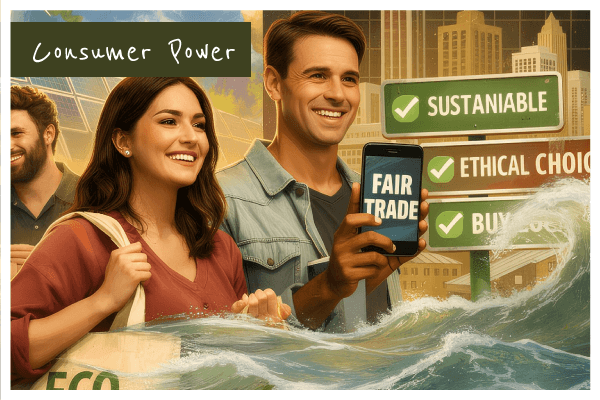
Grassroots advocacy is a form of collective action that seeks to bring about social or political change through the efforts of ordinary citizens. Rather than being driven top-down, grassroots movements emerge from communities and individuals who unite around a shared cause. When enough people participate, these movements can influence policymakers, shape public opinion, and encourage organisations to change their behaviour.
One recent example is the suspension of the late-night television programme Jimmy Kimmel Live. Jimmy Kimmel, a long-standing critic of the Trump administration, saw his programme suspended in September 2025 following a decision by ABC and its parent company, Disney. At the time, the suspension was widely reported to be linked to pressure from senior Trump officials and to controversy surrounding the reporting of the assassination of Turning Point founder and commentator Charlie Kirk.
The announcement prompted an immediate public response. Free speech advocates, critics of the Trump administration, and loyal viewers of the programme voiced opposition across social media and traditional news outlets. More significantly, many consumers sought to exert pressure through their purchasing decisions, cancelling subscriptions and boycotting Disney-owned services.
Over the following five days, public criticism intensified. Politicians, entertainers, journalists, and commentators condemned the decision, while consumer action reportedly led to approximately 1.3 million cancelled streaming subscriptions. During the same period, Disney’s share price fell by around 3%, alongside advertising revenue losses linked to the programme’s suspension.
Faced with sustained public and commercial pressure, the company reversed its decision and reinstated Jimmy Kimmel Live. On his return, Kimmel addressed the Charlie Kirk controversy in an emotional opening monologue.
Although the Kimmel suspension is a recent example, it is far from unique. Consumers have long used their collective purchasing power to signal dissatisfaction with corporate decisions, business practices, or brand values. When enough customers change their spending habits, companies are often compelled to reassess their position to protect their reputation and market share.
For many consumers, affordability remains an important consideration. However, ethical boundaries often outweigh price alone, particularly when issues such as human rights, exploitation, or corporate integrity are at stake. In the absence of comprehensive legal requirements for supply chain transparency, many organisations seek to reassure customers by adopting anti-slavery policies, environmental commitments, and ethical sourcing standards. While these initiatives can represent genuine progress, they also reflect the growing influence of consumers who increasingly expect businesses to align their actions with the values they publicly promote.
One recent example is the suspension of the late-night television programme Jimmy Kimmel Live. Jimmy Kimmel, a long-standing critic of the Trump administration, saw his programme suspended in September 2025 following a decision by ABC and its parent company, Disney. At the time, the suspension was widely reported to be linked to pressure from senior Trump officials and to controversy surrounding the reporting of the assassination of Turning Point founder and commentator Charlie Kirk.
The announcement prompted an immediate public response. Free speech advocates, critics of the Trump administration, and loyal viewers of the programme voiced opposition across social media and traditional news outlets. More significantly, many consumers sought to exert pressure through their purchasing decisions, cancelling subscriptions and boycotting Disney-owned services.
Over the following five days, public criticism intensified. Politicians, entertainers, journalists, and commentators condemned the decision, while consumer action reportedly led to approximately 1.3 million cancelled streaming subscriptions. During the same period, Disney’s share price fell by around 3%, alongside advertising revenue losses linked to the programme’s suspension.
Faced with sustained public and commercial pressure, the company reversed its decision and reinstated Jimmy Kimmel Live. On his return, Kimmel addressed the Charlie Kirk controversy in an emotional opening monologue.
Although the Kimmel suspension is a recent example, it is far from unique. Consumers have long used their collective purchasing power to signal dissatisfaction with corporate decisions, business practices, or brand values. When enough customers change their spending habits, companies are often compelled to reassess their position to protect their reputation and market share.
For many consumers, affordability remains an important consideration. However, ethical boundaries often outweigh price alone, particularly when issues such as human rights, exploitation, or corporate integrity are at stake. In the absence of comprehensive legal requirements for supply chain transparency, many organisations seek to reassure customers by adopting anti-slavery policies, environmental commitments, and ethical sourcing standards. While these initiatives can represent genuine progress, they also reflect the growing influence of consumers who increasingly expect businesses to align their actions with the values they publicly promote.
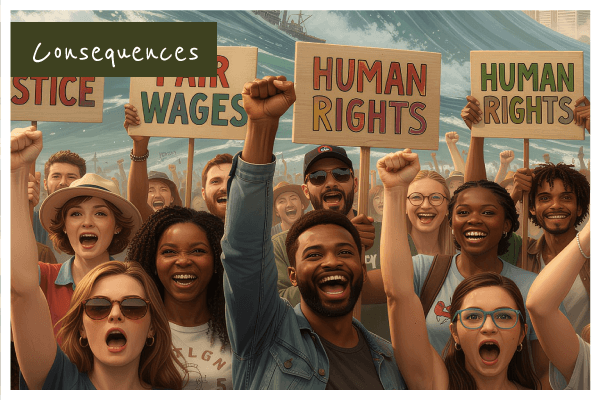
Companies often defend questionable business practices or controversial supply chains by arguing that ethical alternatives would raise costs or reduce the availability of products and services. These claims are often accompanied by warnings that even modest changes would lead to higher prices for consumers, yet they are rarely supported by detailed financial evidence. At the same time, many of these organisations continue to report record profits for shareholders. The result is a narrative that amplifies consumer concerns about rising prices at a time when many households are already under significant financial pressure.
There is little doubt that replacing major suppliers or restructuring complex supply chains can incur additional costs. However, the fundamental question is not whether change has a financial impact, but whether a company is willing to accept a lower profit margin in exchange for operating in ways that reflect its stated values. Ultimately, this is a strategic decision about the brand’s identity and integrity.
Building a trusted brand requires years of investment, consistency, and public confidence, yet that trust can be lost remarkably quickly. A well-known example in the United Kingdom is the collapse of the Ratners jewellery brand. In 1991, its chief executive, Gerald Ratner, addressed the Institute of Directors and joked that the company’s products were so inexpensive because they were of poor quality. Although intended as humour, the remarks severely damaged consumer confidence. Customers questioned the value of the products they had purchased, sales declined rapidly, and the business never fully recovered from the reputational damage.
The fall of Ratners shows that public perception can be as important as financial performance. Consumers do not simply buy products; they buy into a company’s reputation, values, and credibility. When that trust is eroded, the commercial consequences can be severe.
Businesses ultimately exist to generate profit, but they also recognise that their long-term success depends on maintaining public confidence. Negative publicity, consumer boycotts, and reputational damage pose significant commercial risks. Once trust is lost, rebuilding it can take years, and in some cases it is never fully restored.
There is little doubt that replacing major suppliers or restructuring complex supply chains can incur additional costs. However, the fundamental question is not whether change has a financial impact, but whether a company is willing to accept a lower profit margin in exchange for operating in ways that reflect its stated values. Ultimately, this is a strategic decision about the brand’s identity and integrity.
Building a trusted brand requires years of investment, consistency, and public confidence, yet that trust can be lost remarkably quickly. A well-known example in the United Kingdom is the collapse of the Ratners jewellery brand. In 1991, its chief executive, Gerald Ratner, addressed the Institute of Directors and joked that the company’s products were so inexpensive because they were of poor quality. Although intended as humour, the remarks severely damaged consumer confidence. Customers questioned the value of the products they had purchased, sales declined rapidly, and the business never fully recovered from the reputational damage.
The fall of Ratners shows that public perception can be as important as financial performance. Consumers do not simply buy products; they buy into a company’s reputation, values, and credibility. When that trust is eroded, the commercial consequences can be severe.
Businesses ultimately exist to generate profit, but they also recognise that their long-term success depends on maintaining public confidence. Negative publicity, consumer boycotts, and reputational damage pose significant commercial risks. Once trust is lost, rebuilding it can take years, and in some cases it is never fully restored.
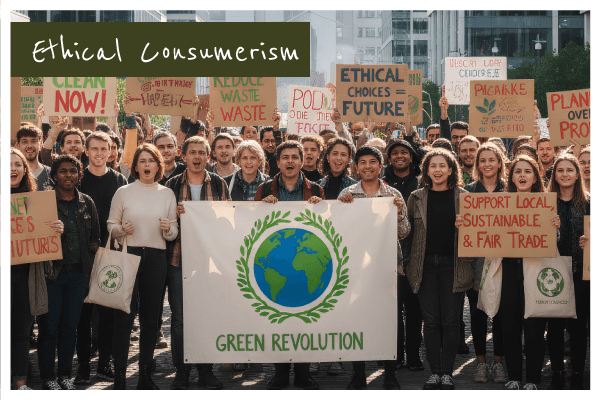
Meaningful transparency is unlikely to become the norm without stronger legal and regulatory requirements. A company that publicly champions LGBTQIA+ rights while simultaneously investing heavily in countries that actively persecute LGBTQIA+ communities should expect public scrutiny. Organisations that align themselves with social causes should also expect to be held accountable for ensuring that their business practices, including their supply chains, reflect the values they promote.
For many people, every purchase draws on their hard-earned income. Yet ethical sourcing is often marketed as a premium feature rather than treated as a fundamental business responsibility. While changing suppliers or restructuring supply chains may incur additional costs, those costs should not be automatically passed on through price increases. Instead, businesses should recognise that ethical practices are an investment in brand reputation, customer trust, and long-term loyalty.
This principle also applies to how companies reward different customer groups. Many businesses regularly offer discounts of 20% or more to attract new customers, while expecting loyal, long-standing customers to continue paying full price. Such strategies can unintentionally signal that new customer acquisition is valued more highly than existing customer loyalty. In reality, retaining existing customers is often more cost-effective than continually acquiring new ones, particularly when the substantial marketing costs of attracting new customers are taken into account.
Ethical consumerism is ultimately about more than supply chains alone. It is about transparency, accountability, and ensuring that a company’s values are consistently reflected in its commercial decisions. As consumers become more informed, an important question emerges: if people had complete visibility into the journey behind every product they purchased, would they continue to support the same brands?
The debate over price and availability is equally significant. As industries consolidate through mergers and acquisitions, competition can diminish, leaving consumers with fewer meaningful alternatives. In markets with limited choice, ethical purchasing becomes more difficult. This makes transparency even more important, enabling consumers to make informed decisions based not only on price and quality but also on the values and practices of the companies they choose to support.
For many people, every purchase draws on their hard-earned income. Yet ethical sourcing is often marketed as a premium feature rather than treated as a fundamental business responsibility. While changing suppliers or restructuring supply chains may incur additional costs, those costs should not be automatically passed on through price increases. Instead, businesses should recognise that ethical practices are an investment in brand reputation, customer trust, and long-term loyalty.
This principle also applies to how companies reward different customer groups. Many businesses regularly offer discounts of 20% or more to attract new customers, while expecting loyal, long-standing customers to continue paying full price. Such strategies can unintentionally signal that new customer acquisition is valued more highly than existing customer loyalty. In reality, retaining existing customers is often more cost-effective than continually acquiring new ones, particularly when the substantial marketing costs of attracting new customers are taken into account.
Ethical consumerism is ultimately about more than supply chains alone. It is about transparency, accountability, and ensuring that a company’s values are consistently reflected in its commercial decisions. As consumers become more informed, an important question emerges: if people had complete visibility into the journey behind every product they purchased, would they continue to support the same brands?
The debate over price and availability is equally significant. As industries consolidate through mergers and acquisitions, competition can diminish, leaving consumers with fewer meaningful alternatives. In markets with limited choice, ethical purchasing becomes more difficult. This makes transparency even more important, enabling consumers to make informed decisions based not only on price and quality but also on the values and practices of the companies they choose to support.
Ultimately, ethical consumerism comes down to informed choice. When companies are exposed for engaging in unfair practices or for relying on supply chains that conflict with the values they publicly promote, consumers have the power to decide whether those businesses continue to merit their support.
Even in markets with limited competition, consumer influence remains significant. The substantial resources some organisations devote to public relations, reputation management, and damage control after a scandal could instead be directed towards building ethical supply chains, maintaining fair prices, and ensuring that their business practices genuinely reflect the values they claim to uphold.
The foundation of ethical consumerism is accountability and transparency. Companies that publicly align with social or ethical causes should be prepared to demonstrate that those commitments extend beyond marketing campaigns and into every aspect of their operations. Where organisations promote values that are contradicted by their business practices, they should expect scrutiny from consumers, regulators, and the wider public.
Greater transparency would also enable consumers to make more informed purchasing decisions. Clear, independent, and easily understood standards or certification schemes could provide confidence that a company’s operations and supply chains have been assessed against recognised ethical criteria. Rather than relying solely on corporate claims, consumers would have meaningful information to inform their choices.
Doing the right thing should not be treated as a premium feature or a marketing advantage. Ethical supply chains should become the expected standard, not the exception. As consumers become more informed and more connected, grassroots advocacy and collective purchasing power will continue to shape corporate behaviour. In the end, every purchase is more than a financial transaction; it is a decision about which values to support.
Stay safe until the next time.
Even in markets with limited competition, consumer influence remains significant. The substantial resources some organisations devote to public relations, reputation management, and damage control after a scandal could instead be directed towards building ethical supply chains, maintaining fair prices, and ensuring that their business practices genuinely reflect the values they claim to uphold.
The foundation of ethical consumerism is accountability and transparency. Companies that publicly align with social or ethical causes should be prepared to demonstrate that those commitments extend beyond marketing campaigns and into every aspect of their operations. Where organisations promote values that are contradicted by their business practices, they should expect scrutiny from consumers, regulators, and the wider public.
Greater transparency would also enable consumers to make more informed purchasing decisions. Clear, independent, and easily understood standards or certification schemes could provide confidence that a company’s operations and supply chains have been assessed against recognised ethical criteria. Rather than relying solely on corporate claims, consumers would have meaningful information to inform their choices.
Doing the right thing should not be treated as a premium feature or a marketing advantage. Ethical supply chains should become the expected standard, not the exception. As consumers become more informed and more connected, grassroots advocacy and collective purchasing power will continue to shape corporate behaviour. In the end, every purchase is more than a financial transaction; it is a decision about which values to support.
Stay safe until the next time.

Learn more about the exceptional LGBTQIA+ community, discover the community’s history, the ongoing movement for equality, the size of the community and how much it contributes to the world economy, frequently asked questions and much more.

Learn more about the exceptional individuals and groups that advocated and fought hard throughout history to improve LGBTQIA+ rights and conditions across the world
Learn more about how individual countries and regions around the world treat members of the LGBTQIA+ community. From the status and laws of same-sex marriages to gender identity recognition, this easy-to-use equality index provides a score and breakdown for every country worldwide.





IMPORTANT DISCLAIMER: All published articles have been written by members of the general public. Many will likely not be journalists nor be affiliated with any professional bodies associated with members of the media. The articles will likely be based on the authors’ own opinions, views, and experiences. Gayther does not endorse or accept any responsibility or liability regarding any materials within the news and media pages. This page may contain external links to third party websites; Gayther provides these links for your convenience and does not endorse, warrant or recommend any particular products or services. By clicking on any external links, you will leave Gayther and be taken to the third-party website, which you do so at your own risk and by accessing the site, you will be required to comply with the external third party’s terms and conditions of use and privacy policies
Discover all of the topical articles written by people from across the community and friends, all sharing their stories, opinions and experiences