








Vocal, opinionated, anxious, lonely, are just some of the words commonly used when describing people from Generation Z; however, though it might be true for some, there is so much more to people born since the turn of the millennium. A generation that has grown up amid some of the worst worldwide events of the past 50 years, yet many of whom still show empathy, care for their community, and a passion for the environment and the political landscape. Let us explore Gen Z, the obstacles and unique characteristics many within this generation have had to face, and the many positive effects they are having on their environments, countries and the world around them.
DISCLAIMER
All published articles are intended for an audience aged 18 years and over and have been written by members of the general public. Many will likely not be journalists nor be affiliated with any professional bodies associated with members of the media. The articles will likely be based on the authors' own opinions, views, and experiences...more
In 2025, the generation in focus, those who are becoming adults, joining the workforce, starting families and represent the future for the next 20 plus years are those born between 1997 to 2012, a group better known as are Generation Z or Gen Z. A generation known for sharing, for their comfort and ease with both social media and technology as well as growing up amongst some of the most challenging world events over the past 50 years. Gen Z individuals are often portrayed as self-entitled and vocal about sharing their thoughts and feelings; however, there is so much about Gen Z that is not always discussed or explored.
A generation of people who seemingly embrace diversity, value ethnicity, seek fortune and success, but do not celebrate success alone; instead, ask how it was achieved and whether it was done ethically. They are also a generation known to struggle the most with mental health issues, disillusioned by the world around them, especially relating to politics and past generations’ responses to the environment and society as a whole. A generation seemingly stressed and anxious much of the time, worried about their future, especially those entering the workforce and concerned about the environment and the impact AI will have on their lives and careers.
Though much of it is opinion, as the generation in focus and often cited in many studies and media reports, let us explore what it means to be Gen Z and some of the challenges many in this generation might face.
A generation of people who seemingly embrace diversity, value ethnicity, seek fortune and success, but do not celebrate success alone; instead, ask how it was achieved and whether it was done ethically. They are also a generation known to struggle the most with mental health issues, disillusioned by the world around them, especially relating to politics and past generations’ responses to the environment and society as a whole. A generation seemingly stressed and anxious much of the time, worried about their future, especially those entering the workforce and concerned about the environment and the impact AI will have on their lives and careers.
Though much of it is opinion, as the generation in focus and often cited in many studies and media reports, let us explore what it means to be Gen Z and some of the challenges many in this generation might face.
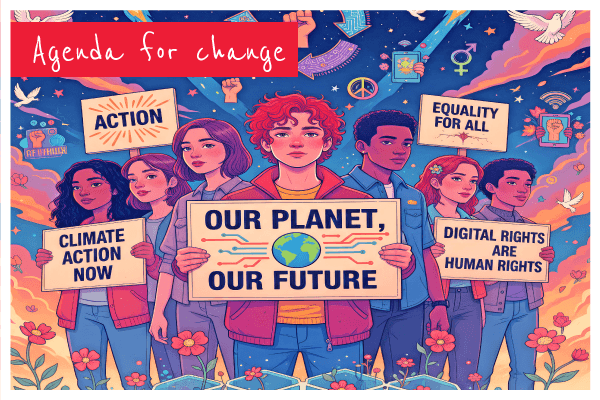
For many past generations, though they likely each face different obstacles and challenges throughout their lives, it is fair to say that, for many Gen Z people, it has not been easy. Whether it was the fear surrounding the turn of the century, the events surrounding the World Trade Centre, and the various wars in the Middle East influencing many of their early years, to the financial crash from 2007 to 2009, then the global COVID-19 pandemic in 2019, which is still impacting many lives and people worldwide today. All of these challenges, it is hard to recall a period in this generation’s lifetime where it has not been affected by war, disease or periods of isolation, which all likely contribute to their mental health.
Even without a reference point in time, a happier time, there are still so many reasons they would be afraid of change. Many Gen Z people are concerned about the environment and society as a whole. Given the availability and ease of use of social media platforms, many Gen Zers seem to prefer connection over consumption. Finding voices, channels, influencers and personalities they trust and where they establish a connection. The ease of social media has meant many Gen Zers are passionate about the future, about building something better, and they seem to highlight and even share problematic behaviours with millions of people worldwide quickly and easily.
There is no doubt that Gen Z has been the driving force behind many recent political movements. During his 2024 presidential campaign, President Donald Trump said that, with advice from his teenage son, Baron, he engaged with many Gen Zers through platforms such as TikTok and appeared on popular YouTube podcasts, all of which he said were significant factors in his election win. Gen Zers were driving forces in Argentina’s 2023 presidential campaign, where President Milei built a large online following, which included many Gen Zers. There are countless examples worldwide, including the so-called first successful Gen Z revolution, in which youth-led protests took place in Bangladesh, as well as the mass youth-led protests in Kenya against the controversial Finance Bill in 2024, and the anti-corruption protests driven predominantly by Gen Z students in Nepal in 2025.
Activism and political engagement seem important to many Gen Zers. According to research by United Way of the National Capital Area, which surveyed 1,000 Americans leading up to the 2024 election, almost one-third (32%) of Gen Zers regularly engaged in activism or social justice work. 8% higher than millennials, and over half of Gen Zers (51%) have participated in rallies or protests to support specific causes or social issues. All highlighting, both good and bad, how many Gen Zers are not afraid to challenge the status quo, drive change, and ensure their voices are heard.
Even without a reference point in time, a happier time, there are still so many reasons they would be afraid of change. Many Gen Z people are concerned about the environment and society as a whole. Given the availability and ease of use of social media platforms, many Gen Zers seem to prefer connection over consumption. Finding voices, channels, influencers and personalities they trust and where they establish a connection. The ease of social media has meant many Gen Zers are passionate about the future, about building something better, and they seem to highlight and even share problematic behaviours with millions of people worldwide quickly and easily.
There is no doubt that Gen Z has been the driving force behind many recent political movements. During his 2024 presidential campaign, President Donald Trump said that, with advice from his teenage son, Baron, he engaged with many Gen Zers through platforms such as TikTok and appeared on popular YouTube podcasts, all of which he said were significant factors in his election win. Gen Zers were driving forces in Argentina’s 2023 presidential campaign, where President Milei built a large online following, which included many Gen Zers. There are countless examples worldwide, including the so-called first successful Gen Z revolution, in which youth-led protests took place in Bangladesh, as well as the mass youth-led protests in Kenya against the controversial Finance Bill in 2024, and the anti-corruption protests driven predominantly by Gen Z students in Nepal in 2025.
Activism and political engagement seem important to many Gen Zers. According to research by United Way of the National Capital Area, which surveyed 1,000 Americans leading up to the 2024 election, almost one-third (32%) of Gen Zers regularly engaged in activism or social justice work. 8% higher than millennials, and over half of Gen Zers (51%) have participated in rallies or protests to support specific causes or social issues. All highlighting, both good and bad, how many Gen Zers are not afraid to challenge the status quo, drive change, and ensure their voices are heard.
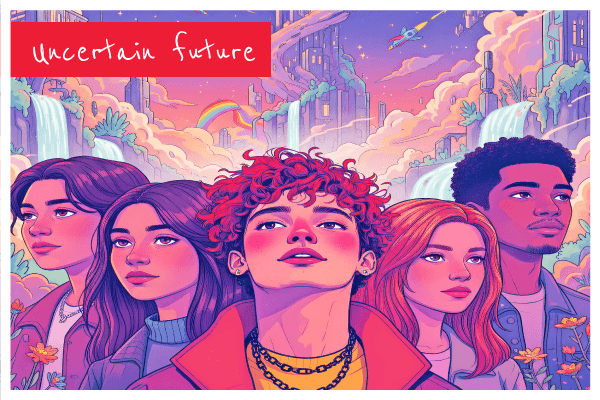
Gen Z individuals are the first generation to grow up with both the internet and smartphones. The ease, availability, and comfort with technology mean that many spend hours of their day online, talking to friends and family via apps, getting the latest news from social media, and commenting on posts and videos across various platforms. The rise in popularity of social media and platforms’ attempts to curb fake news and false information have left many Gen Zers unsure whether what they are being told is genuine. With online AI tools such as ChatGPT’s DALL-E 3, OpenAI’s Sora, and other image and video tools such as Midjourney, Adobe Firefly, Runway ML, and Synthesia, realistic AI images and videos are emerging, making it often difficult to tell what is fake and what is real.
Artificial Intelligence is seemingly creating the next major industrial revolution, and governments across the globe seem unsure or unwilling to regulate how AI is used, leaving many people around the world fearful of what the future will look like for work, income, and careers. Jobs and careers that might be redundant in the near future, those that do not exist today, and new jobs and careers that present opportunities for the youth for the future are questions and challenges many young people face today. Though AI is creating significant uncertainty for many Gen Zers, they are becoming early adopters and embracing its use in their daily lives.
In the report, Online Nation Research, carried out by the UK’s communications services regulator (Ofcom) in 2024, found that among young adults and teenagers, 54% had used AI tools in the past year, compared to the average adult usage, which is lower at 41%. Males aged 16+ were more likely than females to have used a generative AI tool, and Snapchat was one of the most popular generative AI tools among children and teens in 2024, with 43% of users. ChatGPT was the most widely used generative AI service, and its adult reach was highest among the age group 18-24 at 27% (1.4 million people).
Though many Gen Zers are attending higher education, with wars, economic downturns, and rising costs, youth unemployment worldwide remains high compared to periods prior to 2017. According to the 2025 World Economic Forum’s Future of Jobs Report, organisations surveyed expect 41% of their workforce to be reduced before 2030 due to automation. With so much uncertainty, many Gen Zers are turning to apprenticeships and vocational training. According to Forbes, 37% of Gen Z graduates are pursuing or already employed in blue-collar work, attracted by stability, pay and automation-resistant roles.
With conflicts, financial instability, rising costs and unemployment, coupled with AI and emerging technologies, it is difficult for many young people, especially those Gen Zers entering the workforce, to plan and work towards a career with so many moving parts and variables. Long-respected, well-paid jobs today might be performed by AI in the future, and humans might still perform some manual and skilled labour for years to come; however, it is hard to know what businesses, work opportunities and the overall workforce will look like in 10 or 20 years.
Artificial Intelligence is seemingly creating the next major industrial revolution, and governments across the globe seem unsure or unwilling to regulate how AI is used, leaving many people around the world fearful of what the future will look like for work, income, and careers. Jobs and careers that might be redundant in the near future, those that do not exist today, and new jobs and careers that present opportunities for the youth for the future are questions and challenges many young people face today. Though AI is creating significant uncertainty for many Gen Zers, they are becoming early adopters and embracing its use in their daily lives.
In the report, Online Nation Research, carried out by the UK’s communications services regulator (Ofcom) in 2024, found that among young adults and teenagers, 54% had used AI tools in the past year, compared to the average adult usage, which is lower at 41%. Males aged 16+ were more likely than females to have used a generative AI tool, and Snapchat was one of the most popular generative AI tools among children and teens in 2024, with 43% of users. ChatGPT was the most widely used generative AI service, and its adult reach was highest among the age group 18-24 at 27% (1.4 million people).
Though many Gen Zers are attending higher education, with wars, economic downturns, and rising costs, youth unemployment worldwide remains high compared to periods prior to 2017. According to the 2025 World Economic Forum’s Future of Jobs Report, organisations surveyed expect 41% of their workforce to be reduced before 2030 due to automation. With so much uncertainty, many Gen Zers are turning to apprenticeships and vocational training. According to Forbes, 37% of Gen Z graduates are pursuing or already employed in blue-collar work, attracted by stability, pay and automation-resistant roles.
With conflicts, financial instability, rising costs and unemployment, coupled with AI and emerging technologies, it is difficult for many young people, especially those Gen Zers entering the workforce, to plan and work towards a career with so many moving parts and variables. Long-respected, well-paid jobs today might be performed by AI in the future, and humans might still perform some manual and skilled labour for years to come; however, it is hard to know what businesses, work opportunities and the overall workforce will look like in 10 or 20 years.
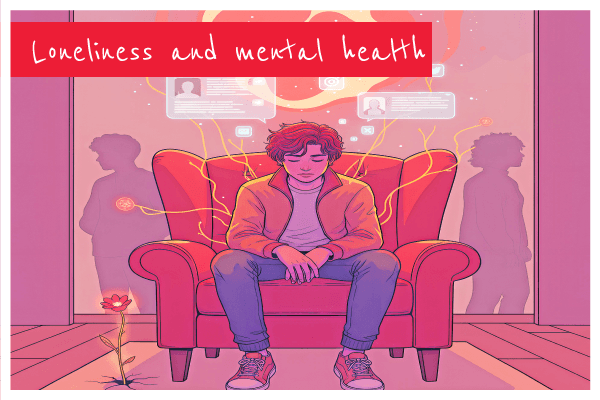
Many Generation Z individuals are believed to suffer from mental health issues, as well as from loneliness. With high digital and technology adoption and the availability of apps and social media services, it is believed that these are significant factors contributing to why so many feel isolated and disconnected. Coupled with a reliance on digital communication, the prolonged shutdown during the Covid-19 pandemic, and a lack of face-to-face social opportunities, it is challenging for many Gen Zers, which is why they are often referred to as the loneliest generation.
The political and economic environment is likely another significant factor. For example, in Japan, the number of young people referred to as Hikikomori is growing. Societal pressures, social withdrawal and a feeling of failure cause many people to suffer from mental health issues. Though Hikikomori is seen as a phenomenon, it is a condition characterised by extreme avoidance of social contact and can result in people withdrawing from society, such as by not attending school or seeking employment. Though historically occurring in Japan, the phenomenon is now spreading worldwide, with terms such as Nini (Ni estudia, ni trabaja) in much of Latin America, NEETs (Not in Education, Employment, or Training) in parts of Europe, and Hidden Youth in many Asian countries. Ultimately, regardless of the term, the condition relates to social withdrawal or social recluse.
Finding love and romance can be challenging for many Gen Z individuals as well. With movements such as the conversatisim and the mannisphere often creating divides between the genders and the rise of heteropessimism and those that are actively choosing celibacy, there is growing evidence that there is not only a decline in sexual activity, but also in people forming relationships. According to the Center for Disease Control and Prevention (CDC)’s National Survey of Family Growth in the United States, between 2022 and 2023, 24% of men and 13% of women aged 22 to 34 reported no sexual activity in the past year, with many Gen Z people often prioritising their careers and success over romantic relationships.
The growing divide between genders and a lack of focus on relationships often creates an environment in which there is a psychological fear of rejection, where people frequently remain in the talking stages for prolonged periods of time and where meaningful relationships are not being formed. The lack of relationship formation is also affecting birth rates worldwide. Reports from around the world indicate that countries are experiencing low fertility rates. Italy has declared its fertility rate a national emergency; Spain saw its lowest birth rate since 1943; and in the UK, births were reported at 1.4 per woman.
The political and economic environment is likely another significant factor. For example, in Japan, the number of young people referred to as Hikikomori is growing. Societal pressures, social withdrawal and a feeling of failure cause many people to suffer from mental health issues. Though Hikikomori is seen as a phenomenon, it is a condition characterised by extreme avoidance of social contact and can result in people withdrawing from society, such as by not attending school or seeking employment. Though historically occurring in Japan, the phenomenon is now spreading worldwide, with terms such as Nini (Ni estudia, ni trabaja) in much of Latin America, NEETs (Not in Education, Employment, or Training) in parts of Europe, and Hidden Youth in many Asian countries. Ultimately, regardless of the term, the condition relates to social withdrawal or social recluse.
Finding love and romance can be challenging for many Gen Z individuals as well. With movements such as the conversatisim and the mannisphere often creating divides between the genders and the rise of heteropessimism and those that are actively choosing celibacy, there is growing evidence that there is not only a decline in sexual activity, but also in people forming relationships. According to the Center for Disease Control and Prevention (CDC)’s National Survey of Family Growth in the United States, between 2022 and 2023, 24% of men and 13% of women aged 22 to 34 reported no sexual activity in the past year, with many Gen Z people often prioritising their careers and success over romantic relationships.
The growing divide between genders and a lack of focus on relationships often creates an environment in which there is a psychological fear of rejection, where people frequently remain in the talking stages for prolonged periods of time and where meaningful relationships are not being formed. The lack of relationship formation is also affecting birth rates worldwide. Reports from around the world indicate that countries are experiencing low fertility rates. Italy has declared its fertility rate a national emergency; Spain saw its lowest birth rate since 1943; and in the UK, births were reported at 1.4 per woman.
Though the world seems challenging right now, and the problems many Gen Z people face might seem insurmountable, the reality is that, despite all the challenges, Gen Z people are showing real resilience. A drive and desire to bring about change, to challenge the status quo and to hold those in power to account. For example, many Gen Z individuals within the UK have vocally opposed the state retirement system. A system that requires the working population to contribute towards past generations, with the promise that when they reach retirement age, they too will receive similar benefits. However, with rising retirement ages and struggling economies, many Gen Zers are raising objections to paying for a system that will likely not exist or be available when they retire. An issue that creates contention: many in retirement feel they contributed to the system and covered the cost for previous generations throughout their working lives, while younger generations are often seen as unappreciative and devoid of social responsibility.
Even in politics, though not always successful, Gen Zers seem not to be afraid to take risks and help political outsiders, even those outside the mainstream political system, gain power, especially those promising radical change. When those politicians and political parties gain power and fail to deliver on their promises, the same people who helped them gain power begin to mobilise and protest for change and for their removal from office. AI is causing great concern to many people right now; however, it does not seem to stop Gen Zers from embracing and adopting new technology and developments.
Though many of the challenges are significant, Gen Zers are resilient and seem unfazed by change. Their empathy, emotional intelligence, and ability to question the world around them likely mean that, in the future, when people from Generation Z are in positions of power, the world will be an interesting place.
Stay safe, and until the next time.
Even in politics, though not always successful, Gen Zers seem not to be afraid to take risks and help political outsiders, even those outside the mainstream political system, gain power, especially those promising radical change. When those politicians and political parties gain power and fail to deliver on their promises, the same people who helped them gain power begin to mobilise and protest for change and for their removal from office. AI is causing great concern to many people right now; however, it does not seem to stop Gen Zers from embracing and adopting new technology and developments.
Though many of the challenges are significant, Gen Zers are resilient and seem unfazed by change. Their empathy, emotional intelligence, and ability to question the world around them likely mean that, in the future, when people from Generation Z are in positions of power, the world will be an interesting place.
Stay safe, and until the next time.

Taking pride in having Youth. Acceptance and coming to terms with a part of what makes you can be challenging for many people. The Gayther Taking pride in being series is about celebrating all things, showcasing exceptional people, interesting facts and ways to connect with those unique communities, all designed to help and promote Taking pride in being LGBTQIA+ identities.

Discover all of the topical articles and the latest community news. Whether you are looking for news stories, articles reflecting topical subjects written by people from the community or the latest trends. Gayther is here to provide you with the information you need when you need it.
Learn more about the exceptional LGBTQIA+ community, discover the community’s history, the ongoing movement for equality, the size of the community and how much it contributes to the world economy, frequently asked questions and much more.






IMPORTANT DISCLAIMER: All published articles have been written by members of the general public. Many will likely not be journalists nor be affiliated with any professional bodies associated with members of the media. The articles will likely be based on the authors’ own opinions, views, and experiences. Gayther does not endorse or accept any responsibility or liability regarding any materials within the news and media pages. This page may contain external links to third party websites; Gayther provides these links for your convenience and does not endorse, warrant or recommend any particular products or services. By clicking on any external links, you will leave Gayther and be taken to the third-party website, which you do so at your own risk and by accessing the site, you will be required to comply with the external third party’s terms and conditions of use and privacy policies
Discover all of the topical articles written by people from across the community and friends, all sharing their stories, opinions and experiences