









LGBTQIA+ Travel Guides:
Destination Toronto
- Atilla Tiriyaki
- Average Reading Time: 29 minutes
- Travel
- articles, atillat, guides
Toronto is known by many names: The 6ix, The Queen City, even The Centre of the Universe, but no word or term can quite capture its electric, unapologetic spirit that pulses through its streets. A city and country that has long led the world in LGBTQIA+ rights, this sprawling, six-district metropolis has built an integrated queer culture so woven into its DNA that it is an integral part of its identity. For LGBTQIA+ travellers, whether you’re drawn to the rainbow crosswalks of Church & Wellesley Village, the indie queer art scenes blooming across its neighbourhoods, or simply the knowledge that here you can walk hand-in-hand without a second thought, Toronto offers more than a welcoming vibe; it delivers a vibrant, ever-evolving scene filled with iconic nightlife, inclusive spaces, and one of the world’s most dynamic Pride celebrations. Whether you’re here to dance until sunrise, explore queer history, or soak in the city’s open-hearted energy, Toronto the Good makes good on its name, a top Canadian break for a good reason, as this city has a lot to offer.
DISCLAIMER
All published articles are intended for an audience aged 18 years and over and have been written by members of the general public. Many will likely not be journalists nor be affiliated with any professional bodies associated with members of the media. The articles will likely be based on the authors' own opinions, views, and experiences...more
Located in South-eastern Canada on the north-western shore of Lake Ontario, Toronto is the capital of the province of Ontario and the fourth-largest city by population in North America. Toronto comprises the city and the metropolitan area, known as the Greater Toronto Area (GTA). The city covers 631 square kilometres (243.7 square miles) and has a population of over 3 million, while the GTA covers 5,902.7 square kilometres (2,279 square miles) and has a population of 6.5 million.
The city of Toronto is divided into six administrative boroughs (Old Toronto, Etobicoke, North York, Scarborough, York, and East York) and 158 neighbourhoods. The city stretches 43 km east-to-west and 21 km north-to-south, and is home to many green spaces: over 1,600 parks and roughly 10 million trees. The city has a 46-kilometre (29-mile) coastline and a chain of 15 small islands. The downtown core and central area are the heart of the city, home to iconic landmarks in the Toronto cityscape, such as the CN Tower and the Eaton Centre, as well as the financial districts. These factors explain why the city sees over 28 million visitors each year and why it is a leading tourist destination in Canada.
Some interesting facts you might not know:
The city of Toronto is divided into six administrative boroughs (Old Toronto, Etobicoke, North York, Scarborough, York, and East York) and 158 neighbourhoods. The city stretches 43 km east-to-west and 21 km north-to-south, and is home to many green spaces: over 1,600 parks and roughly 10 million trees. The city has a 46-kilometre (29-mile) coastline and a chain of 15 small islands. The downtown core and central area are the heart of the city, home to iconic landmarks in the Toronto cityscape, such as the CN Tower and the Eaton Centre, as well as the financial districts. These factors explain why the city sees over 28 million visitors each year and why it is a leading tourist destination in Canada.
Some interesting facts you might not know:
- Toronto’s name derives from the Indigenous Iroquois term meaning ‘where there are trees in the water’. Though the city is often mistaken for the country’s capital, which is actually Ottawa, Toronto is the capital of the province of Ontario and the largest city in Canada and the fourth-largest in North America. People who hail from the city are referred to as Torontonians, and today, there are over 3 million residents in the city and over 6 million in the Greater Toronto area. The city is also known by abbreviations such as TOR or Trt, as well as nicknames including Hogtown, Queen City, T.O., 416, The City that Works, the Megacity, and the Centre of the Universe.
- Though Toronto and Canada have a long Indigenous history, the area was first encountered by Europeans when the French explorer Étienne Brûlé arrived in 1615. The years that followed saw the creation of a trading post, as settlers and missionaries under French rule made Toronto their home. At the end of the Seven Years’ War, which ran from 1756 until 1763, the French lost the territory to the English. In the 1790s, a garrison known as Fort York was built to protect the area and the British settlers. At that time, the town was known as York. York was incorporated as a city in 1834 and, in the same year, was renamed Toronto, likely to avoid confusion with another major city on the continent, New York in the United States of America.
- Toronto’s official motto is Diversity Our Strength, and it is why the city was named the most multicultural city on Earth. Over 180 languages and dialects are spoken throughout the city; half of the city’s population was born outside Canada, and for over 40% of residents, English or French is not their first language. Fewer than 2% of residents are native French speakers, and 95% can communicate in English. South Asian and Chinese immigrants make up the largest group, at over 23% of the population, followed by those from Africa and the Caribbean at around 8%. Did you know that Toronto’s 911 emergency service can communicate in over 150 languages?
- The city is home to Yonge Street, which has the nickname Main Street Ontario and is an impressive 56 kilometres (34 miles) long. According to the Guinness Book of World Records, it is the longest street in the world and is a national historic site. Toronto has over 9,000 streets, and Yonge is home to some of the city’s best-known attractions, such as Yonge-Dundas Square, the Eaton Centre, and the Toronto Hockey Hall of Fame.
- The city has remnants of its long indigenous heritage throughout. One of the best-known streets in Toronto, Spadina Avenue, is derived from an indigenous term meaning “high place” or “ridge.” Spadina’s origins lie with the Ojibwe tribe, who have historically resided in parts of Canada and the United States of America. The avenue’s name is derived from the word ishpadinaa, which also means a sudden rise in the land.
- Much of Toronto’s famous skyline was shaped in the 1960s and 70s, when older buildings were demolished to make way for modern skyscrapers. The famous CN Tower, a 553.3-metre-tall concrete communications and observation tower, was built in 1967. The tower held the title of the world’s tallest structure until 2007, when the Burj Khalifa in Dubai, an impressive 829.8 metres tall, was completed. Whether it is the Gibraltar lighthouse on the islands or the Gothic Revival castle, Casa Loma, Toronto still has many historic buildings to explore. Casa Loma was built in 1914 by Sir Henry Pellatt and claims to be the only authentic castle in North America. Today, the castle is a historic landmark owned by the city and receives hundreds of thousands of visitors each year.
- Toronto is a green city, with over 25% of the city covered in forests. The city has over 10 million trees and 1,500 parks, which cover 2.8 hectares (6.9 acres) of Toronto, or 18% of the city’s total area. Toronto offers a wide range of outdoor spaces, including High Park and the zoo, dog parks, hiking trails, and other green spaces throughout the city, enabling visitors to enjoy nature without leaving Toronto’s city centre.
- Located on Lake Ontario, Toronto has a shoreline that stretches 43 kilometres (26.7 miles) and is home to 158 neighbourhoods. The Greater Toronto Area is also home to fifteen individual islands. The islands make up the largest urban car-free community in North America and are a popular destination for outdoor activities such as biking, boating, and various sports, or for visiting the Centreville Amusement Park, William Meany Maze, or the Gibraltar Point Lighthouse. One of the city’s neighbourhoods is known as ‘The Beaches’ because there are four beaches on Lake Ontario.
- Toronto is a popular destination for the film industry and has been dubbed Hollywood North. The industry generates over $1.5 billion annually, and over 25% of Hollywood movies have been filmed in the city, making it a popular filming location. With over half a million attendees each year, the Toronto International Film Festival is one of the world’s most popular festivals of its kind. The city has produced some famous faces, including Christopher Plummer, Catherine O’Hara, Mike Myers, Jim Carrey, Eugene Levy, Kiefer Sutherland, and many more.
- Toronto has one of the world’s largest neighbourhood-based library systems. The Toronto Public Library, established in 1884, has 100 branches across the city and a collection of more than 12 million publications. The library serves over 2.3 million people, operates two bookmobile buses for communities without easy access to the library, and has expanded its services over the years to include a large collection of audiobooks, eBooks, and electronic magazines.
- Toronto is home to the world’s largest underground shopping mall. PATH, located in downtown Toronto between King and Queen, is an underground complex of tunnels and walkways covering 371.6 thousand square metres, or 4 million square feet. The mall complex comprises 70 buildings and over 1,200 retail businesses, and it handles over 200,000 visitors each day.
- Toronto has an impressive medical history. With discoveries dating back to the early 20th century, many of the medical discoveries at the University of Toronto have changed or contributed to advancements in many medical areas. Some of the discoveries include, in 1921, the discovery of insulin; in 1939, the creation of one of the first transmission electron microscopes; in 1948, the first electrical cardiac pacemaker; in 1961, pioneering stem cell research; and in 1989, the first double lung transplant.
Toronto is the capital of the province of Ontario in Canada. The city forms part of southern Ontario and is located on the northwestern shore of Lake Ontario. Toronto is served by two main airports, with many domestic and international flights. There are many flights from Europe, with most taking around 8 hours, and from the USA, the average is around 3 hours. The average domestic flight time is around 2 hours; all flights, especially internationally, have many direct and indirect routes available.
BY AIR
BY AIR
- There are two main airports that serve Toronto and the surrounding areas.
- Toronto Pearson International Airport (///nights.imagined.clearing – YYZ (IATA) | CYYZ (ICAO)) is an international airport, the main airport in Toronto, and the busiest airport in Canada, serving the city of Toronto and surrounding areas. The airport is located 20 kilometres (12 miles) northwest of downtown Toronto and serves an average of 1,200 flights each day and over 47 million passengers every year. The airport is the main international hub for the national carrier, Air Canada, as well as Porter Airlines, WestJet and Air Transat, and serves as a base for Flair Airlines. Domestic routes to Vancouver and Calgary are among the airport’s busiest, with New York and London the most popular international destinations. The quickest route to Downtown Toronto from the airport is via the UP Express from Terminal 1 to the SkyWalk at Union Station. It takes less than 30 minutes, with trains running every 15 minutes, and it costs around 12.35 CAD for a standard fare and 9.25 CAD using Presto/Contactless. TTC Public Transit lets you transfer at Kipling Station to the 900 Airport Express bus from Bloor-Danforth on Subway Line 1 or 2; the trip takes about 60 minutes and costs about 3.30 CAD. Taxis are widely available, and the cost depends on the zones you are travelling between. Most central locations likely cost around 60 CAD, with a 15 CAD surcharge for pre-arranged airport pickups. Services such as Uber or Lyft might be slightly cheaper, around 50 CAD; however, prices can spike when demand increases, such as during peak travel or in poor weather.
- Billy Bishop Toronto City Airport, also known as Toronto Island Airport (///assorted.losses.blitz – YYZ (IATA) | CYYZ (ICAO)), is an international airport that primarily serves short-haul flights to Canada and the United States. The airport is located on the Toronto Islands, just 3 kilometres (2 miles) from downtown Toronto, and serves an average of 80 commercial flights each day and over 2 million passengers every year. The airport is the main hub for Porter Airlines, and its busiest and most popular routes are to Montreal, Ottawa, and La Guardia in the USA. Getting to the airport is easy: there is a free shuttle service that runs every 15 minutes from the terminal to the Fairmont Royal York Hotel, or you can use one of two public transit (TTC) routes. You can take the 509 Harbourfront, which connects Union Station to the airport, or the 511 Bathurst, which connects Bathurst Station (on Line 2) to the airport. Both require you to get off at Eireann Quay, which is a short 5-minute walk to the airport terminal. Walking or biking is possible; either would likely take about 30 minutes, while taxis average 10 minutes and cost about 20 CAD.
- Toronto Port – International Marine Passenger Terminal (///replace.sponge.ears) is located near the harbourfront in downtown Toronto. The cruise terminal handles around 45 ships between April and October, serving around 20,000 passengers. The terminal’s main building is a two-storey, 38,000-square-foot structure that provides amenities such as a waiting and seating area, ramp access for every passenger boarding, and long-term parking. There are no on-site food facilities, but it is close to downtown and the Queen’s Quay Terminal, which has numerous restaurants and cafés. The terminal welcomes smaller, luxury cruise lines, including Viking Expeditions, Ponant, Pearl Seas Cruises, Hapag-Lloyd Cruises and Victory Cruise Lines. Getting to the port is easy; during the season, the 202 Cherry Beach Bus runs from Union Station directly to Port Lands every 20 minutes. A taxi from downtown will typically take around 10 minutes and cost around 15 CAD.
- Union Station (///sloping.downhill.parkway), located at 65 Front Street West in downtown Toronto, is the main national and international railway station in Toronto. The station is the second-busiest in North America, connecting millions of passengers each year to intercity and cross-border services. It serves VIA Rail (national), Amtrak (international), GO Transit (regional), and the TTC (local subway and streetcars). It connects Toronto to Ottawa, Montreal, Kingston, London (Ontario), Windsor (Ontario), and Niagara Falls. A daily service runs from Toronto to New York City. The trip takes around 12 hours and crosses the border from Canada to the USA at Niagara Falls. The station is on Line 1 (Yonge-University), and several train lines and GO Buses serve Union Station.
- The main hub for intercity and international coach travel is the Union Station Bus Terminal (///dribble.sandals.photos) at 81 Bay Street, next to the Union train station. The terminal is the primary departure point for major carriers such as GO Transit, FlixBus, Megabus, and Ontario Northland. Direct daily services via FlixBus and Megabus run to New York City, and cross-border services operate to Buffalo and Niagara Falls. The modern, climate-controlled terminal connects Toronto to other major Canadian cities, including Montreal, Ottawa, Kingston, London, Windsor, and Sudbury, as well as to many regional areas in Ontario serving the Greater Toronto and Hamilton Area, including Hamilton, Kitchener, Barrie, Oshawa, and Brampton. You can access the terminal via an indoor path from Union Station (accessible via Line 1) or from the street by entering the CIBC Square building.
Interactive Airport Terminal Maps
Discover the interactive travel maps on Gayther. Zoom in and click on individual stations, see all of the lines and much more
Toronto has an extensive public transport infrastructure. There are many options for getting around, including buses, trains, streetcars and the subway. The most popular and easiest way to get around the city is by subway. For those wanting to experience the city by bike, Toronto has a bike share scheme operated by Lyft Urban Solutions, with over 9,700 bikes and 900 stations, with classic and e-bikes available for hire. It costs around 1 CAD per minute to unlock, plus 0.12 CAD for classic bikes and 0.20 CAD for e-bikes. Alternatively, there is a 15 CAD charge for 24 access. You can unlock a bike by paying using a credit card at any of the station kiosks, or by downloading the official PSBC app (IOS) or the Transit App (Android).
- The Toronto Subway consists of five lines, with a sixth under construction, and 109 stations, with a further 26 under construction. It runs on a U-shaped downtown-to-north route and an east-to-west crosstown route, serving over 330 million passengers each year, and comprises 100.1 kilometres (62.2 miles) of track. The subway connects all areas of the City of Toronto and the City of Vaughan in the Greater Toronto Area. The five operational lines are colour-coded and numbered: Line 1 (Yonge-University), Line 2 (Bloor-Danforth), Line 4 (Sheppard), Line 5 (Eglinton), and Line 6 (Finch West). Trains run every 2-3 minutes during peak times and every 4-5 minutes during off-peak times. The subway operates from 6 am to 1.30 am Monday to Saturday and from 8 am to 1.30 am on Sundays, with night buses providing service outside the subway’s operating hours. You can purchase a ticket at subway station vending machines and at any Shoppers Drug Mart locations using cash or credit cards. The PRESTO card can be either physical or virtual, with the physical card costing 4 CAD. Once you have a PRESTO card, you can use the PRESTO App (https://prestocard.ca/en/learn/presto-app) to add funds to your card. Alternatively, you can make a contactless payment using a physical credit or debit card, or via a mobile wallet (Apple Pay or Google Pay) at the subway station fare gate.
- The Toronto Streetcar system is a network of eleven streetcar routes throughout the day and seven at night, with over 685 stops. The streetcar system serves over 224 thousand each day and 79 million passengers each year. The system has around 83 kilometres (52 miles) of physical track and over 200 low-floor Flexity Outlook streetcars. The subway runs from 6 am Monday to Saturday and 8 am on Sundays, both ending at 1 am. Unlike the Subway, the streetcar network outside of operating hours runs the Blue Night Network. Streetcars run every 3-7 minutes during peak times, 6-10 minutes during off-peak hours, and every 15-30 minutes during the Blue Night service. A single journey costs 3.35 CAD using cash or 3.30 CAD using a PRESTO card.
- The train network within Toronto is made up of the regional commuter rail network, known as GO Transit and the Union Pearson (UP) Express. The GO Transit train network consists of 7 lines and 70 stations. It serves around 320,000 passengers each day and over 79 million each year. The GO Transit serves the Greater Toronto Area and the Greater Golden Horseshoe region of Ontario. The main station or central hub is at Union Station in downtown Toronto and spans an area of over 530 kilometres (330 miles). The network operates iconic double-decker commuter trains, running every 15-30 minutes during peak times and hourly during off-peak. Many trains start between 5 and 6 am and typically end between 11 pm and 1 am. The network is divided into fare zones, with short trips typically costing around 3.70 CAD with a PRESTO card or 4.40 CAD when paying in cash, and longer trips typically costing 12-15 CAD. As with other public transport in the city, you can pay with a PRESTO card or a contactless credit/debit card, via Google or Apple Pay, or by purchasing a ticket online via the GO Transit website (https://www.gotransit.com/en/tickets) or at any station vending machine. It is important to note that children under 12 travel for free.
- Travelling by water is also popular, with public ferries departing from Jack Layton Ferry Terminal (9 Queens Quay W) to the three island destinations, Centre Island, Hanlan’s Point, and Ward’s Island. A round-trip ticket for an adult is around 9.60 CAD, and the ferry typically runs from 6.30 am to 11.45 pm each day. Tickets can be purchased online at the Toronto Ferry website or at the terminal ticket booths using cash, credit or debit cards. Water taxis are also available and can be taken at various points along the Toronto Harbourfront, costing typically around 15 CAD per person one-way. The city also offers many sightseeing cruises that typically last 60-90 minutes, allowing visitors to see its many landmarks from the water.
- The bus network, which GO Transit also operates, consists of 39 lines and 65 routes, rising to 80 during high season, and is organised into eight main corridors, with over 1,000 stops. The bus service typically runs from 5-6 am to 12-1.30 am. Outside of operating hours, passengers can use the Blue Night Network, which operates on 30 other routes from 1.30 am to 5 am each day, covering many of Toronto’s major routes. The service typically runs every 30 minutes, and 300-series numbers designate the routes and feature a specific blue-and-white logo at stops along the routes. There are specific routes that operate 24 hours a day, typically serving Pearson International Airport, such as Route 40 (Hamilton–Richmond Hill) and Route 94 (Pickering–Square One). As with other public transport in the city, you can pay with a PRESTO card or a contactless credit/debit card, via Google or Apple Pay, or by purchasing a ticket online via the GO Transit website (https://www.gotransit.com/en/tickets) or at a GO Station vending machine.
- The licenced taxis in the city are normally bright, ranging from bright orange to red. The city licenses taxis and will have a roof sign that illuminates when a taxi is available for hire. A metal GTAA number plate should be found at the rear-right-hand side of the bumper, a driver photo ID card should be displayed on the dashboard, and the Taxicab Bill of Rights should be placed on the back of the driver or passenger seat. You can hail a taxi by standing at the curb and raising your arm at taxi stands found at major locations, such as Union Station, key subway stations, and in front of major hotels. You can also book a taxi using apps like Beck Taxi (https://apps.apple.com/ca/app/beck-taxi/id512292008) or via Uber. The meter starts at 4.25 CAD, and you are charged 0.25 CAD for every 0.143 km travelled, plus 0.25 CAD for every 29 seconds of waiting time. Groups larger than four will have to pay a 2 CAD charge per passenger, and fares to and from the airport are set by a flat-rate zone map. Most taxis accept cash, debit, and credit cards; however, it is important to confirm the driver’s acceptable payment methods before travelling. Private high apps like App, Lyft, Hovr and Hopp are widely used across the city.
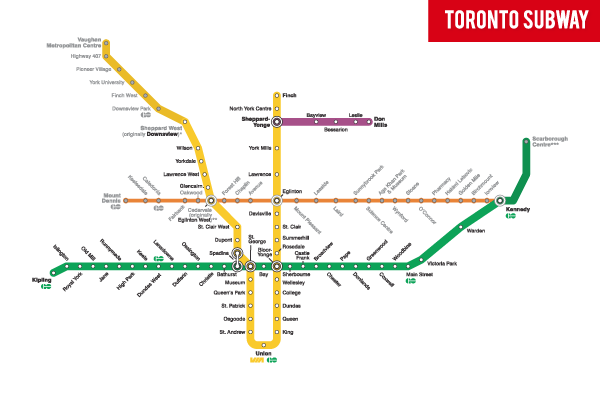
Interactive Travel Information
Discover the interactive travel maps on Gayther. Zoom in and learn more about individual stations, all of the lines and much more
Toronto offers a wide range of accommodation options, from luxury hotels to comfortable hostels. The price and range will vary depending on the suburb and distance to the main attractions. The average cost per night in the city is around 258 CAD. With the city’s extensive transport infrastructure, staying outside the city centre is also viable. With an estimated 28 million visitors staying in Toronto each year, the number of beds available across the Greater Toronto Area is likely over 30,000. Anyone staying in the city or surrounding area will likely have to pay a Municipal Accommodation Tax (MAT), which is charged on hotels, motels, and short-term rentals, and is currently 6%. In addition to the MAT, a further 13% Harmonized Sales Tax (HST) is applied to the room rate. The costs are often included in your room rate; however, in some establishments, you may be required to pay the MAT when settling your bill.
- The Chelsea Hotel Toronto (///poster.steadily.scatter) is located in downtown Toronto, between Yonge and Bay Streets, an area known for its shopping and nightlife. The Chelsea Hotel is a four-star hotel with 1,590 guest rooms and suites set across two towers, making it the largest hotel in Canada. It includes 952 Chelsea Rooms (standard guest rooms), 549 Executive rooms, 44 kitchenette rooms, 45 one-bedroom and family suites, and Deck 27, an adult-only wellness space on the 27th floor with a pool, fitness centre, sundeck and sauna. The hotel has a range of amenities, including the Hive, the family area, with the cove, which has a 130-foot water slide, a teen lounge and creative play spaces. The hotel also has the Bb33 Brasserie and Bistro, which offers a breakfast buffet and Mediterranean-influenced cuisine; the Market Garden, a market-style café; and the T-Bar, a lobby lounge. The average rate for a standard room is around $215 CAD, and the hotel offers a wide range of room options. For more information regarding the hotel, please visit the Chelsea Hotel Toronto’s website (https://www.chelseatoronto.com/en/)/
- The Hazelton Hotel (///sulky.royal.scary) is in Yorkville, the city’s most prestigious shopping and dining district, steps from the high-end boutiques of Bloor Street. The Hazelton is a five-star boutique hotel with 77 spacious rooms and suites, known for its Hollywood glamour design. It offers 62 guest rooms, many of which are oversized and feature French doors leading to a Juliet balcony or a walkout balcony, as well as 15 luxury suites. Features include heated granite floors, deep soaking tubs, and built-in TVs in the bathrooms. The hotel has a range of amenities, including the Spa by Valmont, an indoor heated saltwater lap pool, a fitness centre, a 25-seat cinema, and the One restaurant by celebrity chef Mark McEwan. The average rate for a standard room is around $700 CAD, and the hotel offers a wide range of room options. For more information regarding the hotel, please visit the Hazelton Hotel’s website (https://www.thehazeltonhotel.com/).
- Clarence Park (///married.gathers.orchestra) is located in Clarence Square in the entertainment district of Downtown Toronto, just a 10-minute walk from the CN Tower, the Rogers Centre, and the many restaurants and theatres between King Street West and Front Street. Clarence Park is a highly rated two-star boutique hostel and budget hotel set in a 19th-century building, with 4-bed, 6-bed, 8-bed, and 14-bed dormitories, typically spacious, each with en-suite bathrooms, and many of which are male-only, female-only, or mixed. The budget hotel also offers private rooms and communal areas, including a guest kitchen, and provides a free breakfast. The hotel has a range of amenities, including a rooftop terrace, an arcade/games room, a library and a lounge area, as well as free Wi-Fi throughout the property. The average rate for a standard bed is around $80 CAD, and the hotel offers a wide range of bed and room options. For more information regarding the hotel, please visit the Clarence Park website (http://theclarencepark.com/).
Toronto is one of the most multicultural cities, with more than 140 languages spoken throughout the city. From Chinatown and Little Italy to Greektown, you can easily experience many of the cultures that have become part of the city’s tapestry over the centuries. The waterfront plays an important role, perfectly framing the city’s landscape. Whether taking a ferry ride to the south or strolling through the many markets and galleries to experience the food scene, Toronto is a fun, warm and engaging city. Whether you arrive for the skyline or stay for the food, you’ll find a city that rewards lingering.
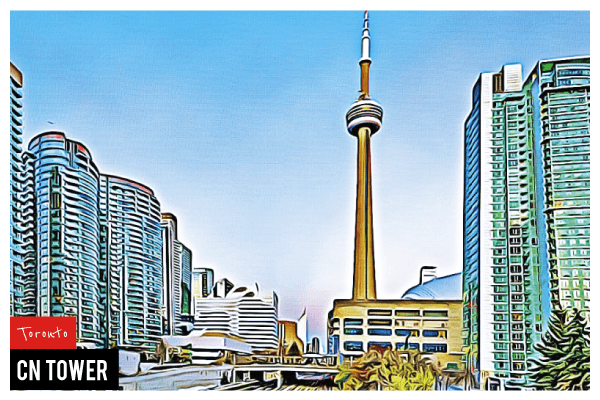
- CN Tower (///select.threaten.shelters) – located in downtown Toronto, close to Union Station, the iconic tower stands 553.3 metres above the lakeshore. Built by the Canadian National Railway to solve a telecommunications problem caused by Toronto’s growing skyline, it opened in 1976 and has since welcomed over two million visitors a year. The lower observation level, with its glass floor, is 342 metres high and offers great views. Walking over the glass floor is a thrill for many thrill-seekers. 33 storeys higher, it is the highest observation platform in the Western Hemisphere, where thrill-seekers can enjoy the seasonal EdgeWalk, a full-circle, hands-free walk around the exterior of the main pod, 356 metres above the ground. At the top, visitors can enjoy the 360-degree view restaurant, which completes a full rotation every 72 minutes. The tower also illuminates the night sky in changing colours, becoming a landmark even from across the lake. The tower is open from 8.30 am to 11 pm daily, and admission averages CA$45 for adult tickets. On weekdays, morning visits to the tower help avoid queues. To learn more about the CN Tower, visit https://www.cntower.ca/.
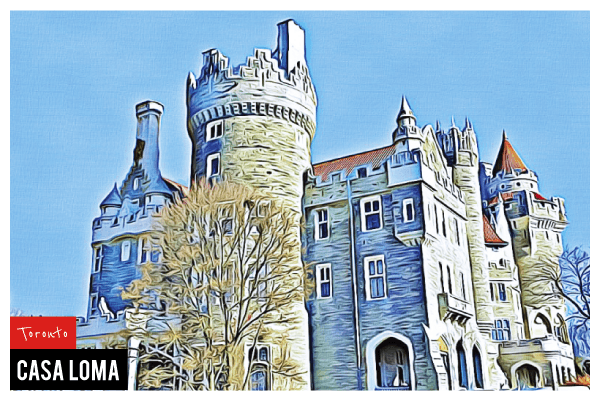
- Casa Loma (///mammal.vampire.nimbly) – located in midtown Toronto on a hill, which, translated from Spanish, means house on the hill. Casa Loma is the only full-scale castle in North America. Built in 1914, it took over four years to complete and cost over $3.5 million, financed by the financier and soldier Sir Henry Pellatt. The 98-room Gothic Revival mansion has many modern marvels, including an elevator, central heating, and two secret passages leading to Sir Henry’s ground-floor office. Today, those secret passages, along with an 800-foot underground tunnel running 18 feet below the street, connect the castle to its former stables, now home to an exhibition of vintage cars from the early 1900s. The castle itself boasts the Group of Seven art collection, an Edwardian-era suite of grand halls and furnished rooms, and, during the winter months, it lights up at night. The iconic Casa Loma has been featured in major films, including X-Men and Crimson Peak. Casa Loma is open from 9.30 am to 5 pm each day, and it typically costs CA$40 for adults, with children under 3 admitted free. There are five acres of gardens and three on-site dining options, including Liberty Café, Gardens Café and BlueBlood Steakhouse. To learn more about Casa Loma, visit https://casaloma.ca/.
- Scarborough Bluffs (///stir.scorch.dates) is a park in the Scarborough district of Toronto. Locals call it “the Bluffs”. It comprises 11 parks and features a series of cliff faces rising to 90 metres above the eastern shore of Lake Ontario, stretching for 15 kilometres. The cliffs were formed over 12,000 years ago at the end of the last Ice Age and are a geological marvel. The highest viewpoints are at Cathedral Bluffs Park, whose spires inspired the park’s name and offer some of the best views of the city on a clear day. Bluffer’s Park, at the base, is popular in summer. It has a Blue Flag-certified sandy beach where people play beach volleyball, enjoy the picnic areas, and rent kayaks or paddleboards. It also has a marina and the Bluffer’s Restaurant with lakeside views. Guild Park and Gardens, at the eastern end, features architectural relics from demolished Toronto buildings arranged in striking formations, including columns from the old Bank of Toronto Building arranged into a Greek Theatre. Birdwatchers and photographers flock to Cudia Park for its dense vegetation and multi-trail network. The park is open all year round from dawn to dusk. Dogs on leads are welcome throughout the park. To learn more about Scarborough Bluffs, visit the Destination Toronto website.
- St. Lawrence Market (///target.instead.values) – located in the St. Lawrence neighbourhood, part of the Old Town area in downtown Toronto. The market was established in 1803 and has long been the centre of Toronto’s food culture. Named the world’s best food market by National Geographic in 2012, the market occupies two connected buildings on Front Street East. The South Market has over 120 speciality merchants, butchers, fishmongers, cheese counters, bakers, and prepared-food vendors spread across two floors, open Tuesday through Sunday. The Saturday Farmers’ Market at the North Market brings fresh produce from Ontario’s farming communities directly into the city centre. The market building has a long history; the structure incorporates the original 1845 Toronto City Hall and has previously served as a courthouse. The market is open from 9 am to 7 pm Tuesday to Friday, 7 am to 6 pm on Saturday, 10 am to 5 pm on Sunday, and is closed on Monday. Entry is free, free Wi-Fi is available, and the market is wheelchair-accessible. To learn more about St. Lawrence Market, visit https://www.stlawrencemarket.com/.
- Toronto Island Park (///erupts.fragment.squish) – located about 10 minutes by ferry from the heart of downtown Toronto. The park comprises an archipelago of 15 islands connected by bridges and pathways, stretching roughly 5 km from Ward’s Island in the east to Hanlan’s Point in the west. Centre Island is home to Centreville Amusement Park, where entry is free, and it is a popular destination for families. The southern shore’s Manitou Beach offers panoramic lake views and swimming. Cars are not permitted in the park, but it is possible to rent bikes and quadricycles to explore the full island network. Hanlan’s Point to the west is typically quieter and home to Toronto’s only clothing-optional beach, with picnic spots, tennis courts, and a baseball diamond, where, in 1914, the baseball legend Babe Ruth hit his first professional home run. Ward’s Island to the east has a charming residential community, a café, a playground, and some of the most beautiful gardens on the island. The park offers some of the best views of the Toronto skyline from the water and is open year-round. The ferry to the park runs from 6.30 am to 114.45 pm, and a return trip typically costs CA$9.57 for an adult ticket. To learn more about Toronto Island Park, visit https://www.torontoisland.com/.
Toronto has long been considered one of the most inclusive and vibrant cities in North America. The LGBTQIA+ community has a long and deep history in the city and is part of its cultural fabric, which helps explain why it remains a top global destination for LGBTQIA+ travel.
The historic, more mainstream neighbourhood Church-Wellesley Village, often referred to as the Village, is a safe, inclusive area in downtown Toronto, home to many gay-owned shops, restaurants, bars, and clubs, as well as the city’s annual Pride parade. Queen Street West, often referred to as Queer West, is centred around Trinity Bellwoods Park and West Queen, is popular with a younger crowd, and is home to many gay-friendly galleries, bars and restaurants. Leslieville and Riverdale are popular with the lesbian and trans community for their family-oriented queer feel, and the Junction and Parkdale have long been hotspots for their trans-friendly atmosphere and for hosting alternative events.
Toronto is a highly progressive city, offering a high degree of protection at both the provincial and federal levels. Even though there are many known gay areas, most of the city is considered safe and welcoming. Hanlan’s Point, located on the Toronto Islands, is a clothing-optional beach that has long attracted community members and even features a 600-metre-long rainbow path. In addition to its neighbourhoods, beaches, countless restaurants, and nightlife, Toronto hosts an annual Pride parade, one of the most popular and well-attended in North America.
Anyone planning a trip to Toronto quickly realises that this unique city is much more than a destination; it’s an experience that lingers long after you leave. From its vibrant neighbourhoods and world-class dining to its rich queer history and inclusive spirit, Toronto offers a sense of belonging that resonates with LGBTQIA+ travellers from around the globe.
Whether you come for the energy of its nightlife, the colour and pride woven into its streets, or simply the chance to explore a city that celebrates diversity in all its forms, Toronto delivers on every level. It’s a place where individuality is embraced, connections are easy to make, and every visit feels uniquely yours.
Whether this was your first visit or one of many, Toronto has a way of calling you back, ready to welcome you again with open arms, new experiences, and even more to discover.
The historic, more mainstream neighbourhood Church-Wellesley Village, often referred to as the Village, is a safe, inclusive area in downtown Toronto, home to many gay-owned shops, restaurants, bars, and clubs, as well as the city’s annual Pride parade. Queen Street West, often referred to as Queer West, is centred around Trinity Bellwoods Park and West Queen, is popular with a younger crowd, and is home to many gay-friendly galleries, bars and restaurants. Leslieville and Riverdale are popular with the lesbian and trans community for their family-oriented queer feel, and the Junction and Parkdale have long been hotspots for their trans-friendly atmosphere and for hosting alternative events.
Toronto is a highly progressive city, offering a high degree of protection at both the provincial and federal levels. Even though there are many known gay areas, most of the city is considered safe and welcoming. Hanlan’s Point, located on the Toronto Islands, is a clothing-optional beach that has long attracted community members and even features a 600-metre-long rainbow path. In addition to its neighbourhoods, beaches, countless restaurants, and nightlife, Toronto hosts an annual Pride parade, one of the most popular and well-attended in North America.
Anyone planning a trip to Toronto quickly realises that this unique city is much more than a destination; it’s an experience that lingers long after you leave. From its vibrant neighbourhoods and world-class dining to its rich queer history and inclusive spirit, Toronto offers a sense of belonging that resonates with LGBTQIA+ travellers from around the globe.
Whether you come for the energy of its nightlife, the colour and pride woven into its streets, or simply the chance to explore a city that celebrates diversity in all its forms, Toronto delivers on every level. It’s a place where individuality is embraced, connections are easy to make, and every visit feels uniquely yours.
Whether this was your first visit or one of many, Toronto has a way of calling you back, ready to welcome you again with open arms, new experiences, and even more to discover.

Are you planning a trip to Canada? Gayther’s travel guides provide all the essential travel information, useful translations and LGBTQIA+-specific information. Gayther guides provide you with all the information you need when planning your trip.

Learn more about the weather and climate information for Toronto. Discover the best time to travel to a specific area, when it is the hottest, when there is the least chance of rain or when it might snow.
Discover more about available modes of transport in Toronto. Whether cruise ports, metro stations or international airports, you will find them all on Gayther. Many popular transportation systems will feature enhanced listings, including interactive maps and click links to stations, lines or routes, airport terminals and amenities.




IMPORTANT DISCLAIMER: All published articles have been written by members of the general public. Many will likely not be journalists nor be affiliated with any professional bodies associated with members of the media. The articles will likely be based on the authors’ own opinions, views, and experiences. Gayther does not endorse or accept any responsibility or liability regarding any materials within the news and media pages. This page may contain external links to third party websites; Gayther provides these links for your convenience and does not endorse, warrant or recommend any particular products or services. By clicking on any external links, you will leave Gayther and be taken to the third-party website, which you do so at your own risk and by accessing the site, you will be required to comply with the external third party’s terms and conditions of use and privacy policies
Discover all of the topical articles written by people from across the community and friends, all sharing their stories, opinions and experiences