









LGBTQIA+ Travel Guides:
Destination Sitges
- Atilla Tiriyaki
- Average Reading Time: 25 minutes
- Travel
- articles, atillat, guides
Sitges, often called the Saint-Tropez of Spain and recognised as one of Europe’s Gay Capitals, exudes effortless glamour with its golden beaches, whitewashed streets, and friendly, inviting vibe. It offers more than acceptance; it is a place of active inclusion. Located just 35 kilometres south of Barcelona on the Catalan coast, Sitges has long been a haven for LGBTQIA+ travellers, where freedom permeates daily life rather than being a rare occurrence. The charming town welcomes everyone with warmth, offering sunny Mediterranean views and laid-back seaside cafés by day. At night, it transforms into a lively hub of inclusive nightlife and celebration. Whether you’re here for its renowned Pride, cultural events, or simply the chance to be yourself in the Spanish sun, Sitges offers a liberating and memorable experience. Its carefree, open-minded spirit continues to attract visitors worldwide. Come for the sunshine, but stay because leaving feels impossible.
DISCLAIMER
All published articles are intended for an audience aged 18 years and over and have been written by members of the general public. Many will likely not be journalists nor be affiliated with any professional bodies associated with members of the media. The articles will likely be based on the authors' own opinions, views, and experiences...more
Located in north-eastern Spain, Sitges lies in the Garraf comarca, the Spanish equivalent of a county, within the Penedès region of Catalonia, and is 35 kilometres (22 miles) south-west of the city of Barcelona. Sitges is part of the Costa Dorada, the Mediterranean’s Golden Coast, known for the many sandy beaches along the towns and cities that line the coastline; Sitges is no exception, boasting an impressive 17 sandy beaches within and around the town’s boundaries.
Sitges is nestled between the Garraf Massif mountains and the Mediterranean Sea. The town covers approximately 43.85 square kilometres (16.93 square miles) and is known for its narrow streets and pedestrian-friendly town centre. Sitges has a stylish yet bohemian atmosphere, and tourism is an important sector, attracting 3 million visitors annually. The famous annual Sitges Film Festival, the Corpus Christi festival, and the Sitges carnival and pride events in June have helped make the town a popular LGBTQIA+ tourist destination, in part due to its many gay-friendly bars, clubs, beaches, and restaurants.
Some interesting facts you might not know:
Sitges is nestled between the Garraf Massif mountains and the Mediterranean Sea. The town covers approximately 43.85 square kilometres (16.93 square miles) and is known for its narrow streets and pedestrian-friendly town centre. Sitges has a stylish yet bohemian atmosphere, and tourism is an important sector, attracting 3 million visitors annually. The famous annual Sitges Film Festival, the Corpus Christi festival, and the Sitges carnival and pride events in June have helped make the town a popular LGBTQIA+ tourist destination, in part due to its many gay-friendly bars, clubs, beaches, and restaurants.
Some interesting facts you might not know:
- Sitges’ name derives from the plural of the Catalan word Sitja, which in English means silo. Silos are deep underground pits used to store and protect grain after harvest, and it is believed that the town may have been where the region’s grain was historically stored. The resort town also has the nickname “the jewel of the Mediterranean,” given its picturesque old town, the over 300 days of sunshine it enjoys throughout the year, and the hills of the Garraf National Park that surround this unique coastal town.
- Sitges is 40 kilometres (25 miles) southwest of Barcelona and 60 kilometres (37 miles) from Tarragona. The country’s capital, Madrid, is 592 kilometres (368 miles) away, and Valencia is 313 kilometres (194 miles) south of the town.
- Sitges is located on the Costa de Garraf, known for its pristine waters and white sandy beaches that stretch for over four kilometres or 2.5 miles. It has a total of seventeen beaches; four are located in the eastern part of the town, eleven are in the central part, and two are west of the town, with the western beaches being difficult to access. All of the east and central beaches have European Blue Flags, which means they meet and maintain high standards for environmental, educational, safety, and accessibility. Sitges has three nudist beaches, the main one being Platja dels Balmins, and Playa del Muerto is the beach that members of the LGBTQIA+ community mainly frequent.
- Part of the town is known as La Fragata, named after the frigate, a vessel used in the 18th century to protect Sitges from pirates and bandits. The ship was stationed in a hidden inlet to the sea, and its six cannons were used to protect the town and deter anyone seeking to raid it or attack passing ships. The site where the frigate was stationed is close to the Punta de Sitges and the parish church of Sant Bartomeu and Santa Tecla.
- Sitges has a stunning old town centre. Though the old town is not large, the picturesque fishing village, with its white houses, cobbled alleys, and historic buildings, makes it feel as if you are stepping back in time. The 15th-century church of Sant Bartomeu and Santa Tecla has a stunning Baroque interior, and the 19th-century Gothic Revival building known as Casa de la Vila is also a popular tourist attraction. The town was once home to the writer and painter Santiago Rusiñol, who lived in Cau Ferrat. Sitges is also home to Palau Maricel, an eclectic art museum. All of these, along with many more beautiful buildings, can be found throughout the resort town.
- Sitges loves a party. The town hosts many fiestas, including the Grape Harvest Festival in September, the International Film Festival of Catalonia in October and the Sitges Carnival week in February.
- Sitges is a popular LGBTQIA+ destination. The town has many businesses, hotels, and services catering to the community, as well as many popular gay beaches. The town offers over 4,500 hotel beds, and the area between the Garraf Massif and the sea is known for its beaches and thriving nightlife. There are over twenty gay bars throughout the town, and many of the town’s hotels are gay-friendly. Sitges has spas and offers many art galleries, quality restaurants and shops for those needing retail therapy. Sitges is often described as the gay capital of Europe, particularly during the summer months, when the number of community members descending on the town peaks from May to September. The most popular LGBTQIA+ events in the town are Sitges Pride, Bears Week, Carnival, Festa Major and Circuit Barcelona.
- Over one-third of Sitges’ permanent residents are from other parts of Europe, including the Netherlands, the UK, France and the various Scandinavian countries. Sitges’ proximity to Barcelona and its popularity with Europeans have led to it being often referred to as the Saint-Tropez of Spain. Property prices around the town have been rising, making it a top destination but an expensive one.
Sitges is located in northeastern Spain, in the province of Barcelona and the region of Catalonia. Although Sitges does not have its own airport, Josep Tarradellas Barcelona-El Prat Airport (BCN) is just 27.8 kilometres (17.9 miles) north of Sitges. There are many flights from Europe, with most taking about 2 hours and offering numerous direct flights across the continent. It typically takes less than 8 hours from North America, and many direct and indirect routes are available.
BY AIR
BY AIR
- Josep Tarradellas Barcelona–El Prat Airport, or Aeroport Josep Tarradellas Barcelona-El Prat (///nozzle.deserved.latest – BCN (IATA) | LEBL (ICAO)), is an international airport and the second-busiest in Spain, serving the city of Barcelona and the surrounding areas. The airport is located 13 kilometres (8 miles) southwest of the centre of Barcelona and serves an average of 100 flights each day and over 57 million passengers every year. The airport is the main international hub for the carriers Level, Air Nostrum and Vueling, and serves as a base for EasyJet, Ryanair and Iberia. Palma de Mallorca, Madrid, Rome, Amsterdam and London are among the busiest airport routes worldwide. There is no direct train service between Sitges and the airport; the most direct options are bus or taxi. The Bus Garraf starts from Parc Can Robert in Sitges and ends at Terminal 1 (T1) at the airport, taking around 40 minutes. For Terminal 2 departures, a transfer to a free shuttle bus is required, which takes a further 15 minutes. The bus from Sitges typically runs hourly, with a reduced service over the weekend, and costs around 8 euros. Alternatively, visitors can take the train (R2 Sud) from Sitges towards Barcelona, getting off at the El Prat de Llobregat station, then changing to (R2 Nord) or L9 Sud Metro to the airport. The train route typically takes 50 minutes and costs around 6 euros. Taxis are available and typically cost around 70 euros, taking around 30 minutes. Apps like FreeNow, Cabify and Uber are widely used in Sitges and across the region.
- Sitges does not have a cruise terminal; however, the two cruise ports in Barcelona, with 9 terminals, make Sitges easily accessible.
- Moll Adossat Quay Cruise Port (///upgrading.skipped.quench) is the largest and busiest port in Barcelona, typically serving larger cruise ships. The five terminals (A, B, C, D, E) welcome major cruise lines, including Royal Caribbean, MSC Cruises, Norwegian Cruise Line, Carnival Cruise Line, Disney Cruise Line, Costa Cruises, AIDA Cruises, and Cunard. The port typically sees over 4 million cruise passengers each year, with over 800 sea cruises making a port of call at the terminal. The terminal is located in the city’s southern section and is about 41 kilometres (25 miles) north-west of Sitges. Though there is no direct route to Sitges other than cruise excursions, a taxi will typically take about 40 minutes and cost about 90 euros. You can take the R2 Sud train to Barcelona Sants Station, reachable by the T3 bus or taxi from the terminal, or the Bus Garraf, which requires a connection at Plaça Espanya or Ronda Universitat by catching the e16 bus line. The port has numerous amenities, including free Wi-Fi for all passengers, foreign exchange bureaux, ATMs, a baggage service known as Bags&Go, and is fully equipped for travellers with disabilities. Every terminal has at least one bar or cafeteria, and duty-free shops can be found throughout the port.
- World Trade Centre (WTC) Port, known as the Moll de Barcelona (///grudges.scale.codes), is the smaller port in Barcelona, located in the heart of the city centre. The port typically serves smaller luxury cruise ships and ferries. It is close to the famous La Rambla and can only host ships roughly 250 metres in length. The port has three terminals or berths, North, South and East. The port welcomes major and smaller luxury cruise lines, including Azamara, Silversea, Viking Ocean Cruises, Regent Seven Seas, Oceania Cruises, and Seabourn. The port typically sees an average of over 600 thousand cruise passengers yearly, with over 340 sea cruises making a port of call at the terminal. The port is also home to the Baleària and Trasmed ferries, with frequent ferries to the Balearic Islands (Mallorca, Ibiza, Menorca). Given the port’s location, the route to Sitges is much more direct. You can take the Bus Garraf from Gran Via or Plaça Espanya to Sitges; the trip takes about an hour and a half and costs around 9 euros. A train is available. Take (The Link) from Passeig de Gràcia, then the Metro L3 (Green Line) south to Drassanes, changing to the R2 Sud train to Sitges Railway station, taking around 1 hour 15 minutes and costing around 8 euros, or by taxi, costing around 100 euros and taking around 40 minutes. The port is located within a mixed-use business complex that is home to several restaurants and cafes, the 5-star Eurostars Grand Marina Hotel, and many shops, all within a short walk of the Maremagnum Shopping Centre.
- The main station is Sitges Railway station (///division.smashes.frantic), located in the centre of the town, offering a direct connection to Barcelona and many surrounding areas, including Barcelona-Estació de França, Vilanova i la Geltrú, Castelldefels, Tarragona, and Montserrat. There are no direct international trains to Sitges; however, trains to Barcelona run frequently, typically every 15-20 minutes. From Barcelona, you can take connecting trains to other cities in Spain, as well as to Paris, London (via Paris), Lyon and Milan. Many international routes typically take 8+ hours.
- There are no international bus routes into Sitges; however, operators such as FlixBus and Alsa offer international connections via Barcelona. The main bus terminal is located in Barcelona’s city centre and is known as Barcelona Nord Bus Station or Estació d’Autobusos Barcelona Nord (///general.buddy.winded). It is the primary terminal for coaches in Barcelona. Located in the Eixample district near the Arc de Triomf, it serves as the main hub for long-distance journeys, both national and international, including destinations such as Paris, Toulouse, Marseille, Milan, Lisbon, and London. Upon arriving at or departing from the bus terminal, you will need to take a connecting bus to Sitges (Bus Garraf).
Interactive Airport Terminal Maps
Discover the interactive travel maps on Gayther. Zoom in and click on individual stations, see all of the lines and much more
Sitges is a relatively small and compact coastal town, covering around 44 square kilometres (17 square miles). Many visitors and locals get around the town on foot; however, there are other public transport options available. The town does not have an official bike rental scheme; however, there are many bike rental shops around the town for those looking to explore Sitges by bike.
- The Sitges train station is served by the R2 Sud (South), R12, R14 and R15 lines. Although these lines connect Sitges to neighbouring towns and cities, there is only one station in Sitges, so it is used more by people staying in Sitges or exploring the surrounding areas. The R2 Sud, R12, R14 and R15 lines connect Sitges to Barcelona, Vilanova i la Geltrú, Sant Vicenç de Calders and Tarragona. The average journey time in most directions is around 30 minutes, and trains typically run every 15-30 minutes. You can purchase train tickets at self-service machines at major stations, including Sitges, at the ticket office, or via the Renfe website or the Renfe Cercanías app. To access the station, you will need to provide a QR code. The cost will vary depending on the journey; however, the average cost per journey is around 5 euros.
- The Sitges Bus network is the main mode of transport for getting around the city. The Bus network is split into Local and Municipal Buses (Urban) and Regional and Intercity (Bus Garraf)
- The Local Bus network has three main routes, SL1, SL2 and SL3. Route SL1 serves the north, running from Poble Sec to Vallpineda; SL2 serves the west, running from Can Pei to Terramar; and SL3 serves the east, running from Llevantina to Quint Mar. The bus network is operated by Moventis (TCC). All local bus routes start and end at Sitges Train Station, and a single journey typically costs around 1.50 euros. Visitors can pay cash on board or purchase a T-10 card, a prepaid card for up to ten trips, available at Sitges Train Station.
- The Regional and City bus network operates multiple buses and routes. The E16 runs from Barcelona City to Sitges, and the airport bus runs from Sitges to Barcelona-El Prat Airport. Many services also run from the town to the neighbouring towns of Sant Pere de Ribes, Vilanova i la Geltrú, and Vilafranca. The average single journey to Barcelona is around 4.50 euros, and to the airport is around 8 euros. Tickets can be purchased on board, cash only, via dedicated Bus Garraf/Planna ticket machines found at Barcelona Airport, and from local shops and retailers throughout the town. The estancos (Tabacs) shops that are government-licensed and can be easily identified by their distinctive brown-and-yellow Tabacs sign. They are the most common local shops where you can purchase integrated transport tickets, such as the T-Casual.
- Licenced Taxis are another option for getting around town. Two main taxi companies operate across the city: the Station Firm and the Town Centre Firm, both managed by the local association Taxi Sitges. The Sitges City Council officially licenses any taxi that operates under the Taximés brand. Official taxis are white with blue rear number plates, displaying the Sitges coat of arms, and typically have a green light on the roof, illuminated to show lliure or libre, meaning available. In contrast, a red light (or no light) indicates that the taxi is occupied or unavailable for hire. Driver identification should be displayed on the front windscreen or dashboard. The taximeter should be visible and in the centre of the dashboard, and there should be a fare sticker with the official municipal tariffs. There are taxi ranks in key areas of the town, such as the train station, the tourist office, and the main promenade (Passeig Marítim), and taxis can also be booked via the Taximés (https://www.taximes.com/taxi-sitges/) or Cabify apps (https://cabify.com/en). Local trips will likely cost around 10-20 euros, and a trip to Barcelona or the airport around 80-100 euros. Many of the modern taxis are equipped with card machines; however, it is important to confirm whether card payments are accepted before starting the journey. Ridesharing and private hire services are available through Cabify, FreeNow and Uber, all of which operate in the area.
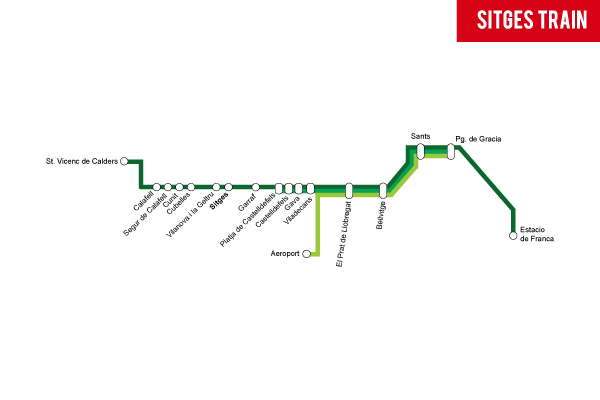
Interactive Travel Information
Discover the interactive travel maps on Gayther. Zoom in and learn more about individual stations, all of the lines and much more
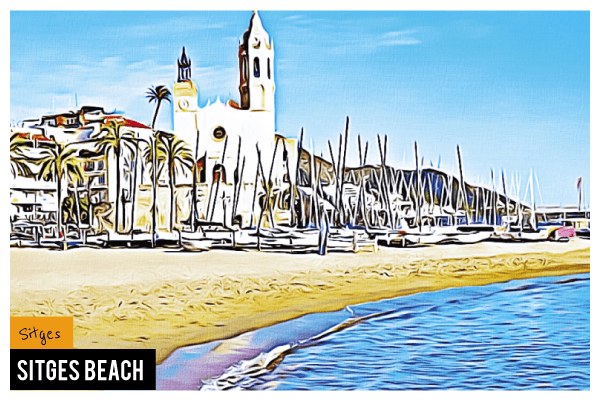
Sitges is a small town, yet it still offers an impressive range of accommodation options, from luxury hotels to comfortable hostels. The price and range will vary depending on where you stay and the distance to the town and the sea; however, almost half of the available options are considered luxury, many 4- and 5-star establishments. The average cost per night in the city is around 180 US Dollars during high season. With the various transport options available in Sitges, staying outside the town centre is also viable. With an estimated 3 million visitors staying in Sitges throughout the year, the number of hotel beds available is around 4,500. Anyone staying in the city or surrounding area will likely have to pay a mandatory Catalan tourist tax on hotels, apartments, and rentals in Catalonia for those over the age of 15, typically costing up to €3.30 per person per night. Many of the available accommodation options are subject to a 10% IVA fee on the room rate. Any fees due may be added to your total cost. You may also be required to pay the tourist tax when you settle your bill.
- The Hotel ME Sitges Terramar (///lasting.automating.teased) is located at the southern end of the Passeig Maritim promenade, opposite Terramar Beach, just a short 20-minute walk or bus ride to the historic city centre. The Hotel ME Sitges is a five-star beachfront hotel with 209 air-conditioned bedrooms, many with private balconies, offering garden or sea views. The hotel offers a range of standard and superior rooms, as well as 26 suites (22 junior and 4 premium), all with free Wi-Fi. The hotel has a range of amenities, including a Basque-Mediterranean cuisine restaurant known as the Beso Restaurant, three bars (Rooftop, swim-up and beach bar), on-site entertainment, a kids club, the Nure Spa, a 24-hour gym, two outdoor pools, and direct access to Terramar Beach, with sun loungers and umbrellas. The average nightly rate for a standard room is around 250 euros, and the hotel offers a range of room options. For more information regarding the hotel, please visit the Hotel ME Sitges Terramar website.
- The Hotel Calipolis (///slot.fencing.synthetic) is located south of the historic city centre and is just a 10-minute walk from Sitges train station and the historic centre. The Hotel Calipolis is a four-star hotel offering panoramic sea views and 170 air-conditioned bedrooms, including sea-view rooms with private terraces. The hotel offers a range of standard and sea-view rooms, as well as 13 suites, including the exclusive Penthouse suite, all of which offer free Wi-Fi. The hotel has a range of amenities, including two on-site restaurants (Mirador and Infinity), two bars (a lobby bar and La Terraza overlooking the promenade), a gym, a seasonal swimming pool with a poolside bar, and meeting rooms for business travellers. The average nightly rate for a standard room is around 200 euros, and the hotel offers a range of room options. For more information regarding the hotel, visit the Hotel Calipolis website.
- The Hotel Medium Sitges Park (///sponge.sympathy.fuels) is located in the historic centre of Sitges Old Town. The Hotel Medium Sitges Park is a three-star hotel with 85 air-conditioned rooms, set within a beautifully preserved late-19th-century Catalan modernist building. The hotel offers a range of standard rooms, many with city views, as well as superior and terrace rooms overlooking the gardens, all with free Wi-Fi. The hotel has a range of amenities, including an on-site restaurant serving Mediterranean cuisine, a bar lounge and a poolside bar, a seasonal pool set within lush gardens, and a business centre. The average nightly rate for a standard room is around 80 euros, and the hotel offers a range of room options. For more information regarding the hotel, visit the Hotel Medium Sitges Park website.
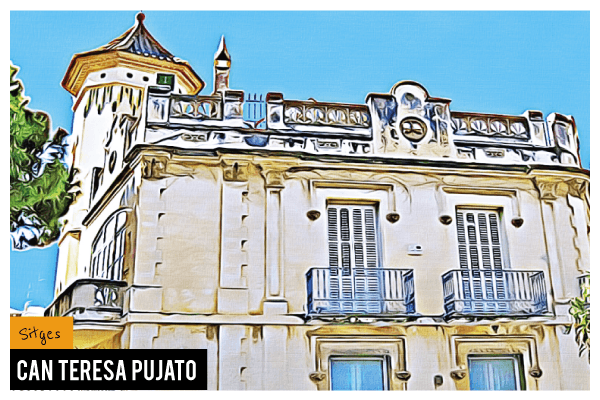
Sitges has long attracted creative people, well-known artists, painters, and writers from Spain and around the world, all of whom have contributed to its bohemian feel. The palm trees lining the coastline of Saint Sebastian beach reflect the Latin American and Caribbean influence on the town, from the many wealthy Catalan merchants who built many of the mansions in Sitges. The old town is full of character, a labyrinth of whitewashed streets, hidden plazas, and stunning architecture, all set against a coastal backdrop of sandy beaches. It is the perfect destination for those seeking fun in the sun. Modern Sitges is a popular getaway for those living in Barcelona looking to escape the city, as well as for people attending the town’s film festival or pride events throughout the summer, which attract visitors from all over the world.
- Raco de la Calma (///posting.lipstick.folds) – located in the old quarter of the town, the small square, which translates from Catalan as the corner of calm, offers a unique experience. From the backdrop of the clifftop church of Sant Bartomeu to the Palau de Maricel with its renowned 15th-century Gothic doorway, and to the Museu del Cau Ferrat, all provide glimpses of the sea between their buildings and facades. Visitors to the square will typically see street musicians performing, marvel at the carved stone sculptures around the base of the palace, and visit the Roman sarcophagus discovered nearby, now also on display in the square. The Raco de la Calma is free to enter and open year-round. It is around a 12-minute walk from the station in Sitges and can be found by following Carrer de Parellades, turning toward the seafront church, then onto Carrer de Fonollar. For more information, visit the Turisme Sitges website.
- Church of Sant Bartomeu & Santa Tecla (///gestures.lion.dart) – collectively forming, what is known as “La Punta” or the point, despite its name, is a single iconic church that has long become an icon and major landmark of Sitges, has been photographed millions of times over the years and is instantly recognisable across Spain and especially by international visitors that have visited Sitges. The church is located on Plaça del Baluard in Sitges, at the end of Passeig de la Ribera, and is an impressive building perched on a rocky promontory where waves are known to crash against the cliffs on both sides. The church has two asymmetric towers, a bell tower and a clock tower set against a Mediterranean background. The church has stood on the cliff since the 14th century and is home to one of Catalonia’s most remarkable collections of Baroque altarpieces, carved in polychrome wood. The centrepiece is the remains of the 1499 Renaissance altarpiece depicting the patron saints, attributed to Neapolitan artist Nicolás de Credença. Beneath the choir lie Gothic tombs dated 1317 and 1322. The church offers amazing views of the town and many beaches; one of the best views is from the Plaça del Baluard. On the first Wednesday of every month, a guided tour of the church interior is available; occasionally, the tour takes a small group up the bell tower, which offers a 360-degree view over Sitges. Typically, open from 10 am to 7.30 pm Monday to Friday, and at various times on Saturdays and Sundays. For more information, visit the Turisme Sitges website.
- La Playa de Sitges (///strange.sigh.fixated) – Sitges is known for its 17 beaches, a large number for the size of the town. The beaches are generally clean and maintain Blue Flag standards. They are well-maintained and typically safe for swimming, though not all have lifeguards on duty throughout the summer season. No two beaches are the same, stretching from the main Platja de la Ribera in front of the old quarter outward in both directions along the coast. The beaches provide visitors, especially during the summer months, with an opportunity to enter warm, calm Mediterranean waters that shift from pale turquoise at the shore to deep sapphire farther out. The Platja de la Ribera is one of the main beaches in Sitges, with 2km of broad sand directly in front of the church and the Passeig, popular with sunbathers and people playing games such as beach volleyball or frisbee. The Platja de Sant Sebastià is located northeast of the church and offers a sheltered aspect, often making it quieter, while the Platja de Balmins is a clothing-optional beach. Typically, the further along the Passeig you travel, the more relaxed and quieter the beaches become. At the more popular beaches, many offer longer sunbathing, parasols, pedalo and kayak rentals during summer, and Chiringuitos or beachside bars that line the shore, offering drinks and food, including plates of patatas bravas. Late summer typically offers a quieter experience, while many of the main beaches can get busy during the summer months. For more information, visit the Turisme Sitges website.
- Passeig Marítim (///stepping.riches.coining) is the name of the iconic promenade that stretches for 2.5 kilometres or 1.6 miles through Sitges. The promenade is palm-tree-lined, with many of the town’s restaurants and hotels located along it. Many restaurants typically open at 1 pm, and bars at 10 pm. The Passeig Marítim begins at the iconic Church, starting on the Passeig de la Ribera and turning onto Passeig Marítim as it heads southeast towards the Terramar neighbourhood. Walking along the promenade is a popular experience, helping visitors immerse themselves in the feel and vibe of Sitges. Along the way, you will see a parade of Americano mansions, each with its distinctive palm trees, ornate ironwork, and grandeur. The Passeig Marítim is typically flat, with no major inclines, well-maintained, and a popular stop for joggers and dog walkers, especially early in the morning. There are many bike rental places and bike tours available for those looking for a different experience. The promenade is popular throughout the day with beachgoers, and at night, many enjoy the many seafront bars and restaurants as the sun sets. A popular route is to start at Hotel Terramar and walk northeast towards the church. The promenade is open all year round and free to walk along, and its flat terrain makes it suitable for people of all abilities. For more information, visit the Turisme Sitges website.
- Palau de Maricel (///backed.aged.soft) is the Noucentista palace, completed in 1918 by artist and engineer Miquel Utrillo for the American industrialist, philanthropist, and art collector Charles Deering. The Palau de Maricel, which means the Palace of the Sea and Sky, today the palace serves three distinct purposes: home to the Museus de Sitges, the former home-studio of painter and writer Santiago Rusiñol, and today it is a museum that showcases Catalan modernisme and the region’s maritime heritage on the coast. Palau de Maricel also serves as a venue for institutional and cultural events, such as concerts and lectures, and as a space for private hire, including civil marriages. Part of the palace’s charm is that it is not built from a single architectural vision or style; instead, much of it was assembled from architectural salvage, such as balconies, doorways, columns, and decorative pieces gathered from historic buildings across Spain. The rooms inside are equally impressive, from the gilded Saló d’Or (Gold Room), the serene Saló Blau (Blue Room), the intimate Chapel Room, to the Ship’s Room. During the summer months, the palace hosts many events, including evening concerts with castanet performances, and the museum offers guided tours. An English-language morning tour is available; however, it is important to arrive early as spaces are limited, especially during the summer months. The cost for general admission and guided tours is around 5 euros, and it is open from Tuesday through to Sunday, from 10 am until 7 pm. For more information, visit the Museu de Sitges website.
Sitges has long been a popular summer destination for members of the LGBTQIA+ community worldwide, and it is often hailed as one of Europe’s gay capitals. The town’s location on the Mediterranean offers sandy beaches and summer sun, and it is just 35 kilometres from Barcelona, Spain. Sitges is a place where the LGBTQIA+ community is not a subculture, as in many towns and cities, but is woven into the city’s culture and history. It has long been a haven for gay men and, over the years, has attracted people from other groups within the community.
It is not uncommon to see rainbow flags and signs, gay bars, and many establishments visibly welcoming community members while walking around town. Though Sitges is a small town, there are areas known for being central to the LGBTQIA+ community. These include Plaça de la Indústria, the heart of the gay scene; Carrer Primer de Maig, nicknamed the Street of Sin, known for its high concentration of bars and vibrant nightlife; Carrer de Joan Tarrida, considered the gay strip, with its many cocktail lounges, cruise bars, and shops; and Carrer de Sant Bonaventura, a more laid-back and quieter street in the Old Town, known for more intimate venues and music bars.
Of the 17 beaches in Sitges, three are best known for attracting LGBTQIA+ individuals. Playa de la Bossa Rodona is considered the main gay beach, located in front of Hotel Calipolis; Playa dels Balmins is popular with both straight and LGBTQIA+ members and is a clothing-optional beach about a 10-minute walk from the centre; and Platja de l’Home Mort is a secluded, predominantly gay nudist beach located about 4km from town. There is no doubt that Sitges is a great summer destination for the LGBTQIA+ community, offering the chance to enjoy the sun during the day and party at night, all while in an inclusive and welcoming town.
There is no question that Sitges has much to offer its visitors. In the height of summer, the best way to spend the day is to unwind on its golden beaches, basking in the Mediterranean sun and cooling off in the crystal-clear waters. As evening falls, the town takes on a different rhythm, perfect for strolls through its charming streets, choosing from the many dining options, and enjoying drinks and entertainment. With a wide range of accommodation, from luxury stays to more budget-friendly options, Sitges caters effortlessly to every kind of traveller. Whether as a short addition to a Barcelona itinerary or as a destination in its own right, it’s easy to see why Sitges is considered a must-visit.
Set along the Mediterranean coast, Sitges enjoys a mild climate year-round. Even in winter, when the pace slows and the crowds thin, daytime temperatures remain around 12–15°C, cooling in the evenings. It’s a destination you can enjoy in every season, with a warm welcome no matter when you arrive.
For LGBTQIA+ travellers in particular, Sitges stands out as a uniquely special destination. In summer, especially, it becomes a vibrant, sun-soaked haven where inclusivity is not just promised but part of the culture. All visitors to Sitges are free to be themselves, embracing relaxation, culture, and history in a town that celebrates openness at every turn.
It is not uncommon to see rainbow flags and signs, gay bars, and many establishments visibly welcoming community members while walking around town. Though Sitges is a small town, there are areas known for being central to the LGBTQIA+ community. These include Plaça de la Indústria, the heart of the gay scene; Carrer Primer de Maig, nicknamed the Street of Sin, known for its high concentration of bars and vibrant nightlife; Carrer de Joan Tarrida, considered the gay strip, with its many cocktail lounges, cruise bars, and shops; and Carrer de Sant Bonaventura, a more laid-back and quieter street in the Old Town, known for more intimate venues and music bars.
Of the 17 beaches in Sitges, three are best known for attracting LGBTQIA+ individuals. Playa de la Bossa Rodona is considered the main gay beach, located in front of Hotel Calipolis; Playa dels Balmins is popular with both straight and LGBTQIA+ members and is a clothing-optional beach about a 10-minute walk from the centre; and Platja de l’Home Mort is a secluded, predominantly gay nudist beach located about 4km from town. There is no doubt that Sitges is a great summer destination for the LGBTQIA+ community, offering the chance to enjoy the sun during the day and party at night, all while in an inclusive and welcoming town.
There is no question that Sitges has much to offer its visitors. In the height of summer, the best way to spend the day is to unwind on its golden beaches, basking in the Mediterranean sun and cooling off in the crystal-clear waters. As evening falls, the town takes on a different rhythm, perfect for strolls through its charming streets, choosing from the many dining options, and enjoying drinks and entertainment. With a wide range of accommodation, from luxury stays to more budget-friendly options, Sitges caters effortlessly to every kind of traveller. Whether as a short addition to a Barcelona itinerary or as a destination in its own right, it’s easy to see why Sitges is considered a must-visit.
Set along the Mediterranean coast, Sitges enjoys a mild climate year-round. Even in winter, when the pace slows and the crowds thin, daytime temperatures remain around 12–15°C, cooling in the evenings. It’s a destination you can enjoy in every season, with a warm welcome no matter when you arrive.
For LGBTQIA+ travellers in particular, Sitges stands out as a uniquely special destination. In summer, especially, it becomes a vibrant, sun-soaked haven where inclusivity is not just promised but part of the culture. All visitors to Sitges are free to be themselves, embracing relaxation, culture, and history in a town that celebrates openness at every turn.

Are you planning a trip to Spain? Gayther’s travel guides provide all the essential travel information, useful translations and LGBTQIA+-specific information. Gayther guides provide you with all the information you need when planning your trip.

Learn more about the weather and climate information for Sitges. Discover the best time to travel to a specific area, when it is the hottest, when there is the least chance of rain or when it might snow.

Discover more about available modes of transport in Sitges. Whether cruise ports, metro stations or international airports, you will find them all on Gayther. Many popular transportation systems will feature enhanced listings, including interactive maps and click links to stations, lines or routes, airport terminals and amenities.





IMPORTANT DISCLAIMER: All published articles have been written by members of the general public. Many will likely not be journalists nor be affiliated with any professional bodies associated with members of the media. The articles will likely be based on the authors’ own opinions, views, and experiences. Gayther does not endorse or accept any responsibility or liability regarding any materials within the news and media pages. This page may contain external links to third party websites; Gayther provides these links for your convenience and does not endorse, warrant or recommend any particular products or services. By clicking on any external links, you will leave Gayther and be taken to the third-party website, which you do so at your own risk and by accessing the site, you will be required to comply with the external third party’s terms and conditions of use and privacy policies
Discover all of the topical articles written by people from across the community and friends, all sharing their stories, opinions and experiences