









LGBTQIA+ Travel Guides:
Destination Seoul
- Atilla Tiriyaki
- Average Reading Time: 25 minutes
- Travel
- articles, atillat, guides
Seoul is a city of striking contradictions. Ancient palaces sit alongside neon-lit skyscrapers, centuries-old temples are just steps away from lively cocktail bars, and beneath it all, a quiet yet passionate movement for equality is emerging. Korea’s LGBTQIA+ community is carving out space in a country where conservatism once dominated, creating something genuinely electrifying. From the welcoming and vibrant atmosphere of Itaewon’s queer scene to the brave voices of activists shaping a new national conversation, Seoul offers the curious traveller much more than its skyline. This is a city that doesn’t merely balance tradition and modernity; it thrives on the tension between the two, and that very tension makes it unmissable.
DISCLAIMER
All published articles are intended for an audience aged 18 years and over and have been written by members of the general public. Many will likely not be journalists nor be affiliated with any professional bodies associated with members of the media. The articles will likely be based on the authors' own opinions, views, and experiences...more
Located in East Asia, Seoul, officially known as Seoul Special Metropolitan City, is both the capital and the largest city on the Korean peninsula. Over the years, it has been given many nicknames, such as the Soul of Asia, City of Palaces, and SimCity, titles that reflect its duality as a cultural centre and a place rich in history. With five UNESCO World Heritage sites within the city alone, Seoul is also a global centre for technology and digital innovation.
Seoul has an ancient history dating back to 18 BC and was made the country’s capital in 1394, during the Joseon Dynasty. Today, it is home to 50% of South Koreans and is ranked among Asia’s most liveable cities, and is home to global technology companies such as Samsung, LG, and Hyundai. The city has been gaining popularity over the years, with over 8 million foreign visitors to Seoul in 2025 alone.
A city built on mountainous and hilly terrain, surrounded by four mountains: Inwangsan, Naksan, Namsan, and Bukhansan, or North Han Mountain, which is the highest in the area. The city is divided by the Han River into northern and southern sections. Seoul covers 605 square kilometres (234 square miles) and is divided into 25 districts called gu. The wider Seoul Metropolitan area includes the city, Gyeonggi province, and Incheon, covering 12.7 thousand square kilometres (4.9 thousand square miles).
Seoul is also called the city of the future because of its cutting-edge technology, futuristic skyline, and status as one of the world’s most digitally connected cities. With free Wi-Fi available in almost all public areas, such as parks and cafés, Seoul leads the world as a smart city by providing high-speed internet, integrating the Internet of Things into urban management, and adopting intelligent waste-management systems. Seoul not only embraces the future but also honours its past and cultural heritage.
Some interesting facts you might not know:
Seoul has an ancient history dating back to 18 BC and was made the country’s capital in 1394, during the Joseon Dynasty. Today, it is home to 50% of South Koreans and is ranked among Asia’s most liveable cities, and is home to global technology companies such as Samsung, LG, and Hyundai. The city has been gaining popularity over the years, with over 8 million foreign visitors to Seoul in 2025 alone.
A city built on mountainous and hilly terrain, surrounded by four mountains: Inwangsan, Naksan, Namsan, and Bukhansan, or North Han Mountain, which is the highest in the area. The city is divided by the Han River into northern and southern sections. Seoul covers 605 square kilometres (234 square miles) and is divided into 25 districts called gu. The wider Seoul Metropolitan area includes the city, Gyeonggi province, and Incheon, covering 12.7 thousand square kilometres (4.9 thousand square miles).
Seoul is also called the city of the future because of its cutting-edge technology, futuristic skyline, and status as one of the world’s most digitally connected cities. With free Wi-Fi available in almost all public areas, such as parks and cafés, Seoul leads the world as a smart city by providing high-speed internet, integrating the Internet of Things into urban management, and adopting intelligent waste-management systems. Seoul not only embraces the future but also honours its past and cultural heritage.
Some interesting facts you might not know:
- Seoul has had many names over the years, from being called Hanseong or Hanyang when it first became the capital over 600 years ago in 1394 during the Joseon Dynasty, to Gyeongseong during Japanese occupation. The city officially adopted the name Seoul Metropolitan City on 15 August 1945, shortly after the end of World War II and colonial rule. In Korean, Seoul literally means “capital city.” It has been the country’s capital for centuries, is the largest city in South Korea, and is situated in the northwest of the country, close to the demilitarised zone (DMZ) that separates North and South Korea.
- Seoul is renowned for its stunning scenery, palaces, and temples. The city has five traditional Korean architectural palaces, including Gyeongbokgung, Changdeokgung, and Deoksugung. It also features Jongmyo, a shrine considered the oldest royal Confucian temple, dedicated to Korea’s late kings and queens. Among the most important and unique cultural sites are the Jongmyo Shrine and the Changdeokgung Palace Complex, both designated as UNESCO World Heritage Sites. Surrounded by mountains over 700 metres tall, including Mount Nam in the city centre, Seoul’s landscape is striking. The Han River flows from east to west, dividing the city into northern and southern parts, and is connected by 27 bridges.
- The Seoul Metropolitan Network comprises 23 lines, 768 stations, and 1.3 thousand kilometres, or 784 miles, of track, making it the world’s longest multi-operator metro system and one of the most extensive transport infrastructures. Alongside the metro, Seoul features a high-speed train network, KTX, that connects the city to other major locations across South Korea.
- Taekwondo, a Korean martial art and combat sport, was developed in Seoul after the Second World War. It was created in the 1940s at schools called kwans, following the end of Japanese occupation. The martial art incorporates unarmed combat styles from the three Korean kingdoms of Goguryeo, Silla, and Baekje. Today, numerous kwans are spread throughout the city, and over 70 million people worldwide enjoy the sport.
- Seoul is home to the world’s largest indoor theme park. Lotte World, also known as Lotte World Adventure or Magic Island, is built on a 128,300 square metre (or 1.4 million square feet) artificial island in a lake, connected by a monorail. The park consists of two sections: the outdoor amusement park and the indoor adventure park. Lotte World attracts over 7 million visitors each year and features live performances and a variety of attractions, including roller coasters, water rides, shopping malls, a luxury hotel, a museum, sports facilities, cinemas, and an observation tower.
- Seoul’s Starfield COEX Mall is one of the largest underground shopping centres in the world, situated in the eastern part of the city. The mall spans 154 square metres, or 1.6 million square feet. The name ‘COEX’ combines ‘CO’ from convention centres and ‘EX’ from exhibition halls, highlighting some of the facilities the mall offers. Inside, it has five plazas, a library, hundreds of retail outlets, two food courts, a cinema, an aquarium, and a gaming area for tournaments.
- Seoul is rich in history. The city still features a well-preserved wall dating back to the Joseon Dynasty. The wall was built around the Seoul fortress in 1396 during the reign of King Taejo, with eight gates providing access to the city. Today, the wall is a popular tourist attraction, with visitors strolling along the pathways and enjoying some of the city’s finest panoramic views. The city also boasts a well-preserved Bukchon Hanok Village, where you can explore traditional Korean houses known as hanoks. In addition to the walls and the village, many traditional tea houses still operate throughout the city, offering an authentic Korean cultural experience.
- The city hosts numerous spectacular events and festivals throughout the year, attracting millions of visitors. In September, visitors can enjoy the International Fireworks Festival, where different countries each year display magnificent fireworks in the night sky. Hundreds of thousands of fireworks light up the sky over Hangang Park. The annual Eulalia Festival takes place in October, when the flowering pampas grass blooms in Seoul’s Haneul Park, also known as Sky Park. The Seoul Lantern Festival, held each winter, features thousands of colourful lanterns, outdoor lights, and a Christmas market, all of which brighten the city. In spring, cherry blossom trees bloom in many parks and along the streets around Seoul. Every year, the city is bathed in the glow of these pink blossoms, drawing visitors eager to witness this natural spectacle.
- Seoul has a colour-coded taxi system. Standard official taxis are usually silver, white, or orange. For those seeking luxury and comfort, black taxis with distinctive gold door stripes are available throughout the city. These black taxis tend to be more expensive, and within this category, there are also international taxis where drivers can speak other foreign languages.
- The traditional Korean side dish, or banchan, known as kimchi, is made from salted and fermented vegetables and is vital to Korean cuisine. Kimchi is so important to Koreans that they might say “kimchi” instead of “cheese” when taking photos, and Seoul is home to the world’s first museum dedicated solely to these distinctive banchan.
- Seoul boasts some of the fastest internet speeds in the world. It has become a leading technology hub, with companies such as LG, Samsung, Kia Motors, and Hyundai maintaining large offices or headquarters there. Technology is evident throughout Seoul, whether in the form of helpful robots greeting visitors at airports, self-driving buses transporting people around the city, or a range of smart gadgets and systems in modern Korean homes, like keyless locks and smart fridges.
- Seoul’s Banpo Bridge is home to the Moonlight Rainbow Fountain, recognised as the world’s largest fountain bridge and listed in the Guinness Book of Records. The 1.5-kilometre (4.9-thousand-foot) bridge links Seoul’s Seocho and Yongsan districts and is the first double-deck bridge constructed in South Korea. The Moonlight Rainbow Fountain runs along both sides of the bridge, featuring over 10,000 LED lights that create spectacular rainbow light displays at night alongside the water; 38 water pumps and 380 nozzles pump 190 tonnes of water per minute from both sides of the bridge throughout the day.
Seoul is located in the northwestern part of Korea in East Asia. There are daily flights to domestic destinations and other major Asian cities such as Busan, Tokyo, and Osaka, with typical flight durations of about 2 hours. Popular international destinations include London, Los Angeles, and New York, with an average travel time of approximately 13 hours. Many direct and indirect routes are available to and from the city.
BY AIR
BY AIR
- There are two international airports that serve Seoul.
- Incheon International Airport (///subways.grids.mended – ICN (IATA) | RKSI (ICAO)) is a major international airport and one of the busiest airports worldwide. It is situated 48 kilometres (30 miles) west of central Seoul, handling approximately 1,200 flights and 74 million passengers each year. The airport serves as the primary international hub for the national carriers Korean Air, AirZeta, Air Premia, and Asiana Airlines, and also functions as a base for Air Seoul, Jeju Air, Jin Air, and T’way Air. The busiest international routes connect to Tokyo Narita (NRT), Osaka Kansai (KIX), and Bangkok (BKK). The most common way to reach the airport is by taking one of two train options. The AREX Express Train takes about 45 minutes, departs every 25-40 minutes, costs roughly ₩12,000, and runs from Seoul Station to the airport terminals. The AREX All-Stop Train operates every 10-15 minutes, takes around 60 minutes from Seoul Station, and costs about ₩6,000. Taxis are also available, typically costing around ₩100,000 plus highway tolls, and taking approximately an hour.
- Gimpo International Airport (///valve.foremost.sardine – GMP (IATA) | RKSS (ICAO)) is an international airport serving the city of Seoul. The airport is situated 9 to 15 kilometres (approximately 9 miles) west of central Seoul and handles an average of 360 flights and around 68,000 passengers daily. It is the main international hub for Korean Air and Asiana Airlines, and a base for Eastar Jet, Jeju Air, and Jin Air. The domestic destinations, Jeju (CJU), Busan (PUS), and the international route to Tokyo Haneda (HND) are the busiest. The most common ways to reach the airport are by taking one of two options. The AREX All-Stop Train runs every 10-15 minutes, takes about 25 minutes from Seoul Station, and costs around ₩3,000. The Seoul Subway (Line 5 or Line 9) runs every 5-10 minutes, takes an average of 35-55 minutes, and costs approximately ₩2,000 for a single journey. Taxis are also available, typically costing around ₩40,000 to ₩60,000, and taking approximately 20-40 minutes.
- There are two cruise terminals adjacent to each other at Incheon Port and Han River Cruise Terminals.
- The Incheon International Cruise Terminal (///milder.crisp.kebab) is the city’s largest and newest dedicated cruise terminal, situated in the Songdo district. The terminal spans two floors and hosts over 60 cruise ship visits annually, welcoming more than 190,000 passengers each year. It is approximately 40 kilometres (25 miles) west of the city centre. The Subway Line 1, running from the International Business District Station to Incheon and Dongincheon Station, takes about 15-30 minutes by taxi from the Incheon International Cruise Terminal. The port offers several amenities, including restrooms, waiting areas, smoking zones, currency exchange, and duty-free shopping.
- The Incheon Port International Passenger Terminal (///fashion.escapes.rollers), situated directly next to the International Cruise Terminal, mainly handles international car ferries connecting South Korea with various ports in China.
- The Han River Cruise Terminals (///rationed.strumming.tunnel) are located at different points along the Han River throughout the city. These river cruise terminals do not facilitate international travel but are mainly used for domestic sightseeing tours and dinner cruises in and around Seoul.
- There are no direct international rail routes to Seoul. The only available international routes involve trains to specific cities in Russia and China, followed by a ferry to South Korea. The Trans-Siberian Railway to Vladivostok, or trains from Mongolia, North Korea, and Russia to China, including Beijing, connect via a transfer in Qingdao, Shandong Province, China’s easternmost province. Once in Qingdao (///normal.cautious.frosted), travellers can take the New Golden Bridge V ferry to Incheon in Seoul. For the Vladivostok Ferry Terminal (///vine.drag.replace), there is a weekly service to Donghae on the Eastern Dream ferry, with a connection in Sakaiminato (Japan).
- There are several intercity rail options to other cities and parts of the country: Seoul Station (///conveys.arrives.lazy) – the main hub for KTX lines, with connections to cities such as Busan, Gyeongju, and Daejeon. Yongsan Station (///later.require.sharpen) – offering connections to places like Gwangju, Mokpo, and Yeosu; Cheongnyangni Station (///inserted.budding.bind) – providing links to Sokcho, Gangneung, and Chuncheon; Yeongdeungpo Station (///swimmer.hungry.pity) – offering connections to more regional trains and services.
- There are two main bus terminals in Seoul: Seoul Express Bus Terminal – Gangnam Terminal (///home.central.causes), which serves major cities on the Gyeongbu (Busan, Daegu, Daejeon) and Yeongdong (Gangneung, Sokcho) lines, and the adjacent Central City Terminal (///waxing.diet.uptown), which handles routes to Jeollanam-do, Jeollabuk-do, and parts of Chungcheongnam-do (Gwangju, Jeonju, Mokpo). There are smaller terminals, such as Dong Seoul Terminal (///plus.groomed.logo), which serves northeastern areas (Gangwon State) and is known for operating many intercity bus lines. Seoul Nambu Terminal (///onwards.salads.stretch) caters to suburban and rural routes to Gyeonggi-do, Chungcheong, and Gyeongsang provinces.
- All express buses are direct, travel long-distance routes, typically use expressways, and are the best option for intercity connections to other major cities in Korea, such as Busan, Daegu, and Gwangju. Intercity buses connect smaller cities and towns and usually make multiple stops along the way. The standard classes offer comfortable seating, and there is often a premium class option with individual curtains and TVs. It is important to note that most buses do not have toilets; however, they make regular rest stops at places known locally as hyugeso.
- Tickets can be booked online or at the station, and many operators use platforms such as Kobus – Express, Bustago – Intercity, or services like Tmoney or the TmoneyGO app.
Interactive Airport Terminal Maps
Discover the interactive travel maps on Gayther. Zoom in and click on individual stations, see all of the lines and much more
Seoul features a comprehensive public transport system. There are numerous ways to get around, including buses, trains, and the Metro. A popular way to explore the city is by bicycle. Seoul has a public bike-sharing scheme called Ttareungi (따릉이), or Seoul Bike, which provides thousands of bicycles at automated stations throughout the city. Bikes can be reserved via the website or through a smartphone app (iOS | Android). The standard hourly rate is ₩1,000, or ₩5,000 for a full day. For those travelling around Seoul by public transport, the metro is a swift and efficient way to move around. Although a cashless payment method is available and the system predominantly relies on prepaid cards, single-use tickets can also be bought, and T-Money cards can be topped up with cash at the machines found at the stations.
- The Seoul Metropolitan Subway features 24 lines and over 700 stations, connecting the entire city and nearby areas. Each line is marked with a different colour, from Dark Blue to Gold, and trains run frequently every 3 to 6 minutes during the day. All signs are in Korean, English, and Chinese. The busiest times, or rush hours, are from 7:30 am to 9:30 am and from 5:30 pm to 7:30 pm. During these times, trains may be crowded even though they run frequently. The trains are air-conditioned and heated, depending on the season, with full 5G coverage and Wi-Fi available. The Metro runs daily from 5:30 am to midnight, and tickets can be bought in various ways. You can purchase a single journey ticket from ticket machines at station entrances or get a T-money card at convenience stores such as GS25, CU, 7-Eleven, MINISTOP, Story Way, Emart24, or from vending machines at subway stations. The average fare for a single trip is about ₩1,500. To find out more about T-money, visit their website.
- Seoul’s bus network is highly efficient, with over 570 lines. The bus colours indicate their functions. Blue buses serve long-distance routes, connecting suburban areas to central Seoul. Green buses operate through neighbourhoods and residential districts. Red buses provide express or rapid services between Seoul and neighbouring Gyeonggi-do or Incheon. Yellow buses loop around business, tourist, and shopping districts. The network also includes town buses (Maeul Bus), which are small buses serving local communities and connecting them to nearby subway stations, and late-night buses (N), running from 12 am to 7 am daily. Several private companies run the bus system and are among the largest worldwide, with over 7,500 buses, many of which are low-floor for better accessibility. The standard timetable runs from 4 am until midnight, with many night buses, known as Owl buses, operating on popular routes outside regular hours. A standard journey costs approximately ₩1,500, and tickets can be bought with a T-money card or paid in cash, though exact change is necessary. For more information, visit the Seoul Transport Operation and Information Service.
- The city also provides a hop-on-hop-off tour bus service, Tiger Bus, which runs every 30 minutes and visits popular tourist landmarks and attractions. The average adult fare is approximately 30 US dollars. The Han River Cruise Terminals offer various sightseeing tours of the city from the Han River. These tours usually last between 40 and 120 minutes, with options including daytime, sunset, moonlight, and dinner cruises. Prices for the river tours vary by time of day and tour type, ranging from 13 to 60 US dollars. The Tiger Bus can be reserved through the Seoul City Tour Bus website, while the Han River tours can be booked via the E-Land Cruise Ticket Office, their website, or through booking platforms such as Klook, Trazy, Seoul Travel Pass, or Viator.
- Official taxis within Seoul must have a yellow licence plate with black text. White or green plates likely indicate they are hackney cars. Licensed taxis will display a TAXI sign on the roof, and the colour scheme relates to the type of taxi. The most common and standard taxi type is usually Seoul Orange. Silver, grey, or white are also used for standard and company-owned taxis. Black with gold stripes typically signifies Deluxe (Mobeom) taxis. Blue taxis usually indicate they are eco-friendly or electric, while black taxis with orange accents are relatively rare and are associated with international taxis with multilingual drivers. You can hail a taxi on the street or use ride-hailing apps such as Kakao T, k.ride, and Uber, or use taxi stands at train stations, bus terminals, and large shopping malls. The base fare for standard taxis is ₩4,800 for the first 1.6 kilometres (1 mile), and ₩100 per 131 metres or every 30 seconds when travelling under 15 km/h.
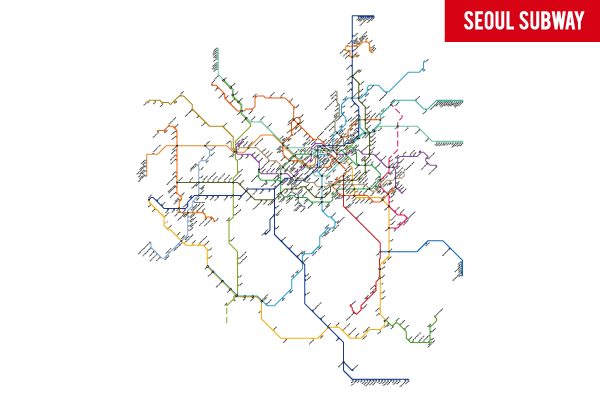
Interactive Travel Information
Discover the interactive travel maps on Gayther. Zoom in and learn more about individual stations, all of the lines and much more
Seoul provides a wide variety of accommodation options, from luxury hotels to cosy hostels. Prices and choices vary by area and distance to main attractions. The average nightly rate in the city is around 200 USD. Thanks to the city’s extensive transport network, staying outside the main districts is also convenient. There are over 60,000 hotel beds across Seoul, ranging from 2-star to 5-star establishments. Hotel prices include a 10% Value Added Tax (VAT) and a service charge of up to 11%, which can add approximately 21% to the room rate. Some hotels include these costs in their overall price, while others may exclude them in a practice called drip pricing. It is important to check what is included in the price before booking.
- The Royal Hotel Seoul (///works.page.history) is located in Myeongdong, within Seoul’s Jung District—the city’s historic and commercial centre—north of the Han River. It is conveniently close to Myeongdong Shopping Street and the Cathedral, with easy subway access to many of Seoul’s main attractions, including Namsan Tower. This 4-star, 21-storey hotel offers 310 rooms, including 19 suites, and is centrally situated in the city. Facilities include a top-floor restaurant and lounge with spectacular city views, a fitness centre, a full-service spa, and banquet halls. The average price for a standard room is around 120 US dollars per night, with a variety of room options available. For further information, please visit the Royal Hotel Seoul’s website.
- The Plaza Seoul (///bicker.snail.happy) is located on Sogong-ro in the Jung District and is centrally positioned in the city, close to City Hall and Deoksugung Palace. It offers convenient access to the city’s attractions, many of which are reachable by subway, bus, or taxi. The area is known for luxury hotels, high-end dining, and major shopping centres, including a 5-star hotel with over 400 rooms that provides extensive amenities and in-room services. The Plaza features six restaurants and bars, nine banquet halls, a luxury spa, and an indoor swimming pool. The average cost of a standard room is around 200 US dollars per night, with multiple room options available. For further details, please visit the Plaza Seoul website.
- H Hostel (///nesting.baffle.onto) is situated in Itaewon, in the central Yongsan district, an area celebrated for its vibrancy and multicultural atmosphere, and home to one of the city’s gay districts. The district lies north of the Han River and provides easy access to many of the city’s attractions. The H Hostel is a five-storey property with over 30 modern, non-smoking rooms, including private and shared dormitories. The hostel offers free Wi-Fi, a communal kitchen, a lounge with a TV, a rooftop terrace, and laundry services. The average cost for a standard room is approximately 40 US dollars per night, with various room options available. For more details, please visit the H Hostel listing on the Booking.com website.
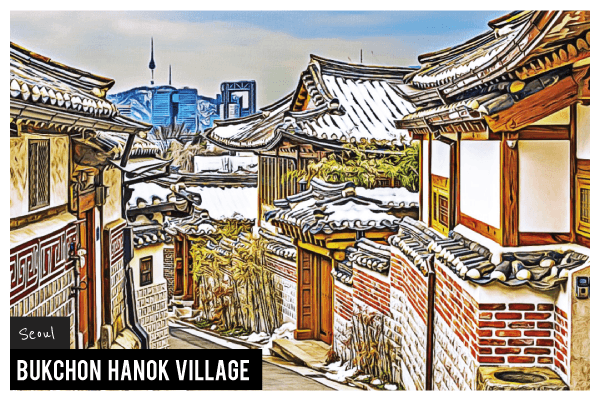
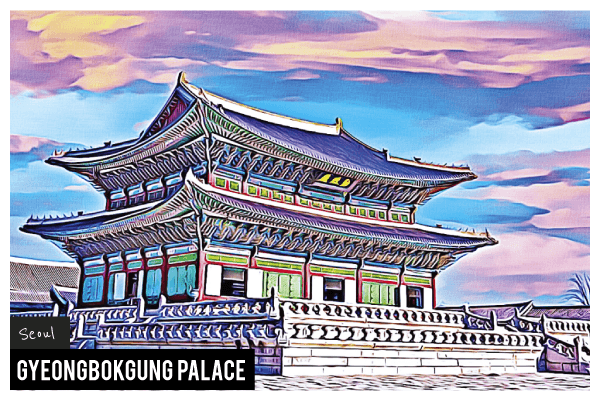
Seoul has a unique landscape, blending historic elements from periods like the Joseon Dynasty with the Gyeongbokgung Grand Palace and traditional Hanok villages, such as Bukchon, contrasting with futuristic architectural wonders like the Dongdaemun Design Plaza, the 555-metre Lotte World Tower, and the glass-wave Seoul City Hall. The city not only combines old and new but also seamlessly integrates its surroundings and nature, such as the Hangang River parks and Bukhansan, with urban landmarks like N Seoul Tower. Seoul’s popularity as a tourist destination continues to grow, driven by the K-Pop phenomenon, K-dramas, and its impressive technology and infrastructure. Seoul is and will remain a top must-see destination in Asia and around the world.
- Gyeongbokgung Palace (///quantity.donation.prices) – situated in the Jungno district, the historic centre of Seoul, Gyeongbokgung was the former royal residence of Korea’s dynastic kingdom, Joseon, and was completed around 1395. The Joseon dynasty used it until it was burned down in 1592. The palace was not fully restored until the late 19th century and comprises approximately 500 buildings with over 7,700 rooms. Notable structures include the Geunjeongjeon (Throne Hall), Gyeonghoeru Pavilion (Banquet Hall), and Gwanghwamun Gate, the main entrance where visitors can witness the changing-of-the-guard ceremony twice daily. The palace is open every day except Tuesdays, generally opening around 9 am and closing between 4 and 5 pm. For more details about tours and admission, visit the Royal Palaces and Tombs centre website.
- Bukhansan National Park (///shrimps.backpack.curvy) is located in Seoul’s metropolitan area, encompassing parts of Seoul and Gyeonggi Province, and covers approximately 80 square kilometres (31 square miles). With over 100 scenic hiking routes, including the renowned Dulle-gil loop, which spans more than 70 kilometres and comprises 21 sections and 100 temples, the park is among the most visited in the country, allowing visitors to walk through lush forests and reach granite peaks. The three main summits are Baekundae, Insubong, and Mangnyeongdae. It is a popular destination for hikers, rock climbers, and nature lovers, featuring beautiful oak and maple trees as well as deer and woodpeckers. Entry is free, and the park opens at 4 am daily, generally closing between 4 and 5 pm. Night hiking is not permitted in South Korea. For more information, visit the official website.
- Bukchon Hanok Village (///cuter.followers.visions) is located in the Jongno district, a residential area known as Bukchon Hanok, comprising over 900 traditionally restored Korean houses called Hanoks, including guesthouses such as the Bukchonmaru Hanok Guesthouse. The village is home to more than 6,000 residents. The Hanok buildings date back to the late 19th and early 20th centuries and have become a popular tourist destination, welcoming over 6 million visitors each year. The name means “north village” because of its location within the city, and it encompasses five neighbourhoods: Wonseo-dong, Jae-dong, Gye-dong, Gahoe-dong, and Insa-dong. Historically, the village served as a residence for high-ranking government officials and nobility. To manage over-tourism, the local government has introduced zoning and time restrictions. The village is open daily from 10 am to 5 pm, and non-residents and guests staying in the guesthouses are not permitted to enter the red zones outside these hours. For further information, visit the official website.
- N Seoul Tower (///jazzy.brand.revolts) is located at the top of Namsan Mountain in the Yongsan-gu district of Seoul. The 236-metre (774-foot) communication and observation tower was completed in 1971, with the observation deck opening to the public in 1980. This iconic landmark on the Seoul skyline marks the second-highest point in the city and was the first general-purpose radio-wave tower to provide TV and radio broadcasting to residents. The tower comprises three sections: N Lobby, N Plaza, and N Tower. The observation decks are on the fourth and fifth floors. Several cafes and restaurants are scattered throughout the tower; the eateries with the best views are on the third floor (3F), and a revolving restaurant sits on the top floor (7F). The observation decks are typically open from 10 am until between 10 pm and 11 pm every day, costing roughly ₩21,000 (about 14 US dollars). For more information about N Seoul Tower, visit the official website.
- Cheonggyecheon Stream (///marble.poodle.slides) is situated in the Jongno District and extends for 10.9 kilometres, or 6.8 miles, as an ecological park and stream. Originating in Suseongdong Valley, it connects to the Jungnangcheon tributary of the Han River and has become a popular recreation spot. Visitors and locals alike enjoy walking along the urban pathway, especially at night. The stream is a favourite nocturnal attraction for its colourful lights that illuminate the path, its escape from the busy streets, and its relaxing experience. Both the stream and the path are free to access, with the walk passing under 22 bridges, including the historic Gwangtonggyo Bridge. A major highlight is the Candlelight Fountain, which features light and water shows every evening. For more details, visit the Seoul Metropolitan Government website.
Although acceptance and public perception of the LGBTQIA+ community have gradually improved, the situation remains complex. While same-sex relationships have never been criminalised in South Korea, they are still considered a crime among active soldiers in the military. The country does not recognise same-sex marriage or civil unions, and there are no anti-discrimination laws to protect individuals from harassment based on their sexual orientation or gender identity. Although progress is being made, attitudes and treatment of the community vary across the country, with Seoul generally being more liberal and welcoming.
There are two gay districts in Seoul. The first is in Itaewon, locally known as Homo Hill, on Usadan-ro 12-gil, the main gay area with more than 70 LGBTQIA+ bars, clubs, and restaurants. The second area surrounds Jongno 3-ga and is home to Seoul’s older, more traditional gay scene. This area has over 100 small, local bars and is more grassroots and seen as more intimate than Itaewon.
Discussing LGBTQIA+ related matters and identities remains somewhat taboo, with wider society not fully understanding or being well-informed about the community. Although these topics are more visible in the two gay districts, it is advisable to be respectful and discreet throughout the rest of the city, such as limiting public displays of affection.
Koreans are generally very polite and helpful to tourists. Culturally, they are friendly, non-confrontational, and reserved. Korea is a safe and welcoming destination; however, language and communication can present challenges for some, and their culture usually limits intimacy to holding hands or linking arms. Public displays of affection, such as kissing, are frowned upon, especially among older generations. Overall, most LGBTQIA+ tourists will enjoy their visit without incident and leave with memorable experiences.
With increasing global recognition of brand Korea, starting with PSY’s Gangnam Style in 2012 and the worldwide popularity of K-Pop groups like BTS and Blackpink, along with the rise of K-dramas partly driven by streaming platforms such as Netflix through hits like Squid Game and Crash Landing on You, the world began paying more attention to Korea. A fact highlighted for those who watched the 1988 Summer Olympics was how breathtaking the Korean peninsula truly is. Still, the growing prominence of Korean shows has clearly demonstrated everything Korea has to offer.
Although Seoul is a top city destination, with 17 World Heritage Sites, 14 cultural and two related to nature, there is much to explore for those wishing to extend their stay. From the breathtaking volcanic Jeju Island and the shaded paths of Nami Island to immersing oneself in nature, and from a historical tour of the border between North and South Korea, known as the DMZ (or Demilitarised Zone), to a visit to the renowned Gyeongbokgung Palace, Korea offers a wealth of attractions.
For LGBTQIA+ travellers, a trip to South Korea might seem intimidating; however, with an established community in Seoul and smaller presences in other Korean cities, the local community is welcoming. Although South Korea still has progress to make in advancing community rights, Korean culture and hospitality ensure that visitors to the country will have a memorable experience. Seoul and Korea offer much more than just a city break. Whether it’s history, nature, or a sense of close-knit community, LGBTQIA+ travellers will quickly fall in love with this country and see why the world is finally recognising its culture.
There are two gay districts in Seoul. The first is in Itaewon, locally known as Homo Hill, on Usadan-ro 12-gil, the main gay area with more than 70 LGBTQIA+ bars, clubs, and restaurants. The second area surrounds Jongno 3-ga and is home to Seoul’s older, more traditional gay scene. This area has over 100 small, local bars and is more grassroots and seen as more intimate than Itaewon.
Discussing LGBTQIA+ related matters and identities remains somewhat taboo, with wider society not fully understanding or being well-informed about the community. Although these topics are more visible in the two gay districts, it is advisable to be respectful and discreet throughout the rest of the city, such as limiting public displays of affection.
Koreans are generally very polite and helpful to tourists. Culturally, they are friendly, non-confrontational, and reserved. Korea is a safe and welcoming destination; however, language and communication can present challenges for some, and their culture usually limits intimacy to holding hands or linking arms. Public displays of affection, such as kissing, are frowned upon, especially among older generations. Overall, most LGBTQIA+ tourists will enjoy their visit without incident and leave with memorable experiences.
With increasing global recognition of brand Korea, starting with PSY’s Gangnam Style in 2012 and the worldwide popularity of K-Pop groups like BTS and Blackpink, along with the rise of K-dramas partly driven by streaming platforms such as Netflix through hits like Squid Game and Crash Landing on You, the world began paying more attention to Korea. A fact highlighted for those who watched the 1988 Summer Olympics was how breathtaking the Korean peninsula truly is. Still, the growing prominence of Korean shows has clearly demonstrated everything Korea has to offer.
Although Seoul is a top city destination, with 17 World Heritage Sites, 14 cultural and two related to nature, there is much to explore for those wishing to extend their stay. From the breathtaking volcanic Jeju Island and the shaded paths of Nami Island to immersing oneself in nature, and from a historical tour of the border between North and South Korea, known as the DMZ (or Demilitarised Zone), to a visit to the renowned Gyeongbokgung Palace, Korea offers a wealth of attractions.
For LGBTQIA+ travellers, a trip to South Korea might seem intimidating; however, with an established community in Seoul and smaller presences in other Korean cities, the local community is welcoming. Although South Korea still has progress to make in advancing community rights, Korean culture and hospitality ensure that visitors to the country will have a memorable experience. Seoul and Korea offer much more than just a city break. Whether it’s history, nature, or a sense of close-knit community, LGBTQIA+ travellers will quickly fall in love with this country and see why the world is finally recognising its culture.

Are you planning a trip to the Republic of Korea (South)? Gayther’s travel guides provide all the essential travel information, useful translations and LGBTQIA+-specific information. Gayther guides provide you with all the information you need when planning your trip.

Learn more about the weather and climate information for Seoul. Discover the best time to travel to a specific area, when it is the hottest, when there is the least chance of rain or when it might snow.
Discover more about available modes of transport in Seoul. Whether cruise ports, metro stations or international airports, you will find them all on Gayther. Many popular transportation systems will feature enhanced listings, including interactive maps and click links to stations, lines or routes, airport terminals and amenities.




IMPORTANT DISCLAIMER: All published articles have been written by members of the general public. Many will likely not be journalists nor be affiliated with any professional bodies associated with members of the media. The articles will likely be based on the authors’ own opinions, views, and experiences. Gayther does not endorse or accept any responsibility or liability regarding any materials within the news and media pages. This page may contain external links to third party websites; Gayther provides these links for your convenience and does not endorse, warrant or recommend any particular products or services. By clicking on any external links, you will leave Gayther and be taken to the third-party website, which you do so at your own risk and by accessing the site, you will be required to comply with the external third party’s terms and conditions of use and privacy policies
Discover all of the topical articles written by people from across the community and friends, all sharing their stories, opinions and experiences