








Companion Code:
When AI Becomes Queer Confidant, Freedom or Concealment?
- Atilla Tiriyaki
- Average Reading Time: 7 minutes
- Community
- articles, atillat, guides
In an age of digital connection, loneliness seems to be becoming increasingly common. Many people now find themselves surrounded by online communities and networks, yet lacking consistent emotional support in their everyday lives. Artificial intelligence, long seen primarily as a productivity tool, is becoming a confidant and conversational presence, offering companionship and emotional reflection. From casual interactions to deeply personal disclosures, AI is there in moments of isolation. While AI can offer immediate relief and a sense of being heard, it may also subtly reshape emotional habits and expectations around connection. As AI becomes more human-like in conversation while remaining fundamentally non-human in experience, these systems may be slowly redefining what people expect from relationships and from themselves.
DISCLAIMER
All published articles are intended for an audience aged 18 years and over and have been written by members of the general public. Many will likely not be journalists nor be affiliated with any professional bodies associated with members of the media. The articles will likely be based on the authors' own opinions, views, and experiences...more
Over the past two decades, human connection and communication have changed significantly. The way we connect has become faster, often instant, more frequent, and increasingly digital, yet it often lacks emotional depth and meaningful connection. Meanwhile, economic pressure, housing instability, and the lingering psychological effects of the COVID-19 pandemic have contributed to rising feelings of isolation across many societies.
Loneliness is now more widely understood not simply as an individual emotional experience but as a broader social condition shaped by the environment, inequality, and weakening community ties. Research suggests it affects large proportions of people across age groups, regions, and backgrounds, though its expression and intensity vary widely.
In an increasingly digital world, where individuals may have hundreds or even thousands of online connections but only a handful of meaningful relationships in their local communities, loneliness has become both more visible and more structurally embedded in everyday life.
Loneliness is now more widely understood not simply as an individual emotional experience but as a broader social condition shaped by the environment, inequality, and weakening community ties. Research suggests it affects large proportions of people across age groups, regions, and backgrounds, though its expression and intensity vary widely.
In an increasingly digital world, where individuals may have hundreds or even thousands of online connections but only a handful of meaningful relationships in their local communities, loneliness has become both more visible and more structurally embedded in everyday life.
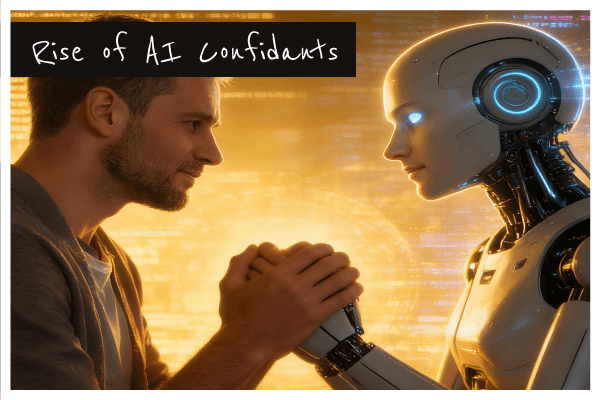
Against this backdrop, artificial intelligence is beginning to play a new and unexpected role in everyday life. While public discussion of AI often focuses on productivity, automation, and innovation, a quieter shift is underway as people increasingly turn to AI assistants for conversation, reflection, and reassurance. These systems are used not only for practical tasks but also as spaces for interaction and emotional support.
Early research suggests that AI companions are already being used to reduce loneliness and provide emotional support in daily life. At the same time, reports and social media discussions indicate a growing number of individuals forming meaningful relationships with these systems, often attributing personalities, narratives, and emotional significance to their interactions in ways that resemble friendship or even romantic attachment.
The appeal is relatively straightforward. AI systems are available at any time, respond instantly, and are typically designed to be non-judgmental and responsive. For individuals experiencing loneliness, anxiety, or social fatigue, this creates an always-accessible conversational presence that can feel easier to engage with than many forms of human interaction.
This dynamic is not purely theoretical. In 2023, the developer of Replika, an AI companion app, introduced changes to its underlying model and safety rules, significantly altering the behaviour of users’ AI companions. The update triggered widespread backlash on Reddit and social media, with some users reporting emotional distress and describing the experience in terms resembling grief, stating that their “AI partner had changed.” In response, the company partially restored certain features for some users, though not a full rollback of the system.
Yet while AI companions may help alleviate loneliness, the level of responsiveness must not be mistaken for understanding. AI systems do not possess lived experience, emotional awareness, or responsibility for the interactions they produce. Their outputs are generated through statistical patterns in data and shaped by design constraints intended to maximise usefulness, safety, and coherence.
What may feel like empathy is, in practice, a simulation of empathetic language rather than an expression of felt experience.
Early research suggests that AI companions are already being used to reduce loneliness and provide emotional support in daily life. At the same time, reports and social media discussions indicate a growing number of individuals forming meaningful relationships with these systems, often attributing personalities, narratives, and emotional significance to their interactions in ways that resemble friendship or even romantic attachment.
The appeal is relatively straightforward. AI systems are available at any time, respond instantly, and are typically designed to be non-judgmental and responsive. For individuals experiencing loneliness, anxiety, or social fatigue, this creates an always-accessible conversational presence that can feel easier to engage with than many forms of human interaction.
This dynamic is not purely theoretical. In 2023, the developer of Replika, an AI companion app, introduced changes to its underlying model and safety rules, significantly altering the behaviour of users’ AI companions. The update triggered widespread backlash on Reddit and social media, with some users reporting emotional distress and describing the experience in terms resembling grief, stating that their “AI partner had changed.” In response, the company partially restored certain features for some users, though not a full rollback of the system.
Yet while AI companions may help alleviate loneliness, the level of responsiveness must not be mistaken for understanding. AI systems do not possess lived experience, emotional awareness, or responsibility for the interactions they produce. Their outputs are generated through statistical patterns in data and shaped by design constraints intended to maximise usefulness, safety, and coherence.
What may feel like empathy is, in practice, a simulation of empathetic language rather than an expression of felt experience.
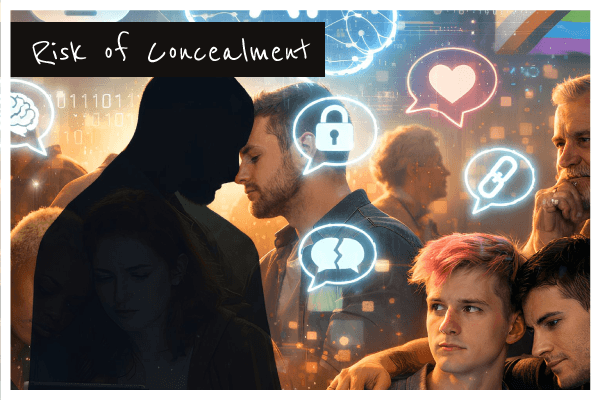
Although visibility, representation, and social acceptance have improved significantly in many parts of the world, the journey of self-discovery and acceptance remains complex and, for many, deeply difficult. Cultural context, regional politics, and religious belief can shape whether individuals feel able to explore or express their identity. Even today, in some regions, people continue to struggle with their sexuality or gender identity, often out of fear of persecution or social isolation.
AI assistants offer a safe space for exploration, reflection, and validation. For individuals navigating identity questions, they can provide a low-pressure environment to organise thoughts, rehearse difficult conversations, or process emotions privately. Early research on AI companionship suggests these systems can reduce loneliness in the short term, particularly when users feel seen, heard, and affirmed during these interactions.
Longer-term findings paint a different, more complex picture. Some studies suggest that increased use of AI companions may be associated with higher levels of loneliness over time for certain users, indicating a bidirectional relationship: those who feel lonely are more likely to turn to AI, while heavy reliance on it may, in some cases, reinforce isolation. This introduces a more subtle concern: emotional outsourcing.
If AI becomes a primary space for emotional support, some individuals may delay or suppress aspects of identity formation in the real world, relying instead on private, mediated forms of connection. In doing so, the process of self-understanding may become increasingly contained within digital interaction rather than extending into lived social experience.
Though there is a risk of concealment, AI has a role to play, potentially as a valuable source of support. Human relationships are not always accessible, and AI may provide meaningful assistance during periods of stress, uncertainty, or isolation. The concern arises when it shifts from a supplementary tool for reflection to the sole place for a person’s sense of identity and emotional connection.
Human relationships involve friction, disagreement, and unpredictability. While often uncomfortable, these dynamics are central to emotional development, resilience, and self-understanding. AI systems, by contrast, are typically optimised for smooth, responsive, and low-friction interaction unless explicitly designed otherwise.
As a result, the nature of emotional interaction itself may begin to shift.
AI assistants offer a safe space for exploration, reflection, and validation. For individuals navigating identity questions, they can provide a low-pressure environment to organise thoughts, rehearse difficult conversations, or process emotions privately. Early research on AI companionship suggests these systems can reduce loneliness in the short term, particularly when users feel seen, heard, and affirmed during these interactions.
Longer-term findings paint a different, more complex picture. Some studies suggest that increased use of AI companions may be associated with higher levels of loneliness over time for certain users, indicating a bidirectional relationship: those who feel lonely are more likely to turn to AI, while heavy reliance on it may, in some cases, reinforce isolation. This introduces a more subtle concern: emotional outsourcing.
If AI becomes a primary space for emotional support, some individuals may delay or suppress aspects of identity formation in the real world, relying instead on private, mediated forms of connection. In doing so, the process of self-understanding may become increasingly contained within digital interaction rather than extending into lived social experience.
Though there is a risk of concealment, AI has a role to play, potentially as a valuable source of support. Human relationships are not always accessible, and AI may provide meaningful assistance during periods of stress, uncertainty, or isolation. The concern arises when it shifts from a supplementary tool for reflection to the sole place for a person’s sense of identity and emotional connection.
Human relationships involve friction, disagreement, and unpredictability. While often uncomfortable, these dynamics are central to emotional development, resilience, and self-understanding. AI systems, by contrast, are typically optimised for smooth, responsive, and low-friction interaction unless explicitly designed otherwise.
As a result, the nature of emotional interaction itself may begin to shift.
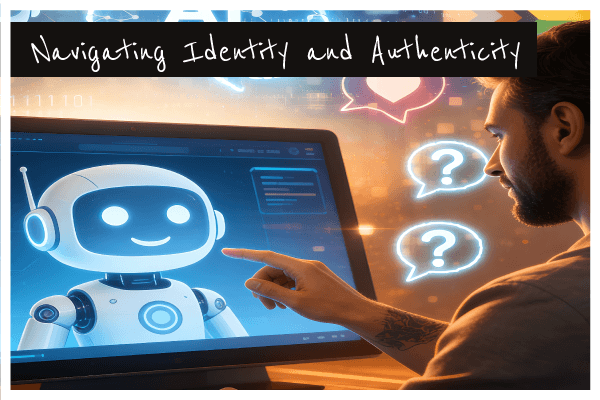
The journey of self-acceptance often begins with making sense of one’s thoughts and emotions and learning to integrate them into a coherent sense of identity. It involves exploring internal experience, finding language for what is felt, and developing an understanding that helps reduce isolation.
Within this context, LGBTQIA+ identity is often discussed in terms of acceptance and self-understanding, shaped by a complex interplay of personal experience, cultural norms, and social environment.
These dynamics are particularly significant in identity formation, especially for individuals exploring sexuality, gender identity, or other aspects of self that may not be socially accepted in their environment.
Research suggests that emotional attachment to AI systems is shaped by psychological and social factors rather than being uniform across users. This means the impact of AI companionship varies significantly depending on individual circumstances, including age, attachment style, and access to real-world support networks.
For some individuals, AI may provide a safe and private space to explore thoughts and emotions without fear of judgment, rejection, or exposure. In contexts where openness carries real social, cultural, or legal risk, this can offer meaningful psychological relief and a form of early-stage self-expression.
At the same time, this safety introduces a more complex tension. Human identity is formed not only internally but also through interaction with others, through acceptance, rejection, negotiation, and lived social experience. If AI becomes the primary space for identity exploration, it may alter the pathway from private self-understanding to public self-expression.
This does not prevent identity development, but it may reshape its timing, texture, and social grounding.
Within this context, LGBTQIA+ identity is often discussed in terms of acceptance and self-understanding, shaped by a complex interplay of personal experience, cultural norms, and social environment.
These dynamics are particularly significant in identity formation, especially for individuals exploring sexuality, gender identity, or other aspects of self that may not be socially accepted in their environment.
Research suggests that emotional attachment to AI systems is shaped by psychological and social factors rather than being uniform across users. This means the impact of AI companionship varies significantly depending on individual circumstances, including age, attachment style, and access to real-world support networks.
For some individuals, AI may provide a safe and private space to explore thoughts and emotions without fear of judgment, rejection, or exposure. In contexts where openness carries real social, cultural, or legal risk, this can offer meaningful psychological relief and a form of early-stage self-expression.
At the same time, this safety introduces a more complex tension. Human identity is formed not only internally but also through interaction with others, through acceptance, rejection, negotiation, and lived social experience. If AI becomes the primary space for identity exploration, it may alter the pathway from private self-understanding to public self-expression.
This does not prevent identity development, but it may reshape its timing, texture, and social grounding.
The question is not whether AI confidants are good or bad, but how they are designed and used. AI systems can be configured in different ways, prioritising emotional validation, encouraging reflection and uncertainty, or introducing challenge and alternative perspectives. Each approach carries trade-offs.
Highly affirming systems may feel supportive and emotionally safe, but risk reinforcing existing beliefs or emotional states. More challenging systems may better approximate human interaction, yet feel less accessible during vulnerable moments.
A further complication lies in perception. Users may perceive AI systems as empathetic, even though they lack emotional understanding. This creates a gap between perceived emotional presence and the underlying mechanism.
AI confidants are unlikely to remain marginal. As systems become more conversational, personalised, and integrated into everyday digital environments, they are likely to become a persistent feature of modern emotional life.
The question, therefore, is not whether AI companionship is inherently beneficial or harmful, but how it reshapes expectations of emotional effort, connection, and self-understanding. Used thoughtfully, AI can support reflection, communication, and emotional clarity. Used uncritically, it may subtly redefine what people expect from relationships.
Ultimately, the technology is not the decisive factor. The more important question is what kinds of emotional lives we are building alongside it, and what forms of human friction, presence, and unpredictability we are willing to preserve.
Stay safe, and until the next time.
Highly affirming systems may feel supportive and emotionally safe, but risk reinforcing existing beliefs or emotional states. More challenging systems may better approximate human interaction, yet feel less accessible during vulnerable moments.
A further complication lies in perception. Users may perceive AI systems as empathetic, even though they lack emotional understanding. This creates a gap between perceived emotional presence and the underlying mechanism.
AI confidants are unlikely to remain marginal. As systems become more conversational, personalised, and integrated into everyday digital environments, they are likely to become a persistent feature of modern emotional life.
The question, therefore, is not whether AI companionship is inherently beneficial or harmful, but how it reshapes expectations of emotional effort, connection, and self-understanding. Used thoughtfully, AI can support reflection, communication, and emotional clarity. Used uncritically, it may subtly redefine what people expect from relationships.
Ultimately, the technology is not the decisive factor. The more important question is what kinds of emotional lives we are building alongside it, and what forms of human friction, presence, and unpredictability we are willing to preserve.
Stay safe, and until the next time.

Learn more about the exceptional LGBTQIA+ community, discover the community’s history, the ongoing movement for equality, the size of the community and how much it contributes to the world economy, frequently asked questions and much more.

Learn more about the exceptional individuals and groups that advocated and fought hard throughout history to improve LGBTQIA+ rights and conditions across the world

Learn more about how individual countries and regions around the world treat members of the LGBTQIA+ community. From the status and laws of same-sex marriages to gender identity recognition, this easy-to-use equality index provides a score and breakdown for every country worldwide.






IMPORTANT DISCLAIMER: All published articles have been written by members of the general public. Many will likely not be journalists nor be affiliated with any professional bodies associated with members of the media. The articles will likely be based on the authors’ own opinions, views, and experiences. Gayther does not endorse or accept any responsibility or liability regarding any materials within the news and media pages. This page may contain external links to third party websites; Gayther provides these links for your convenience and does not endorse, warrant or recommend any particular products or services. By clicking on any external links, you will leave Gayther and be taken to the third-party website, which you do so at your own risk and by accessing the site, you will be required to comply with the external third party’s terms and conditions of use and privacy policies
Discover all of the topical articles written by people from across the community and friends, all sharing their stories, opinions and experiences