









Transition Tapestry:
Transgender Journeys and the Shape of Identity
- Atilla Tiriyaki
- Average Reading Time: 16 minutes
- Community, Transgender
- articles, atillat, guides
What does it really mean to be transgender? Beyond the headlines, political arguments, and the increasingly divisive debate, there is a more personal story: a person seeking to understand who they are, how they see themselves, and how they want to live their life. The journey may begin with questions in childhood, whilst for others it may not become clear until adolescence or adulthood. It can involve puberty, self-discovery, social transition, healthcare, hormones, and, for some, simply legal recognition. But there is no single path, no universal timeline, and no requirement to follow every step of a perceived process. Let us explore the journey from identity to transition, and the medical, social and legal decisions that may accompany it. Remember that behind the debate is something that can easily be lost in the headlines: a person simply trying to understand themselves and live authentically.
DISCLAIMER
All published articles are intended for an audience aged 18 years and over and have been written by members of the general public. Many will likely not be journalists nor be affiliated with any professional bodies associated with members of the media. The articles will likely be based on the authors' own opinions, views, and experiences...more
The transgender community has, particularly over the past five years, received an extraordinary amount of public and media attention, much of it negative. Despite the volume of personal narratives and public debate, much of what the wider public encounters about transgender people is filtered through political debate, sensational headlines, misinformation and competing narratives about what transgender identity means. Yet those narratives do not necessarily reflect the lived experience of transgender people.
Anyone who looks beyond the headlines and, more importantly, listens to transgender people and engages with their stories and experiences will encounter something far more ordinary and human. Behind the political arguments are individuals trying to understand themselves, navigate their bodies and relationships, find language for their experiences, and ultimately live their lives with the same dignity and acceptance that most people take for granted.
Let us explore together transgender identity, the spectrum of gender identities, and the journey some people undertake to understand and express their gender. Before doing so, however, it is useful to establish a few principles:
Ultimately, being transgender is not typically experienced as a switch that someone consciously turns on or off. The choices often come later: whether to disclose that identity, how to express it, whether to transition socially or medically, and how to navigate life in a society that may not always understand it.
At its heart, the transgender experience is about something so simple: how a person understands themselves, how they wish to live, and the hope that others will respect them for who they are.
So where does gender identity come from in the first place?
Anyone who looks beyond the headlines and, more importantly, listens to transgender people and engages with their stories and experiences will encounter something far more ordinary and human. Behind the political arguments are individuals trying to understand themselves, navigate their bodies and relationships, find language for their experiences, and ultimately live their lives with the same dignity and acceptance that most people take for granted.
Let us explore together transgender identity, the spectrum of gender identities, and the journey some people undertake to understand and express their gender. Before doing so, however, it is useful to establish a few principles:
- For the people themselves, being transgender is not about denying anatomy or demanding that everyone else see the world in the same way.
- Questioning one’s gender is not the same as being transgender.
- For many transgender people, understanding their identity is a process, often long and complex.
Ultimately, being transgender is not typically experienced as a switch that someone consciously turns on or off. The choices often come later: whether to disclose that identity, how to express it, whether to transition socially or medically, and how to navigate life in a society that may not always understand it.
At its heart, the transgender experience is about something so simple: how a person understands themselves, how they wish to live, and the hope that others will respect them for who they are.
So where does gender identity come from in the first place?
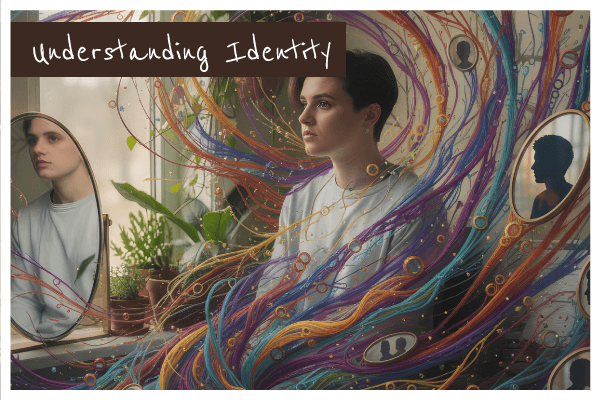
In the Gayther article From Maybe to Me: The LGBTQIA+ Journey of Self-Discovery, we explored how gender and biological sex (or sex assigned at birth) are distinct concepts. We looked at how many of the behaviours, expectations and characteristics associated with gender are learned through family, society and culture, and how those expectations can vary considerably across regions and cultures.
Having explored some of the psychological aspects of what it means to identify as transgender or within the spectrum of gender identities, we will focus more closely on the journey itself: what it can look and feel like, how it may develop over time, and what may happen when someone decides to express or act on their identity.
The journey for many transgender people, including any legal or medical processes, varies considerably between countries. Healthcare systems, laws, age requirements, and access to gender-affirming care all differ. Rather than presenting a single universal process, we will explore some of the stages a person may encounter, along with the safeguards, assessments, and obstacles that may arise.
Let’s get the argument that being transgender was traditionally a mental health disorder out of the way early. The International Classification of Diseases (ICD) is the global standard diagnostic tool for epidemiology, health management, and clinical purposes, maintained and published by the World Health Organisation. Specifically, ICD-11 recognises gender incongruence as a health-related condition but no longer places it in the chapter on mental and behavioural disorders. This change reflects the distinction between gender identity itself and mental illness, while recognising that some transgender people may still require healthcare or psychological support. So, though being transgender is not a mental health disorder, conditions such as body dysmorphia would be considered a condition requiring support and treatment.
THE EARLY YEARS
Children begin developing an understanding of gender at a young age. They learn about gender roles and expectations through their families, communities, culture, language and the people around them. Gender identity, however, is more complex than simply learning these social expectations, and there is no single age at which a person’s gender identity suddenly emerges.
Some transgender people describe having, from childhood, a sense that something about their gender did not fit. They may not have had the language to explain it, and they may not have initially understood what that feeling meant. For others, their identity only becomes clear much later. However, it is important not to confuse gender nonconformity with being transgender.
A boy who enjoys dolls, dressing up or traditionally feminine activities is not necessarily transgender. Equally, a girl who loves football, climbing trees or traditionally masculine activities is not necessarily transgender. Children naturally experiment with interests, behaviours and forms of expression, and many do not conform to the gender expectations placed on them, often not until much later in life.
For some children, however, the experience can be more fundamental than interests or preferences. They may repeatedly express that they are a different gender from the one assigned at birth, feel uncomfortable being treated as that gender, or experience a persistent sense that others’ perceptions do not reflect how they understand themselves. For these children, the experience may be less about what they like doing and more about who they believe themselves to be.
When a child consistently expresses a transgender identity, some families may support a social transition. This may include using a different name, changing clothing or hairstyle, and asking family members, friends or teachers to use different pronouns. The extent of this transition varies from child to child and family to family.
An important distinction is that these changes are primarily social rather than medical. A child may change how they are addressed or presented without undergoing medical treatment or irreversible procedures. For some families, this offers an opportunity for the child to explore and express their identity while continuing to grow and develop.
This distinction is important because childhood gender expression and social transition should not be conflated with medical transition. They are separate issues, and decisions about medical care, particularly for children and adolescents, involve substantially different considerations.
So, when does medical intervention start?
Having explored some of the psychological aspects of what it means to identify as transgender or within the spectrum of gender identities, we will focus more closely on the journey itself: what it can look and feel like, how it may develop over time, and what may happen when someone decides to express or act on their identity.
The journey for many transgender people, including any legal or medical processes, varies considerably between countries. Healthcare systems, laws, age requirements, and access to gender-affirming care all differ. Rather than presenting a single universal process, we will explore some of the stages a person may encounter, along with the safeguards, assessments, and obstacles that may arise.
Let’s get the argument that being transgender was traditionally a mental health disorder out of the way early. The International Classification of Diseases (ICD) is the global standard diagnostic tool for epidemiology, health management, and clinical purposes, maintained and published by the World Health Organisation. Specifically, ICD-11 recognises gender incongruence as a health-related condition but no longer places it in the chapter on mental and behavioural disorders. This change reflects the distinction between gender identity itself and mental illness, while recognising that some transgender people may still require healthcare or psychological support. So, though being transgender is not a mental health disorder, conditions such as body dysmorphia would be considered a condition requiring support and treatment.
THE EARLY YEARS
Children begin developing an understanding of gender at a young age. They learn about gender roles and expectations through their families, communities, culture, language and the people around them. Gender identity, however, is more complex than simply learning these social expectations, and there is no single age at which a person’s gender identity suddenly emerges.
Some transgender people describe having, from childhood, a sense that something about their gender did not fit. They may not have had the language to explain it, and they may not have initially understood what that feeling meant. For others, their identity only becomes clear much later. However, it is important not to confuse gender nonconformity with being transgender.
A boy who enjoys dolls, dressing up or traditionally feminine activities is not necessarily transgender. Equally, a girl who loves football, climbing trees or traditionally masculine activities is not necessarily transgender. Children naturally experiment with interests, behaviours and forms of expression, and many do not conform to the gender expectations placed on them, often not until much later in life.
For some children, however, the experience can be more fundamental than interests or preferences. They may repeatedly express that they are a different gender from the one assigned at birth, feel uncomfortable being treated as that gender, or experience a persistent sense that others’ perceptions do not reflect how they understand themselves. For these children, the experience may be less about what they like doing and more about who they believe themselves to be.
When a child consistently expresses a transgender identity, some families may support a social transition. This may include using a different name, changing clothing or hairstyle, and asking family members, friends or teachers to use different pronouns. The extent of this transition varies from child to child and family to family.
An important distinction is that these changes are primarily social rather than medical. A child may change how they are addressed or presented without undergoing medical treatment or irreversible procedures. For some families, this offers an opportunity for the child to explore and express their identity while continuing to grow and develop.
This distinction is important because childhood gender expression and social transition should not be conflated with medical transition. They are separate issues, and decisions about medical care, particularly for children and adolescents, involve substantially different considerations.
So, when does medical intervention start?
For many transgender individuals, puberty is both a pivotal period and a time of considerable stress. In a child’s development, puberty is an important milestone, marking the onset of significant, increasingly visible changes in the body. Breasts develop, facial and body hair may appear, menstruation begins, the voice may change, muscle mass and body shape develop, and in males the larynx and Adam’s apple can become more prominent. For most children, these changes are simply part of growing up.
For many, puberty can be an exciting, confusing or sometimes uncomfortable period. It is nevertheless a natural stage of physical development. For a transgender child, however, puberty can feel very different. The physical changes may seem to move their body further from how they understand themselves. What might be an ordinary developmental milestone for one child can therefore become a source of significant distress for another.
For some young people who experience gender incongruence or gender dysphoria, puberty can therefore be an important point at which they, their family and healthcare professionals discuss what support may be appropriate.
PUBERTY SUPPRESSION
Where a young person experiences persistent gender incongruence or gender dysphoria, they may seek specialist medical support. Depending on the country and healthcare system, this may involve assessment by specialist clinicians and consideration of the individual’s psychological, social and physical circumstances.
Puberty suppression has been used in some healthcare systems for young people experiencing gender dysphoria or gender incongruence. The medicines most commonly discussed are gonadotrophin-releasing hormone (GnRH) analogues, commonly referred to as puberty blockers. These medicines suppress the hormonal signals that drive pubertal development, thereby delaying or suppressing some of the physical changes associated with puberty.
Puberty suppression is distinct from masculinising or feminising hormone therapy. It does not introduce oestrogen or testosterone to produce the physical characteristics associated with another sex.
When puberty suppression is considered clinically, treatment is generally initiated during the early stages of physical puberty rather than at a specific chronological age. Tanner Stage 2 is commonly used to mark the onset of puberty, although the timing of puberty varies considerably between individuals. Reaching Tanner Stage 2 does not, by itself, mean that a young person is eligible for treatment. The Endocrine Society guideline supports initiating treatment after the onset of physical signs of puberty rather than at a fixed age.
Some of the effects of puberty suppression are considered reversible when treatment is stopped, in the sense that endogenous puberty can resume. However, this does not mean that treatment is without potential consequences or medical considerations. Treatment requires medical monitoring and consideration of factors such as bone health and other aspects of physical development. The evidence surrounding puberty suppression, particularly in adolescents, remains an area of active clinical and scientific debate.
Access also varies considerably between countries. The situation in England is particularly important to distinguish from international practice. NHS England does not currently commission puberty-suppressing hormones as a routine treatment option for children and young people with gender incongruence or gender dysphoria. An important point to note when discussing the transgender journey is that there is no single international medical pathway. What is available to a transgender young person can depend heavily on where they live, the healthcare system they use, their age, current clinical guidance and their individual circumstances.
For many, puberty can be an exciting, confusing or sometimes uncomfortable period. It is nevertheless a natural stage of physical development. For a transgender child, however, puberty can feel very different. The physical changes may seem to move their body further from how they understand themselves. What might be an ordinary developmental milestone for one child can therefore become a source of significant distress for another.
For some young people who experience gender incongruence or gender dysphoria, puberty can therefore be an important point at which they, their family and healthcare professionals discuss what support may be appropriate.
PUBERTY SUPPRESSION
Where a young person experiences persistent gender incongruence or gender dysphoria, they may seek specialist medical support. Depending on the country and healthcare system, this may involve assessment by specialist clinicians and consideration of the individual’s psychological, social and physical circumstances.
Puberty suppression has been used in some healthcare systems for young people experiencing gender dysphoria or gender incongruence. The medicines most commonly discussed are gonadotrophin-releasing hormone (GnRH) analogues, commonly referred to as puberty blockers. These medicines suppress the hormonal signals that drive pubertal development, thereby delaying or suppressing some of the physical changes associated with puberty.
Puberty suppression is distinct from masculinising or feminising hormone therapy. It does not introduce oestrogen or testosterone to produce the physical characteristics associated with another sex.
When puberty suppression is considered clinically, treatment is generally initiated during the early stages of physical puberty rather than at a specific chronological age. Tanner Stage 2 is commonly used to mark the onset of puberty, although the timing of puberty varies considerably between individuals. Reaching Tanner Stage 2 does not, by itself, mean that a young person is eligible for treatment. The Endocrine Society guideline supports initiating treatment after the onset of physical signs of puberty rather than at a fixed age.
Some of the effects of puberty suppression are considered reversible when treatment is stopped, in the sense that endogenous puberty can resume. However, this does not mean that treatment is without potential consequences or medical considerations. Treatment requires medical monitoring and consideration of factors such as bone health and other aspects of physical development. The evidence surrounding puberty suppression, particularly in adolescents, remains an area of active clinical and scientific debate.
Access also varies considerably between countries. The situation in England is particularly important to distinguish from international practice. NHS England does not currently commission puberty-suppressing hormones as a routine treatment option for children and young people with gender incongruence or gender dysphoria. An important point to note when discussing the transgender journey is that there is no single international medical pathway. What is available to a transgender young person can depend heavily on where they live, the healthcare system they use, their age, current clinical guidance and their individual circumstances.
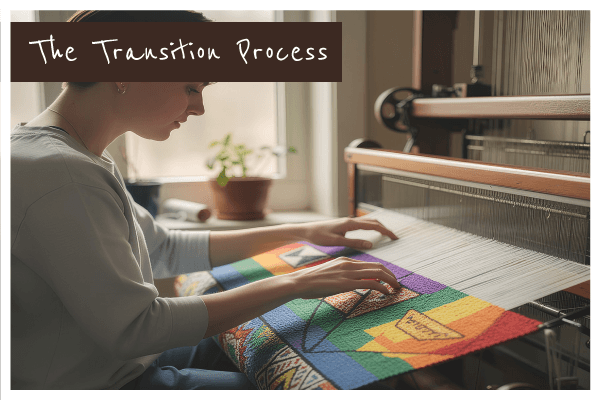
For some transgender young people, much of their early experience remains social rather than medical. They may live in their affirmed gender, use a chosen name or pronouns, change their clothing or the way they present themselves, and develop an understanding of how they wish to live as they become adults. There is no universally prescribed sequence that every transgender person follows. Some people socially transition without medical intervention, some pursue hormone therapy, some undergo surgery, some seek legal recognition, and some choose none of these.
For some people, adulthood may be when they pursue medical transition; for others, it may simply offer greater independence in how they express and live their identity. There is no universal age at which every transgender person begins medical transition. Laws governing medical consent, access to treatment and legal recognition vary between countries. Adulthood is not the point at which someone suddenly becomes transgender. Their gender identity may have been understood for many years. Rather, adulthood may mark a point at which they have greater legal and practical ability to make decisions about their own healthcare and how they wish to live.
The extent of assessment also varies. There is no single international assessment process. Some healthcare systems have historically required extensive psychological assessment and evidence of persistent gender dysphoria before initiating medical treatment. Other systems have moved towards models that place greater emphasis on informed consent and individual autonomy.
Requirements therefore vary considerably between countries and healthcare providers. It is also important not to assume that every transgender person must complete a fixed period of social transition, undergo a set number of psychological assessments, or follow a prescribed sequence of steps before being able to make decisions about their healthcare.
WHAT HAPPENS NEXT?
For some transgender adults, the next stage may be gender-affirming hormone therapy. Hormone therapy is fundamentally different from social transition and from puberty suppression. It involves administering hormones such as oestrogen or testosterone to produce physical changes associated with the person’s affirmed gender.
Depending on the treatment, these changes can be substantial. Some may reverse after treatment is stopped, while others may be partially reversible or effectively permanent. This is why hormone treatment involves a discussion of the individual’s health, circumstances, expectations, potential risks and benefits, and, where relevant, fertility and reproductive options.
Hormone therapy is not, however, a requirement for being transgender. Some transgender people take hormones, while others do not. Some pursue surgery, while others do not. Some transition socially but never medically. Medical transition is therefore better understood as a collection of possible choices rather than a single destination.
LEGAL RECOGNITION
For many transgender people, medical transition is only one part of the journey. Legal recognition can be equally important. Having a name, gender marker and identity documents that reflect how a person lives can remove a particularly difficult source of friction. A person may live every day in their affirmed gender, yet encounter a completely different identity whenever they are required to present a passport, birth certificate or other official document.
The legal process varies dramatically around the world. Some countries allow people to change their legal gender through an administrative process. Others require medical evidence, a diagnosis, proof of living in an affirmed gender for a set period, court involvement, or other requirements. Historically, some jurisdictions have also required sterilisation or surgical intervention before legal gender recognition could be granted. Such requirements have been widely criticised as violations of bodily autonomy and human rights.
In the United Kingdom, for example, a Gender Recognition Certificate (GRC) is a specific legal process. Under the current UK process, applicants using the main route must generally be 18 or over, have been diagnosed with gender dysphoria or gender incongruence in the UK, have lived in their acquired gender for at least two years, and intend to live in that gender for the rest of their life. Surgery or medical treatment is not required. A Gender Recognition Certificate is not required to update a passport, driving licence, medical record, employment record, or bank account.
This distinction is important because the transgender journey is not a single pathway with a predetermined end. For some people, it may involve social transition; for others, hormone therapy; for others, surgery or legal recognition; and for some, a combination of several of these. Others may choose none of them.
What connects these experiences is not a particular medical procedure or legal document, but rather the individual’s understanding of their gender and the decisions they make about how they wish to live.
For some people, adulthood may be when they pursue medical transition; for others, it may simply offer greater independence in how they express and live their identity. There is no universal age at which every transgender person begins medical transition. Laws governing medical consent, access to treatment and legal recognition vary between countries. Adulthood is not the point at which someone suddenly becomes transgender. Their gender identity may have been understood for many years. Rather, adulthood may mark a point at which they have greater legal and practical ability to make decisions about their own healthcare and how they wish to live.
The extent of assessment also varies. There is no single international assessment process. Some healthcare systems have historically required extensive psychological assessment and evidence of persistent gender dysphoria before initiating medical treatment. Other systems have moved towards models that place greater emphasis on informed consent and individual autonomy.
Requirements therefore vary considerably between countries and healthcare providers. It is also important not to assume that every transgender person must complete a fixed period of social transition, undergo a set number of psychological assessments, or follow a prescribed sequence of steps before being able to make decisions about their healthcare.
WHAT HAPPENS NEXT?
For some transgender adults, the next stage may be gender-affirming hormone therapy. Hormone therapy is fundamentally different from social transition and from puberty suppression. It involves administering hormones such as oestrogen or testosterone to produce physical changes associated with the person’s affirmed gender.
Depending on the treatment, these changes can be substantial. Some may reverse after treatment is stopped, while others may be partially reversible or effectively permanent. This is why hormone treatment involves a discussion of the individual’s health, circumstances, expectations, potential risks and benefits, and, where relevant, fertility and reproductive options.
Hormone therapy is not, however, a requirement for being transgender. Some transgender people take hormones, while others do not. Some pursue surgery, while others do not. Some transition socially but never medically. Medical transition is therefore better understood as a collection of possible choices rather than a single destination.
LEGAL RECOGNITION
For many transgender people, medical transition is only one part of the journey. Legal recognition can be equally important. Having a name, gender marker and identity documents that reflect how a person lives can remove a particularly difficult source of friction. A person may live every day in their affirmed gender, yet encounter a completely different identity whenever they are required to present a passport, birth certificate or other official document.
The legal process varies dramatically around the world. Some countries allow people to change their legal gender through an administrative process. Others require medical evidence, a diagnosis, proof of living in an affirmed gender for a set period, court involvement, or other requirements. Historically, some jurisdictions have also required sterilisation or surgical intervention before legal gender recognition could be granted. Such requirements have been widely criticised as violations of bodily autonomy and human rights.
In the United Kingdom, for example, a Gender Recognition Certificate (GRC) is a specific legal process. Under the current UK process, applicants using the main route must generally be 18 or over, have been diagnosed with gender dysphoria or gender incongruence in the UK, have lived in their acquired gender for at least two years, and intend to live in that gender for the rest of their life. Surgery or medical treatment is not required. A Gender Recognition Certificate is not required to update a passport, driving licence, medical record, employment record, or bank account.
This distinction is important because the transgender journey is not a single pathway with a predetermined end. For some people, it may involve social transition; for others, hormone therapy; for others, surgery or legal recognition; and for some, a combination of several of these. Others may choose none of them.
What connects these experiences is not a particular medical procedure or legal document, but rather the individual’s understanding of their gender and the decisions they make about how they wish to live.
When transgender stories and articles appear online, particularly when reported by major news outlets or referenced by politicians, the information presented can be heavily shaped by the way the story is framed. Individual incidents can be presented as representative of an entire community, isolated cases can be given disproportionate attention, and questions about transgender people can become broader debates about public safety, sport, children, healthcare or the future of society.
A transgender woman competing in sport can become a story about the future of women’s sport. A transgender man using a men’s toilet can become a story about the safety of everyone using that facility. An individual incident can quickly become a narrative about an entire population.
This does not mean that legitimate questions about sport, healthcare, safeguarding or the law should not be discussed. They should. But there is an important distinction between asking legitimate questions and presenting a small or isolated number of cases as evidence that an entire community poses a threat.
Transgender people make up a relatively small proportion of the population, although there is no single reliable global figure. Estimates vary by country and depend on how transgender identity is defined and measured. Some surveys also indicate that younger generations are more likely to identify as transgender or gender diverse than older generations. UNAIDS has previously cited estimates suggesting that transgender people may account for approximately 0.1% to 1.1% of the world population.
To put that scale into context, some estimates place the prevalence of individual characteristics and conditions at similarly small proportions of the population. For example, the rarest of the eight main blood groups, AB negative, is found in around 0.5% of the population in the UK. Red hair is estimated to occur in approximately 1% to 2% of the world’s population, while complete or partial heterochromia, the presence of differently coloured eyes, occurs in less than 1% of people.
The significance of this is not that being a minority makes a community more or less important. Rather, it offers useful context when assessing the scale of claims about transgender people. When a story concerns an individual transgender person, it is worth asking how many people are actually involved. Is this an isolated incident, a small number of cases, or evidence of a widespread pattern? Is the evidence based on systematic research, or is it an individual anecdote used to make a much broader claim? These are questions that should be asked of any story involving any minority or vulnerable community.
It is also important not to suggest that being transgender makes someone inherently good, harmless, or immune from wrongdoing. Transgender people, like everyone else, are individuals. There will inevitably be transgender people who behave badly, commit crimes, or cause harm. But an individual’s behaviour does not automatically tell us anything meaningful about transgender people as a whole. This principle applies to everyone. When an individual member of a group commits a crime, we do not normally conclude that the group’s characteristics are responsible for the crime simply because the individual belongs to it.
Another side of the public debate is often overlooked: the impact of hostility, stigma and uncertainty on transgender people themselves. For some transgender people, transitioning is not a simple or uninterrupted process. People may pause, delay or adjust aspects of their transition for many reasons. These can include family circumstances, financial considerations, access to healthcare, changes in personal circumstances, uncertainty about treatment, social pressures, discrimination or concerns about personal safety.
For some, the prospect of being publicly identified as transgender can carry significant social consequences. A person may face rejection from family, difficulties at work or school, harassment, discrimination, or, in some circumstances, violence. This means that when someone pauses or changes their transition, it should not automatically be taken as evidence that they have realised being transgender was a mistake. The reasons behind these decisions are individual, and they deserve to be understood rather than assumed.
When reading a story about transgender people, there are several simple questions worth asking:
Transgender people are not a single political movement or a single collective experience. They are individuals, with different identities, experiences, beliefs and lives. The challenge is therefore not to pretend that difficult questions do not exist, but to ensure that those questions are answered using evidence, proportion and humanity rather than fear.
Stay safe, and until the next time.
A transgender woman competing in sport can become a story about the future of women’s sport. A transgender man using a men’s toilet can become a story about the safety of everyone using that facility. An individual incident can quickly become a narrative about an entire population.
This does not mean that legitimate questions about sport, healthcare, safeguarding or the law should not be discussed. They should. But there is an important distinction between asking legitimate questions and presenting a small or isolated number of cases as evidence that an entire community poses a threat.
Transgender people make up a relatively small proportion of the population, although there is no single reliable global figure. Estimates vary by country and depend on how transgender identity is defined and measured. Some surveys also indicate that younger generations are more likely to identify as transgender or gender diverse than older generations. UNAIDS has previously cited estimates suggesting that transgender people may account for approximately 0.1% to 1.1% of the world population.
To put that scale into context, some estimates place the prevalence of individual characteristics and conditions at similarly small proportions of the population. For example, the rarest of the eight main blood groups, AB negative, is found in around 0.5% of the population in the UK. Red hair is estimated to occur in approximately 1% to 2% of the world’s population, while complete or partial heterochromia, the presence of differently coloured eyes, occurs in less than 1% of people.
The significance of this is not that being a minority makes a community more or less important. Rather, it offers useful context when assessing the scale of claims about transgender people. When a story concerns an individual transgender person, it is worth asking how many people are actually involved. Is this an isolated incident, a small number of cases, or evidence of a widespread pattern? Is the evidence based on systematic research, or is it an individual anecdote used to make a much broader claim? These are questions that should be asked of any story involving any minority or vulnerable community.
It is also important not to suggest that being transgender makes someone inherently good, harmless, or immune from wrongdoing. Transgender people, like everyone else, are individuals. There will inevitably be transgender people who behave badly, commit crimes, or cause harm. But an individual’s behaviour does not automatically tell us anything meaningful about transgender people as a whole. This principle applies to everyone. When an individual member of a group commits a crime, we do not normally conclude that the group’s characteristics are responsible for the crime simply because the individual belongs to it.
Another side of the public debate is often overlooked: the impact of hostility, stigma and uncertainty on transgender people themselves. For some transgender people, transitioning is not a simple or uninterrupted process. People may pause, delay or adjust aspects of their transition for many reasons. These can include family circumstances, financial considerations, access to healthcare, changes in personal circumstances, uncertainty about treatment, social pressures, discrimination or concerns about personal safety.
For some, the prospect of being publicly identified as transgender can carry significant social consequences. A person may face rejection from family, difficulties at work or school, harassment, discrimination, or, in some circumstances, violence. This means that when someone pauses or changes their transition, it should not automatically be taken as evidence that they have realised being transgender was a mistake. The reasons behind these decisions are individual, and they deserve to be understood rather than assumed.
When reading a story about transgender people, there are several simple questions worth asking:
- How many people are we actually talking about?
- Is the story describing an individual, a handful of cases or a statistically significant trend?
- What is the evidence?
- Are the facts being separated from the interpretation?
- Why is this particular story receiving attention?
Transgender people are not a single political movement or a single collective experience. They are individuals, with different identities, experiences, beliefs and lives. The challenge is therefore not to pretend that difficult questions do not exist, but to ensure that those questions are answered using evidence, proportion and humanity rather than fear.
Stay safe, and until the next time.
Learn more about the exceptional LGBTQIA+ community, discover the community’s history, the ongoing movement for equality, the size of the community and how much it contributes to the world economy, frequently asked questions and much more.

Taking pride in being Transgender. Acceptance and coming to terms with a part of what makes you can be challenging for many people. The Gayther Taking pride in being series is about celebrating all things, showcasing exceptional people, interesting facts and ways to connect with those unique communities, all designed to help and promote Taking pride in being LGBTQIA+ identities.

Learn more about how individual countries and regions around the world treat members of the LGBTQIA+ community. From the status and laws of same-sex marriages to gender identity recognition, this easy-to-use equality index provides a score and breakdown for every country worldwide.





IMPORTANT DISCLAIMER: All published articles have been written by members of the general public. Many will likely not be journalists nor be affiliated with any professional bodies associated with members of the media. The articles will likely be based on the authors’ own opinions, views, and experiences. Gayther does not endorse or accept any responsibility or liability regarding any materials within the news and media pages. This page may contain external links to third party websites; Gayther provides these links for your convenience and does not endorse, warrant or recommend any particular products or services. By clicking on any external links, you will leave Gayther and be taken to the third-party website, which you do so at your own risk and by accessing the site, you will be required to comply with the external third party’s terms and conditions of use and privacy policies
Discover all of the topical articles written by people from across the community and friends, all sharing their stories, opinions and experiences