









Crossing Lines:
LGBTQIA+ Rights When Emigrating
- Atilla Tiriyaki
- Average Reading Time: 10 minutes
- Community
- articles, atillat, guides
What happens when the rights you rely on every day stop at the border? As more people than ever before choose to live, work, fall in love, marry, and raise families across borders, many assume their legal rights and family status will travel with them. Yet the reality is often far more complex. A marriage recognised in one country may not be recognised in another. A legally recognised parent may lose parental status abroad. Even the legal protections you enjoy today may not exist tomorrow, as laws continue to evolve and can be expanded, restricted, or reinterpreted. Understanding these legal realities is as important as choosing where to live. Whether you are planning a temporary stay, relocating for work, or beginning a new life overseas, explore the legal challenges of crossing borders, gain practical insight into navigating an increasingly complex legal landscape, and discover whether your rights will travel with you.
DISCLAIMER
All published articles are intended for an audience aged 18 years and over and have been written by members of the general public. Many will likely not be journalists nor be affiliated with any professional bodies associated with members of the media. The articles will likely be based on the authors' own opinions, views, and experiences...more
In an increasingly connected world, cross-border relationships are more common than ever. International travel has become more accessible and affordable, enabling people to visit destinations that previous generations might never have imagined. As movement between countries has become a normal part of modern life, it is increasingly common for people of different nationalities, whether heterosexual or LGBTQIA+, to form relationships, enter into partnerships or marriages, and build families together.
Yet while love and commitment often transcend borders, the law does not. In practice, rights, protections, and legal recognition vary widely across jurisdictions. A relationship or family structure fully recognised and protected in one country may receive only limited recognition elsewhere, or none at all. In some jurisdictions, same-sex relationships or diverse gender identities remain criminalised, legally restricted, or subject to active discrimination and persecution.
For many, international travel also raises important personal questions. A holiday, work opportunity, or cultural exchange may prompt someone to ask, “What if I lived here?” Could I build my life here? What would it mean for my relationship or family? While these are natural questions, the answers depend on a range of factors, including immigration and family law, nationality, language, sexuality, and gender identity. The legal and practical realities of relocating can vary dramatically depending on the destination country and an individual’s personal circumstances.
Let’s explore what crossing borders means for LGBTQIA+ individuals and families, examining how legal recognition, or the lack of it, can affect relationships, parental rights, and family life when emigrating across jurisdictions.
Yet while love and commitment often transcend borders, the law does not. In practice, rights, protections, and legal recognition vary widely across jurisdictions. A relationship or family structure fully recognised and protected in one country may receive only limited recognition elsewhere, or none at all. In some jurisdictions, same-sex relationships or diverse gender identities remain criminalised, legally restricted, or subject to active discrimination and persecution.
For many, international travel also raises important personal questions. A holiday, work opportunity, or cultural exchange may prompt someone to ask, “What if I lived here?” Could I build my life here? What would it mean for my relationship or family? While these are natural questions, the answers depend on a range of factors, including immigration and family law, nationality, language, sexuality, and gender identity. The legal and practical realities of relocating can vary dramatically depending on the destination country and an individual’s personal circumstances.
Let’s explore what crossing borders means for LGBTQIA+ individuals and families, examining how legal recognition, or the lack of it, can affect relationships, parental rights, and family life when emigrating across jurisdictions.
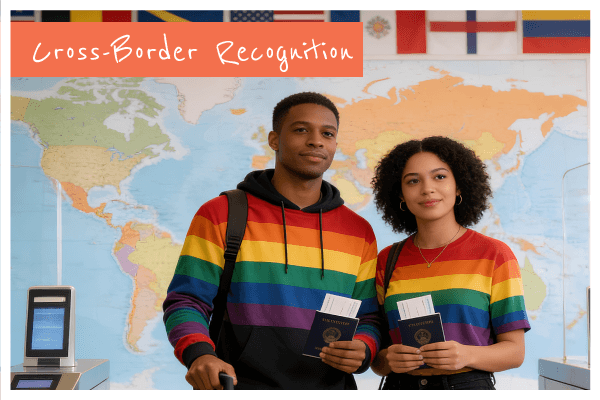
Unlike many areas of international law, there is no single global framework for recognising marriages, families, or parental rights across national borders. Instead, recognition is determined primarily by domestic law, with each country setting its own rules on marriage, family relationships, immigration, and legal parenthood. While this allows states to reflect their legal and cultural traditions, it also creates significant uncertainty for individuals and families relocating internationally.
Several international human rights instruments set out principles on marriage and family life. These include the Convention on Consent to Marriage, Minimum Age for Marriage and Registration of Marriages, which promotes free and full consent to marriage, minimum legal age requirements, and the official registration of marriages. Other international and regional instruments, including the International Covenant on Civil and Political Rights, the European Convention on Human Rights, and the American Convention on Human Rights, recognise the right to marry and emphasise the importance of protecting family life, equality, and individual autonomy. However, these instruments do not require states to adopt identical marriage laws or to recognise all foreign marriages.
Consequently, a marriage valid in one country may not automatically be recognised in another. Even where both parties freely consented, met the minimum legal age, and complied with all legal requirements in the country where the marriage took place, recognition abroad may depend on the destination state’s domestic law. Differences in the minimum age of marriage, prohibited relationships, public policy considerations, or the legal recognition of same-sex marriages can all affect whether a marriage is recognised.
The issue is particularly significant for LGBTQIA+ couples. Some jurisdictions continue to prohibit or criminalise same-sex relationships, while others recognise same-sex marriages performed abroad even though they do not permit such marriages domestically. Within the European Union, for example, judgments of the Court of Justice of the European Union have established that Member States must recognise same-sex spouses lawfully married in another Member State for certain purposes, including the exercise of European Union free movement rights. This does not require every Member State to legalise same-sex marriage domestically. However, it does require recognition in specific legal contexts, such as residency and immigration.
Similar approaches exist elsewhere. Jurisdictions including Israel, Namibia, Suriname, and American Samoa recognise certain same-sex marriages or civil partnerships formed overseas, even though they do not permit same-sex marriage under their domestic law. Recognition, however, often extends only to limited legal purposes and should not be assumed to confer the same rights as domestic marriage.
Travelling internationally may also entail legal risks. While passports rarely indicate marital status, immigration authorities may learn of a traveller’s marital status from supporting documents, visa applications, accompanying family members, or other official records. In countries where same-sex relationships remain criminalised or heavily restricted, disclosing a same-sex relationship may expose individuals to discrimination, detention, or criminal investigation under local law. Prospective migrants should therefore familiarise themselves with the legal position in their destination country before travelling or relocating.
Cross-border recognition extends beyond marriage to parental rights. Even where a same-sex marriage is recognised, the legal recognition of parenthood may vary significantly. Some jurisdictions do not recognise the parental status of a non-biological or non-adoptive parent in a same-sex family, even when both parents appear on a foreign birth certificate. This can create practical difficulties when travelling, including obtaining medical treatment for a child, consenting to emergency healthcare, or exercising parental responsibility if the “recognised legal parent” becomes incapacitated or dies.
Additional complexities arise when children are born abroad through surrogacy or assisted reproduction. Depending on the laws of the country of birth or the parents’ nationality, difficulties may arise in obtaining birth certificates, establishing legal parentage, or securing citizenship and passports. In exceptional circumstances, these legal conflicts may delay or complicate a child’s acquisition of nationality, potentially creating a risk of statelessness until the issues are resolved.
For LGBTQIA+ individuals and families considering relocation, careful preparation is essential. Before moving abroad, it is important to understand not only immigration requirements but also whether the destination country recognises and protects marriages, civil partnerships, parental rights, legal gender recognition, and gender-affirming healthcare. Thorough legal research and, where appropriate, specialist advice can help minimise uncertainty and protect family relationships across borders.
Several international human rights instruments set out principles on marriage and family life. These include the Convention on Consent to Marriage, Minimum Age for Marriage and Registration of Marriages, which promotes free and full consent to marriage, minimum legal age requirements, and the official registration of marriages. Other international and regional instruments, including the International Covenant on Civil and Political Rights, the European Convention on Human Rights, and the American Convention on Human Rights, recognise the right to marry and emphasise the importance of protecting family life, equality, and individual autonomy. However, these instruments do not require states to adopt identical marriage laws or to recognise all foreign marriages.
Consequently, a marriage valid in one country may not automatically be recognised in another. Even where both parties freely consented, met the minimum legal age, and complied with all legal requirements in the country where the marriage took place, recognition abroad may depend on the destination state’s domestic law. Differences in the minimum age of marriage, prohibited relationships, public policy considerations, or the legal recognition of same-sex marriages can all affect whether a marriage is recognised.
The issue is particularly significant for LGBTQIA+ couples. Some jurisdictions continue to prohibit or criminalise same-sex relationships, while others recognise same-sex marriages performed abroad even though they do not permit such marriages domestically. Within the European Union, for example, judgments of the Court of Justice of the European Union have established that Member States must recognise same-sex spouses lawfully married in another Member State for certain purposes, including the exercise of European Union free movement rights. This does not require every Member State to legalise same-sex marriage domestically. However, it does require recognition in specific legal contexts, such as residency and immigration.
Similar approaches exist elsewhere. Jurisdictions including Israel, Namibia, Suriname, and American Samoa recognise certain same-sex marriages or civil partnerships formed overseas, even though they do not permit same-sex marriage under their domestic law. Recognition, however, often extends only to limited legal purposes and should not be assumed to confer the same rights as domestic marriage.
Travelling internationally may also entail legal risks. While passports rarely indicate marital status, immigration authorities may learn of a traveller’s marital status from supporting documents, visa applications, accompanying family members, or other official records. In countries where same-sex relationships remain criminalised or heavily restricted, disclosing a same-sex relationship may expose individuals to discrimination, detention, or criminal investigation under local law. Prospective migrants should therefore familiarise themselves with the legal position in their destination country before travelling or relocating.
Cross-border recognition extends beyond marriage to parental rights. Even where a same-sex marriage is recognised, the legal recognition of parenthood may vary significantly. Some jurisdictions do not recognise the parental status of a non-biological or non-adoptive parent in a same-sex family, even when both parents appear on a foreign birth certificate. This can create practical difficulties when travelling, including obtaining medical treatment for a child, consenting to emergency healthcare, or exercising parental responsibility if the “recognised legal parent” becomes incapacitated or dies.
Additional complexities arise when children are born abroad through surrogacy or assisted reproduction. Depending on the laws of the country of birth or the parents’ nationality, difficulties may arise in obtaining birth certificates, establishing legal parentage, or securing citizenship and passports. In exceptional circumstances, these legal conflicts may delay or complicate a child’s acquisition of nationality, potentially creating a risk of statelessness until the issues are resolved.
For LGBTQIA+ individuals and families considering relocation, careful preparation is essential. Before moving abroad, it is important to understand not only immigration requirements but also whether the destination country recognises and protects marriages, civil partnerships, parental rights, legal gender recognition, and gender-affirming healthcare. Thorough legal research and, where appropriate, specialist advice can help minimise uncertainty and protect family relationships across borders.
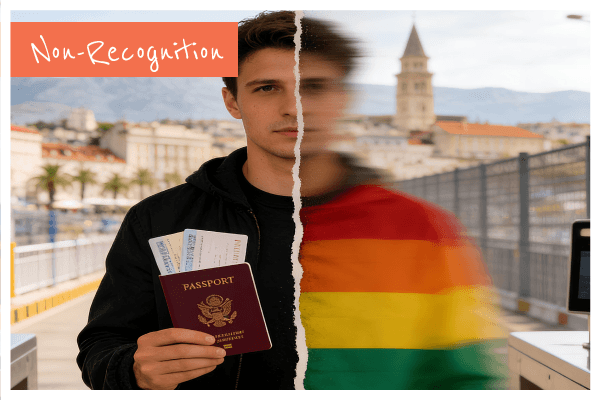
When it comes to rights, events over the past 5 years have shown that hard-fought laws can be overturned or changed. A key factor in any law is its type. In most countries around the world, there are constitutional and statutory laws. Constitutional laws are much harder to change and take time to amend, and they form the principal framework of the legal system upon which many laws are built. Statutory laws are easier to change and regulate how things will work. They are typically easy to create, amend or scrap.
Take, for example, the introduction of same-sex marriage laws in countries around the world. Of the 64 countries and territories that allow same-sex marriage, only 5 (Ireland, South Africa, Cuba, Nepal and Ecuador) have it enshrined in their constitutional law. By comparison, 10 countries have it as part of their constitutional court mandates, which means that a majority of same-sex marriage laws are statutory and can be easily changed by those in power at the time.
The picture is the same when it comes to LGBTQIA+ parenting and adoption rights, though in some countries such as the United States, Colombia and Taiwan, there are implied constitutional rights; most are statutory and, when opposed, are often subject to constitutional court rulings, which are more based on fundamental human rights, equality, and the protection of children.
For gender identities and legal gender changes, the framework typically consists of a mix of statutory laws (acts passed by parliaments) and constitutional court rulings issued by the highest courts in the land. All of this points to three key factors:
Take, for example, the introduction of same-sex marriage laws in countries around the world. Of the 64 countries and territories that allow same-sex marriage, only 5 (Ireland, South Africa, Cuba, Nepal and Ecuador) have it enshrined in their constitutional law. By comparison, 10 countries have it as part of their constitutional court mandates, which means that a majority of same-sex marriage laws are statutory and can be easily changed by those in power at the time.
The picture is the same when it comes to LGBTQIA+ parenting and adoption rights, though in some countries such as the United States, Colombia and Taiwan, there are implied constitutional rights; most are statutory and, when opposed, are often subject to constitutional court rulings, which are more based on fundamental human rights, equality, and the protection of children.
For gender identities and legal gender changes, the framework typically consists of a mix of statutory laws (acts passed by parliaments) and constitutional court rulings issued by the highest courts in the land. All of this points to three key factors:
- That rights are not guaranteed or protected
- That rules and laws can be changed quickly and easily by the passing of parliamentary acts, unless they are constitutional
- That a change in the law can see your legal status for your partner or children change overnight.
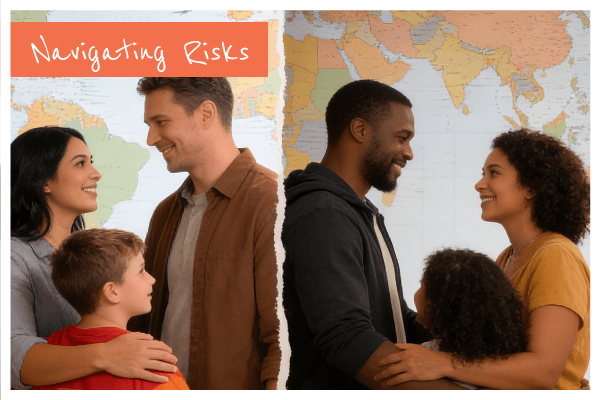
The legal complexities of cross-border recognition can seem daunting. However, many of these challenges are not unique to LGBTQIA+ individuals and families. Differences in immigration, family, citizenship, and legal recognition laws can affect anyone relocating internationally. The key is to identify potential legal risks before relocating and to plan for situations where the law may change or fail to recognise an existing legal relationship.
Effective migration planning requires more than understanding visa requirements. Prospective migrants should also consider the broader legal environment of their destination country. This includes examining its approach to human rights, the stability of its legal protections, recent legislative developments, and the likelihood of changes affecting marriage, parenthood, gender recognition, or immigration status. The level of preparation required will naturally vary depending on whether someone is travelling temporarily, relocating for work, or making a permanent move.
For couples, it is important to consider alternative legal and immigration pathways. Where residence rights depend solely on marital status, changes in the legal recognition of marriage could have wider immigration consequences. Where possible, maintaining an independent basis for residency, such as employment, study, or long-term residence rights, may provide additional security if legal circumstances change. This is particularly relevant where legal protections remain politically or judicially contested.
Families with children should also consider how parental rights will be recognised in the destination country. If one parent’s legal status may not be recognised, it is worth exploring whether local law offers alternative mechanisms to protect the child’s welfare, such as adoption, guardianship, parental responsibility orders, or carefully drafted testamentary arrangements. While these measures cannot always replicate full legal parenthood, they may help reduce uncertainty in an emergency or if legal recognition is challenged.
For transgender and gender-diverse individuals, understanding the legal framework for gender recognition is equally important. Countries vary significantly in how they recognise legal gender changes, amend identity documents, or acknowledge gender-affirming healthcare obtained abroad. Some jurisdictions recognise foreign legal gender changes with few formalities, while others impose additional requirements or decline to recognise them altogether. Understanding these rules before relocating can help avoid difficulties with identity documentation, employment, healthcare, education, and everyday interactions with public authorities.
Preparation should not end once relocation is complete. Laws governing LGBTQIA+ rights, immigration, and family recognition continue to evolve in many parts of the world. Staying informed about legislative developments, monitoring official government guidance, and engaging with local community or advocacy organisations can help individuals and families respond more effectively to legal changes as they arise.
Ultimately, successful international relocation involves more than securing the right visa. It requires understanding how the destination country recognises relationships, families, and personal identity, and ensuring that appropriate legal safeguards are in place wherever possible. While no legal system can eliminate all uncertainty, careful planning can significantly reduce risk and provide greater security for individuals and their families.
Effective migration planning requires more than understanding visa requirements. Prospective migrants should also consider the broader legal environment of their destination country. This includes examining its approach to human rights, the stability of its legal protections, recent legislative developments, and the likelihood of changes affecting marriage, parenthood, gender recognition, or immigration status. The level of preparation required will naturally vary depending on whether someone is travelling temporarily, relocating for work, or making a permanent move.
For couples, it is important to consider alternative legal and immigration pathways. Where residence rights depend solely on marital status, changes in the legal recognition of marriage could have wider immigration consequences. Where possible, maintaining an independent basis for residency, such as employment, study, or long-term residence rights, may provide additional security if legal circumstances change. This is particularly relevant where legal protections remain politically or judicially contested.
Families with children should also consider how parental rights will be recognised in the destination country. If one parent’s legal status may not be recognised, it is worth exploring whether local law offers alternative mechanisms to protect the child’s welfare, such as adoption, guardianship, parental responsibility orders, or carefully drafted testamentary arrangements. While these measures cannot always replicate full legal parenthood, they may help reduce uncertainty in an emergency or if legal recognition is challenged.
For transgender and gender-diverse individuals, understanding the legal framework for gender recognition is equally important. Countries vary significantly in how they recognise legal gender changes, amend identity documents, or acknowledge gender-affirming healthcare obtained abroad. Some jurisdictions recognise foreign legal gender changes with few formalities, while others impose additional requirements or decline to recognise them altogether. Understanding these rules before relocating can help avoid difficulties with identity documentation, employment, healthcare, education, and everyday interactions with public authorities.
Preparation should not end once relocation is complete. Laws governing LGBTQIA+ rights, immigration, and family recognition continue to evolve in many parts of the world. Staying informed about legislative developments, monitoring official government guidance, and engaging with local community or advocacy organisations can help individuals and families respond more effectively to legal changes as they arise.
Ultimately, successful international relocation involves more than securing the right visa. It requires understanding how the destination country recognises relationships, families, and personal identity, and ensuring that appropriate legal safeguards are in place wherever possible. While no legal system can eliminate all uncertainty, careful planning can significantly reduce risk and provide greater security for individuals and their families.
International travel and migration inevitably create uncertainty, particularly regarding family relationships, legal identity, and immigration status. For LGBTQIA+ individuals and families, these uncertainties may be compounded by differences in how countries recognise marriage, parenthood, and gender identity. However, legal complexity should not be seen as an insurmountable barrier to building a life abroad. Rather, it underscores the importance of informed decision-making and careful preparation.
Understanding the legal framework of a destination country, identifying potential risks, and considering alternative legal or immigration pathways can significantly reduce uncertainty. Where legal recognition is available, obtaining it as early as possible may provide greater legal certainty, as rights and legal statuses that have already been formally recognised are, in many jurisdictions, more difficult to alter retrospectively than those that have not yet been established.
It is also important to remember that the legal landscape is constantly evolving. Countries continue to expand, refine, and, in some cases, restrict rights relating to marriage, parenthood, and gender recognition. The direction of legal change is rarely uniform, making it essential for prospective migrants to remain informed and to review their legal position throughout the migration process, rather than only at the point of relocation.
While many of the issues highlighted centre on LGBTQIA+ individuals and families, the underlying principles apply more broadly. Cross-border moves always involve navigating different legal systems, each with its own approach to recognising relationships, families, and personal status. Recognising these differences enables individuals and families to make informed choices that reflect both their personal circumstances and their long-term aspirations.
Ultimately, emigrating is about more than changing countries; it is about building a life. With careful planning, a clear understanding of the legal landscape, and appropriate safeguards, individuals and families can pursue opportunities abroad while safeguarding the relationships and identities that matter most. Whatever the destination, every person deserves the chance to live authentically, form meaningful relationships, and create a safe, supportive home where they and their loved ones can thrive.
Stay safe until next time.
Understanding the legal framework of a destination country, identifying potential risks, and considering alternative legal or immigration pathways can significantly reduce uncertainty. Where legal recognition is available, obtaining it as early as possible may provide greater legal certainty, as rights and legal statuses that have already been formally recognised are, in many jurisdictions, more difficult to alter retrospectively than those that have not yet been established.
It is also important to remember that the legal landscape is constantly evolving. Countries continue to expand, refine, and, in some cases, restrict rights relating to marriage, parenthood, and gender recognition. The direction of legal change is rarely uniform, making it essential for prospective migrants to remain informed and to review their legal position throughout the migration process, rather than only at the point of relocation.
While many of the issues highlighted centre on LGBTQIA+ individuals and families, the underlying principles apply more broadly. Cross-border moves always involve navigating different legal systems, each with its own approach to recognising relationships, families, and personal status. Recognising these differences enables individuals and families to make informed choices that reflect both their personal circumstances and their long-term aspirations.
Ultimately, emigrating is about more than changing countries; it is about building a life. With careful planning, a clear understanding of the legal landscape, and appropriate safeguards, individuals and families can pursue opportunities abroad while safeguarding the relationships and identities that matter most. Whatever the destination, every person deserves the chance to live authentically, form meaningful relationships, and create a safe, supportive home where they and their loved ones can thrive.
Stay safe until next time.

With countries around the world treating members of the LGBTQIA+ community differently, planning an overseas trip can be challenging. With over 233 country and 435 regional guides, Gayther Guides provides all the information you need to plan your trip.

Learn more about how individual countries and regions around the world treat members of the LGBTQIA+ community. From the status and laws of same-sex marriages to gender identity recognition, this easy-to-use equality index provides a score and breakdown for every country worldwide.
Learn more about the exceptional LGBTQIA+ community, discover the community’s history, the ongoing movement for equality, the size of the community and how much it contributes to the world economy, frequently asked questions and much more.






IMPORTANT DISCLAIMER: All published articles have been written by members of the general public. Many will likely not be journalists nor be affiliated with any professional bodies associated with members of the media. The articles will likely be based on the authors’ own opinions, views, and experiences. Gayther does not endorse or accept any responsibility or liability regarding any materials within the news and media pages. This page may contain external links to third party websites; Gayther provides these links for your convenience and does not endorse, warrant or recommend any particular products or services. By clicking on any external links, you will leave Gayther and be taken to the third-party website, which you do so at your own risk and by accessing the site, you will be required to comply with the external third party’s terms and conditions of use and privacy policies
Discover all of the topical articles written by people from across the community and friends, all sharing their stories, opinions and experiences