








THE ULTIMATE GUIDE
Beyond the Labels: The True Meaning of Ideological and Collective Terms
- Peter Williams
- Average Reading Time: 17 minutes
- Business & Events, Community
- articles, guides, petercw
The main ideologies and collective terms are often taught in specific subjects in schools, featured in the media, as well as represented in movies and TV shows. Although some may vocally oppose and resist the accurate teaching of these terms or discourage meaningful explanations, most will likely have heard of them; however, how many truly understand what they mean or represent? Some of these ideologies have evolved away from their initial aims and objectives, such as by employing outdated and restrictive policies, prioritising the few over the many, or being distorted or misrepresented as anything other than those seeking some form of equality or equal treatment. Even though some aspects or components in the design of these ideologies or terms may have been well-meaning attempts to address societal challenges or problems, in their entirety, some can present a significant risk to marginalised groups or society as a whole. The reason why it is better to understand what they are, rather than what we want them to be or believe them to be. Let us together explore the meaning and underlying principles of many of these ideologies and collective terms.
DISCLAIMER
All published articles are intended for an audience aged 18 years and over and have been written by members of the general public. Many will likely not be journalists nor be affiliated with any professional bodies associated with members of the media. The articles will likely be based on the authors' own opinions, views, and experiences...more
There are certain words and phrases that, upon mention, evoke an immediate reference and understanding, effectively an ingrained image in our minds, which can be both positive and negative. Terms and labels that can also be weaponised, especially when associated with a person, cause, organisation, or even a government, can be used to influence the way we see and think about them. For example, calling someone a communist might immediately conjure up the belief that a person aligns themselves with communist ideologies, the belief that the person seeks to implement the principles, such as the removal of the right for people to own property, collective ownership of resources, and a centralised government that will make decisions about every aspect of people’s lives. Even though the words and actions of the person being labelled in this way may not be directly linked to communism, associating them with that term means that many people likely have a preconception about them and what they stand for, often contrary to their actual beliefs and values.
SO, WHAT IS AN IDEOLOGY OR COLLECTIVE TERM?
An ideology is a system of beliefs, ideas, and values that shapes how individuals or groups understand the world around them and how they want society to be organised or governed. It provides a framework for political, economic, or social thinking and often guides actions and policies. In contrast, a collective term is a word or phrase that groups multiple entities, ideas, or concepts under a common category. It serves to describe a whole set of categories of related things, such as political ideologies, religions, social movements and economic systems.
The positive aspects of ideologies and collective terms are that by associating with a shared belief, movement, or values, individuals can rally and find others with similar views and opinions, and ultimately enact the change they hope to see. The more negative aspects relate to how some ideologies and collective terms can often be weaponised, used against political opponents or public figures to change the way people perceive them. Mislabelling or altering public opinion to shift support, or attempting to dismiss or disregard valid opinions and causes, and ultimately being used as a way to control people, narratives and public attention.
Although many of the words and phrases relate to real ideologies, causes, and political movements, their presentation to the world has often been misrepresented by politicians and the media, which can result in the loss or distortion of their original meanings. It does not mean that these ideologies, causes, and movements are inherently good or represent the best examples of human societal reform; instead, it is essential for people to understand what they truly are and what they represent whenever they are referenced.
Let us explore six of the most common and well-known ideologies and collective terms, examining what they are, what they are not, and what distinguishes them from the rest.
SO, WHAT IS AN IDEOLOGY OR COLLECTIVE TERM?
An ideology is a system of beliefs, ideas, and values that shapes how individuals or groups understand the world around them and how they want society to be organised or governed. It provides a framework for political, economic, or social thinking and often guides actions and policies. In contrast, a collective term is a word or phrase that groups multiple entities, ideas, or concepts under a common category. It serves to describe a whole set of categories of related things, such as political ideologies, religions, social movements and economic systems.
The positive aspects of ideologies and collective terms are that by associating with a shared belief, movement, or values, individuals can rally and find others with similar views and opinions, and ultimately enact the change they hope to see. The more negative aspects relate to how some ideologies and collective terms can often be weaponised, used against political opponents or public figures to change the way people perceive them. Mislabelling or altering public opinion to shift support, or attempting to dismiss or disregard valid opinions and causes, and ultimately being used as a way to control people, narratives and public attention.
Although many of the words and phrases relate to real ideologies, causes, and political movements, their presentation to the world has often been misrepresented by politicians and the media, which can result in the loss or distortion of their original meanings. It does not mean that these ideologies, causes, and movements are inherently good or represent the best examples of human societal reform; instead, it is essential for people to understand what they truly are and what they represent whenever they are referenced.
Let us explore six of the most common and well-known ideologies and collective terms, examining what they are, what they are not, and what distinguishes them from the rest.
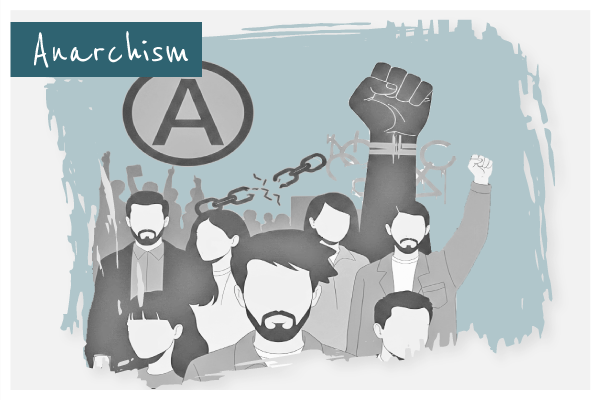
- Anarchism is a political ideology.
- Rejects all forms of unnecessary authority and hierarchical power.
- The emphasis is on individual liberty and the right to self-determination and control.
- Promotes social relationships and organisations which should be based on free agreement, not coercion or control. Preferring local, autonomous communities over centralised power structures.
Anarchism is a political ideology that advocates for and seeks societies with very limited or no hierarchy authority, where the emphasis is on individual freedom, voluntary cooperation, and the belief that people can organise themselves peacefully and without the need for centralised control or government. Anarchists often seek to abolish oppressive systems and promote self-managed communities, emphasising principles such as mutual aid, equality, and direct action.
Anarchism has played a significant role in various social movements, revolutions, and labour struggles worldwide. It gained prominence in the late 19th and early 20th centuries, with notable figures associated with the ideology, including Pierre-Joseph Proudhon and Emma Goldman. Though often associated with revolutionary upheavals, many anarchists also promote nonviolent methods and community-based alternatives.
Anarchists, followers of the ideology, question the legitimacy of hierarchical structures of authority, such as the state, and other groups and organisations that impose coercive control over individuals and communities. Instead, anarchists advocate for a society based on voluntary cooperation, mutual aid, and self-governance.
Variations:
Anarchism has played a significant role in various social movements, revolutions, and labour struggles worldwide. It gained prominence in the late 19th and early 20th centuries, with notable figures associated with the ideology, including Pierre-Joseph Proudhon and Emma Goldman. Though often associated with revolutionary upheavals, many anarchists also promote nonviolent methods and community-based alternatives.
Anarchists, followers of the ideology, question the legitimacy of hierarchical structures of authority, such as the state, and other groups and organisations that impose coercive control over individuals and communities. Instead, anarchists advocate for a society based on voluntary cooperation, mutual aid, and self-governance.
Variations:
- Anarcho-communism – advocates for a stateless, classless society with common ownership of resources.
- Anarcho-syndicalism – focuses on workers’ control of industries through trade unions and direct action.
- Anarcho-primitivism – critical of modern civilisation and advocates for a return to pre-industrial societies.
- Individualist anarchism – emphasises personal freedom and autonomy, often with a focus on individual rights.
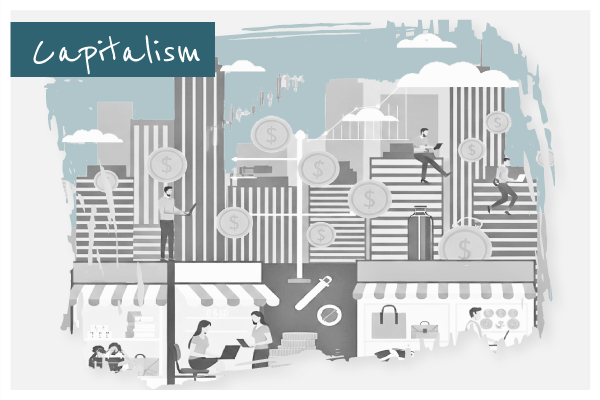
- Capitalism is an economic system rather than an ideology
- Centred around private ownership rather than state or government control
- Principles relating to free markets and competitive environments which encourage innovation, fair pricing, and change through efficiencies.
- Preferring minimal government intervention and open and free markets
Capitalism is not an ideology; instead, it is an economic system centred around private ownership, competitive markets, and profit maximisation. The production and distribution of goods and services are carried out by private ownership, meaning by citizens rather than the government. People or companies own property, such as factories, land, and resources, and set the strategy and direction of the business, as well as generating profit for themselves or their shareholders.
Capitalism reinforces the need for competition, where businesses compete with one another, leading to innovation, efficiencies, and fair pricing, as well as limited government intervention, which plays a minimal role in how the free market operates.
The concepts relating to capitalism emerged during the late Middle Ages and early modern period, evolving throughout the Industrial Revolution into the dominant economic system globally. It facilitated rapid technological advances, increased production, and expanded consumer markets.
Variations:
Capitalism reinforces the need for competition, where businesses compete with one another, leading to innovation, efficiencies, and fair pricing, as well as limited government intervention, which plays a minimal role in how the free market operates.
The concepts relating to capitalism emerged during the late Middle Ages and early modern period, evolving throughout the Industrial Revolution into the dominant economic system globally. It facilitated rapid technological advances, increased production, and expanded consumer markets.
Variations:
- Laissez-faire Capitalism – emphasises minimal government intervention.
- Welfare Capitalism – combines free markets with social safety nets and regulations to address inequality.
- Critics argue that capitalism can lead to economic inequality, worker exploitation, environmental degradation, and boom-and-bust cycles. Many debates are often centred around the balance between free enterprise and social responsibility.
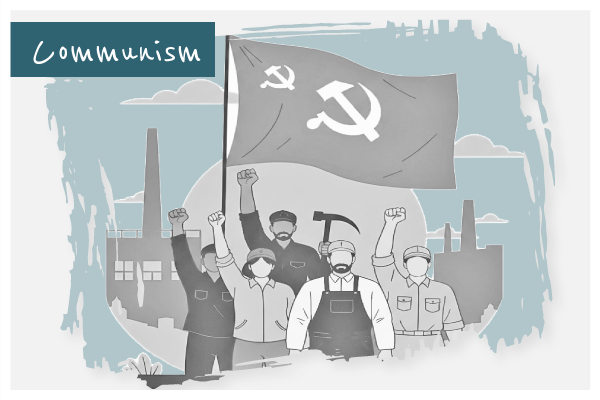
- Communism is both a political and economic ideology
- Advocating for a classless society, with collective ownership of property, land, and resources
- Aims to eliminate social inequalities and create a society based on equality, cooperation, and the common good.
- A society where social classes are abolished, wealth disparities are eliminated, and exploitation is eradicated, thereby creating equality among all citizens.
Communism is both a political and economic ideology that advocates for a classless society, one where property, land, and resources are collectively owned, meaning owned by everyone in society, rather than by individuals or corporations. Its goal is to eliminate social inequalities and create a society based on equality, cooperation, and the common good, promoting the meeting of everyone’s needs, not just some. Though typically associated with revolutionary movements and states, communism’s ultimate goal is a stateless, classless society based on cooperation and social justice.
Communism emphasises the importance of collective ownership of resources, with land, factories, and means of production being held by the community or the state on behalf of the people. A society where social classes are abolished, wealth disparities are eliminated, and exploitation is eradicated, thereby creating equality among all citizens. Communism is achieved through a central authority or a collective decision-making process that assesses and makes decisions to meet the needs of everyone. The distribution of goods and services is based on individual needs rather than market forces or a profit-driven focus.
Communism as a practical system was most notably attempted in the 20th century through revolutionary movements and governments, such as those in the Soviet Union, Maoist China, and Cuba, among others. These implementations often involved a transitional phase called socialism, where the state controls the economy before reaching a stateless, communist society, as theorised by Karl Marx and Friedrich Engels.
Variations:
Communism emphasises the importance of collective ownership of resources, with land, factories, and means of production being held by the community or the state on behalf of the people. A society where social classes are abolished, wealth disparities are eliminated, and exploitation is eradicated, thereby creating equality among all citizens. Communism is achieved through a central authority or a collective decision-making process that assesses and makes decisions to meet the needs of everyone. The distribution of goods and services is based on individual needs rather than market forces or a profit-driven focus.
Communism as a practical system was most notably attempted in the 20th century through revolutionary movements and governments, such as those in the Soviet Union, Maoist China, and Cuba, among others. These implementations often involved a transitional phase called socialism, where the state controls the economy before reaching a stateless, communist society, as theorised by Karl Marx and Friedrich Engels.
Variations:
- Marxism – the foundational theory of communism, emphasising historical the opposition towards materialism and the revolutionary overthrowing of capitalism.
- Leninism – adapted Marxist ideas to revolutionary practice, advocating for a vanguard party to lead the transition.
- Trotskyism – advocates for a permanent worldwide revolution.
- Libertarian Communism – emphasises voluntary association and minimal state involvement, aiming for a stateless society from the outset.
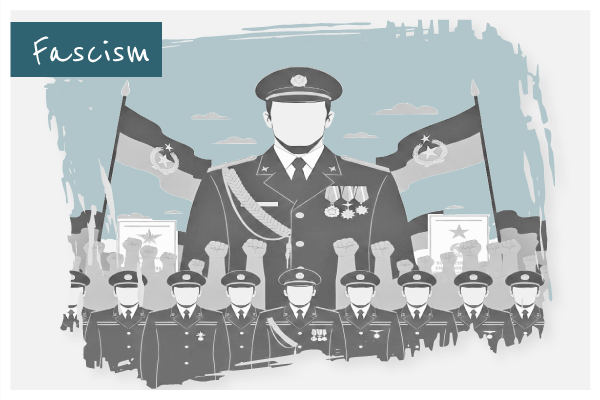
- Fascism is a far-right, authoritarian political ideology
- Opposed to democratic principles, promoting dictatorial power, extreme nationalism, suppression of dissent, and often militarism.
- Communities and societies are typically controlled through propaganda, censorship, and mass media, which are used to control information and shape public opinion.
- Promoting a strong military and glorifying war as a means of national strength
Fascism is a far-right, authoritarian political ideology, opposed to democratic principles, promoting dictatorial power, extreme nationalism, suppression of dissent, and often militarism. It seeks to create a centralised, totalitarian state where the government has complete control over many aspects of the lives of citizens, promoting unity through strict discipline, propaganda, and will often, at its core, xenophobia or racism. Individual rights, such as freedom of speech and the freedom of the press, are usually suppressed, and the state frequently operates without transparency within broader society.
Fascism is linked to extreme nationalism, with an emphasis on intense pride in a nation, often accompanied by xenophobia, racism, or anti-immigrant sentiments. The leadership is frequently authoritarian, characterised by a concentration of power in a dictatorial leader or ruling party, with little to no political opposition, and restrictions or removal of free and fair elections. All opposition is often suppressed, where dissenting voices, political opponents, or minority groups are usually persecuted or silenced. Communities and societies are typically controlled through propaganda, censorship, and mass media, which are used to control information and shape public opinion. Regimes usually promote a strong military and glorify war as a means of national strength.
Fascism, as an ultranationalist political ideology, emerged in the early 20th century, most notably with regimes like Nazi Germany under Adolf Hitler and Fascist Italy under Benito Mussolini. Fascism emerged as a response to economic instability, social upheaval, and fears of communism following World War I. It gained momentum in countries facing financial crises and political chaos, promising stability, revived national pride, and strong leadership.
Variations
Fascism is linked to extreme nationalism, with an emphasis on intense pride in a nation, often accompanied by xenophobia, racism, or anti-immigrant sentiments. The leadership is frequently authoritarian, characterised by a concentration of power in a dictatorial leader or ruling party, with little to no political opposition, and restrictions or removal of free and fair elections. All opposition is often suppressed, where dissenting voices, political opponents, or minority groups are usually persecuted or silenced. Communities and societies are typically controlled through propaganda, censorship, and mass media, which are used to control information and shape public opinion. Regimes usually promote a strong military and glorify war as a means of national strength.
Fascism, as an ultranationalist political ideology, emerged in the early 20th century, most notably with regimes like Nazi Germany under Adolf Hitler and Fascist Italy under Benito Mussolini. Fascism emerged as a response to economic instability, social upheaval, and fears of communism following World War I. It gained momentum in countries facing financial crises and political chaos, promising stability, revived national pride, and strong leadership.
Variations
- Nazism (National Socialism) – racial purity and antisemitism were central to Nazi ideology, leading to the Holocaust.
- Corporatist Fascism – focused on the creation of a corporatist state that integrated economic interests under state control, without the racial ideology central to Nazism.
- Falangism – under Francisco Franco, combining fascist authoritarianism with conservative Catholic values.
- Strasserism – a more socialist-leaning variation within Nazi ideology, emphasising economic nationalism and social welfare, but still rooted in fascist principles of authoritarianism and racial ideology.
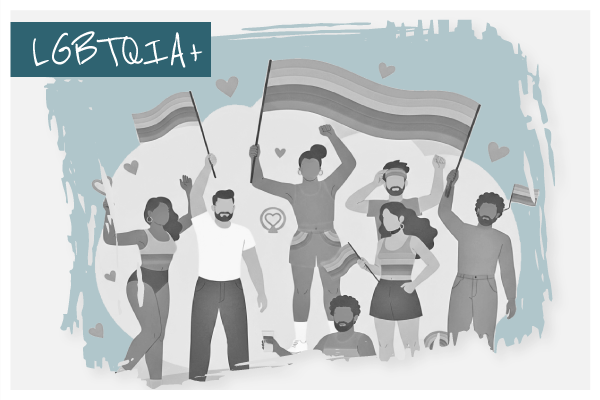
- LGBTQIA+ is a collective term for an equality movement
- LGBTQIA+ is not an ideology
- An acronym that celebrates human diversity across the spectrum of sexuality and gender
- Advocates for equal rights, anti-discrimination protections, and social acceptance for the community, regardless of how one identifies or whom they love
LGBTQIA+ is a collective term for an equality movement, not an ideology, as it does not represent a set of beliefs, values, or a worldview that prescribes specific political or social principles. The term is a comprehensive acronym that celebrates human diversity across the spectrum of sexuality and gender. It emphasises inclusivity, equality, and respect for all individuals’ identities and experiences, advocating for social acceptance and equal rights regardless of how one identifies or whom they love.
The term is used to promote awareness and acknowledgement of diverse identities, advocating for equal rights, anti-discrimination protections, and social acceptance within the community. A community and movement which provides a sense of belonging and validation for individuals who may face social stigma or marginalisation. The LGBTQIA+ term is made up of individual letters that represent a group categorised as either sexuality or gender identities and include:
Variations:
The term is used to promote awareness and acknowledgement of diverse identities, advocating for equal rights, anti-discrimination protections, and social acceptance within the community. A community and movement which provides a sense of belonging and validation for individuals who may face social stigma or marginalisation. The LGBTQIA+ term is made up of individual letters that represent a group categorised as either sexuality or gender identities and include:
- Lesbian (sexuality) – women who are attracted emotionally, romantically, or sexually to other women.
- Gay (sexuality) – men who are attracted to men; also used as a broad term for same-sex attraction.
- Bisexual (sexuality) – individuals who are attracted to two or more genders, often including their own.
- Transgender (gender identity) – people whose gender identity (their inner sense of being male, female, or another gender) differs from the sex they were assigned at birth.
- Queer or Questioning- an umbrella term for those who don’t identify strictly as heterosexual or cisgender; often used as a political statement emphasising fluidity and resistance to traditional labels. Also, used to recognise and acknowledge those questioning their sexuality or gender identity
- Intersex (gender identity) – people born with physical sex characteristics (genitalia, gonads, chromosomes, hormones) that do not fit typical definitions of male or female bodies.
- Asexual (sexuality) – individuals who experience little or no sexual attraction or desire, though they may still experience romantic attraction.
- + – the plus sign represents the inclusion of other identities and orientations, such as pansexual, genderqueer, non-binary, agender, demisexual, and more.
Variations:
- Gender Identity – how someone personally experiences their gender, which may or may not align with their sex assigned at birth.
- Gender Expression – how someone presents their gender outwardly through clothing, behaviour, and appearance
- Same-gender loving (SGL) – used by some members of the LGBTQIA+ community, particularly within African American and Black communities, to describe romantic and sexual relationships between people of the same gender.
- Feminist movement – focused on gender equality, women’s rights, and challenging patriarchy, which intersects with LGBTQIA+ issues, especially concerning gender identity and expression.
- Intersex activism – advocating for the rights and awareness of intersex individuals—people born with variations in sex characteristics
- Intersectional movement – recognise that identities are multifaceted and advocate for the rights of people marginalised based on multiple aspects such as race, gender, sexuality, class, and ability.
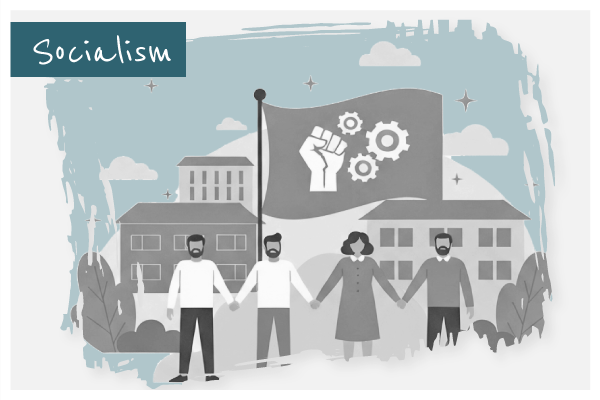
- Socialism is an economic and political ideology.
- Advocates for collective or government ownership and management of the production and distribution of goods and services
- Aims to create a society where resources and opportunities are shared more fairly
- State and government policies focus on reducing income inequality through measures such as progressive taxation and social welfare programs.
Socialism is an economic and political ideology that advocates for collective or government ownership and management of the production and distribution of goods and services. It aims to create a society where resources and opportunities are shared more equitably, ensuring that everyone’s basic needs are met, while striking a balance between economic efficiency and social welfare.
Socialism advocates for key industries and resources to be owned and operated by the state or the community, rather than by private individuals or corporations. Production and distribution are often planned or regulated by the government to meet societal needs, rather than driven solely by profit. State and government policies aim to reduce income inequality through measures such as progressive taxation, social welfare programs, and public services, including healthcare and education, to ensure that these essential services are accessible to everyone, regardless of their income level.
Socialism has roots in reactions to the inequalities caused by early capitalism during the Industrial Revolution. It has influenced many political movements and governments worldwide, leading to the development of welfare states and social safety nets. Notable implementations include the social democracies of the Scandinavian countries, as well as socialist policies in countries such as Cuba, Venezuela, and the former Soviet Union.
Variations:
Socialism advocates for key industries and resources to be owned and operated by the state or the community, rather than by private individuals or corporations. Production and distribution are often planned or regulated by the government to meet societal needs, rather than driven solely by profit. State and government policies aim to reduce income inequality through measures such as progressive taxation, social welfare programs, and public services, including healthcare and education, to ensure that these essential services are accessible to everyone, regardless of their income level.
Socialism has roots in reactions to the inequalities caused by early capitalism during the Industrial Revolution. It has influenced many political movements and governments worldwide, leading to the development of welfare states and social safety nets. Notable implementations include the social democracies of the Scandinavian countries, as well as socialist policies in countries such as Cuba, Venezuela, and the former Soviet Union.
Variations:
- Democratic Socialism – combines democratic political systems with socialist economic policies, emphasising both political democracy and social ownership.
- Market Socialism – contains elements of market economies, but with significant social ownership or regulation.
- Marxist Socialism, based on the ideas of Karl Marx, advocates for a transitional phase leading to a classless, stateless society (communism).
- Utopian Socialism – early forms of socialism that envisioned ideal societies based on cooperation and shared ownership, often lacking detailed implementation strategies.
It is vital to remember that many of these ideologies, collective terms, and the underlying movements were developed in response to the desire to address injustice or resolve societal challenges. Though they may have evolved and changed into something else, at their core, many have a specific goal and mission they are trying to address. The reality is that a desire for improvement or development did not necessarily drive the evolution of many of these movements, as a few often exploited them with the aim of gaining greater control and influence over people’s lives.
For example, while shared assets and communal living have existed in some form over the centuries, modern communism is primarily rooted in the works of Karl Marx and Friedrich Engels. The movement emerged during a time when many absolute monarchs still ruled in many of the European countries. It gained popularity, particularly in Russia, following the revolution and the end of the First World War. At its core, communism aimed to overthrow capitalist societies, redistributing control to the working class and promoting principles of community and shared resources.
Although some ideologies, particularly in their evolution and implementation, and what they have become, make them unappealing or not necessarily fair, it is often the way they have been implemented that is the issue. People and governments frequently rise and rally against the cause or movement, rather than addressing the real need or underlying cause that led to the movement in the first place. Whether it is the need for a fairer society, one where no one is left behind, the perceived threat to personal identity, or simply that people’s needs are met by the state, at their core, many of these ideas remain popular worldwide.
With the historical rise in popularity and the ceasing of power, many of these ideologies and movements underwent significant changes and often became corrupted by the desire of some for absolute control and power. Historically, many of these ideologies, movements, and causes have evolved from other causes, incorporating aspects from existing ones, adapting to new standards and policies that better align with the principles and beliefs of their followers. When you examine the ideologies as they stand, they can easily be dismissed; however, by looking at their core, selecting some, but not all, of the core principles, and combining specific components and aspects from various ideologies and movements, you can often gain insight and a roadmap into a genuinely fair and free society. Simply put, you should not discount a good idea, regardless of where it comes from.
Next time someone claims that a statement you just made is a socialist principle or that you sound like an anarchist, your response should not be to be offended, to panic, or even try to change the subject; the answer should be, “Is the idea I presented wrong?” Is free healthcare for all, really socialist, or is it a concept that costs people a fraction of what they pay for private coverage and ensures no one is left behind? The question of whether affordable social housing is rooted in communism or a bid to help those more vulnerable in society. The simple truth is that, though following one of these principles devotedly may be dangerous, adapting and selecting the best from lots of different ideologies and movements could help create something new, something better.
Stay safe, and until the next time.
For example, while shared assets and communal living have existed in some form over the centuries, modern communism is primarily rooted in the works of Karl Marx and Friedrich Engels. The movement emerged during a time when many absolute monarchs still ruled in many of the European countries. It gained popularity, particularly in Russia, following the revolution and the end of the First World War. At its core, communism aimed to overthrow capitalist societies, redistributing control to the working class and promoting principles of community and shared resources.
Although some ideologies, particularly in their evolution and implementation, and what they have become, make them unappealing or not necessarily fair, it is often the way they have been implemented that is the issue. People and governments frequently rise and rally against the cause or movement, rather than addressing the real need or underlying cause that led to the movement in the first place. Whether it is the need for a fairer society, one where no one is left behind, the perceived threat to personal identity, or simply that people’s needs are met by the state, at their core, many of these ideas remain popular worldwide.
With the historical rise in popularity and the ceasing of power, many of these ideologies and movements underwent significant changes and often became corrupted by the desire of some for absolute control and power. Historically, many of these ideologies, movements, and causes have evolved from other causes, incorporating aspects from existing ones, adapting to new standards and policies that better align with the principles and beliefs of their followers. When you examine the ideologies as they stand, they can easily be dismissed; however, by looking at their core, selecting some, but not all, of the core principles, and combining specific components and aspects from various ideologies and movements, you can often gain insight and a roadmap into a genuinely fair and free society. Simply put, you should not discount a good idea, regardless of where it comes from.
Next time someone claims that a statement you just made is a socialist principle or that you sound like an anarchist, your response should not be to be offended, to panic, or even try to change the subject; the answer should be, “Is the idea I presented wrong?” Is free healthcare for all, really socialist, or is it a concept that costs people a fraction of what they pay for private coverage and ensures no one is left behind? The question of whether affordable social housing is rooted in communism or a bid to help those more vulnerable in society. The simple truth is that, though following one of these principles devotedly may be dangerous, adapting and selecting the best from lots of different ideologies and movements could help create something new, something better.
Stay safe, and until the next time.
Learn more about the exceptional LGBTQIA+ community, discover the community’s history, the ongoing movement for equality, the size of the community and how much it contributes to the world economy, frequently asked questions and much more.

Acceptance and coming to terms with a part of what makes you can be challenging for many people. The Gayther pride in series is about celebrating all things relating to sexualities, gender identities and special groups. Showcasing the exceptional people, interesting facts and ways to connect with those unique communities

Discover all of the topical articles and the latest community news. Whether you are looking for news stories, articles reflecting topical subjects written by people from the community or the latest trends. Gayther is here to provide you with the information you need when you need it.





IMPORTANT DISCLAIMER: All published articles have been written by members of the general public. Many will likely not be journalists nor be affiliated with any professional bodies associated with members of the media. The articles will likely be based on the authors’ own opinions, views, and experiences. Gayther does not endorse or accept any responsibility or liability regarding any materials within the news and media pages. This page may contain external links to third party websites; Gayther provides these links for your convenience and does not endorse, warrant or recommend any particular products or services. By clicking on any external links, you will leave Gayther and be taken to the third-party website, which you do so at your own risk and by accessing the site, you will be required to comply with the external third party’s terms and conditions of use and privacy policies
Discover all of the topical articles written by people from across the community and friends, all sharing their stories, opinions and experiences