








THE ULTIMATE GUIDE TO FREE SPEECH
The Myth of Untouchable Speech: Challenging Falsehoods in a Free World
- Peter Williams
- Average Reading Time: 17 minutes
- Business & Events, Community
- articles, guides, petercw
Free speech is often discussed in the press and on social media platforms. At the same time, some individuals knowingly make false statements or spread misinformation on popular social network services, believing it is their right to do so without fear of repercussions. With the pursuit of viral posts and the rise of clickbait stories, propaganda seems to reign, coupled with societies where people can be too quick to cancel a person without knowing the whole story or the truth. In this modern social media-driven era, what does free speech actually mean? And how has social media changed the way people express themselves in the way they communicate?
DISCLAIMER
All published articles are intended for an audience aged 18 years and over and have been written by members of the general public. Many will likely not be journalists nor be affiliated with any professional bodies associated with members of the media. The articles will likely be based on the authors' own opinions, views, and experiences...more
In the modern social media world, it has become commonplace to hear people assert their right to freedom of speech or the belief that true free speech only exists in the US. Some use social media services to make unsubstantiated claims, spread misinformation, and push falsehoods, often believing that their rights are protected under the First Amendment.
Although freedom of speech is important, it comes with limitations and consequences. Defamation lawsuits, criminal convictions for inciting violence or harassment, breach of confidentiality and civil cases are just many of the examples that can land people knowingly creating false statements in serious trouble.
The root cause of many modern-day speech issues is the rise in popularity of globalisation and the sharing of views and opinions online, with the actions and behaviour of people inherently different in real life compared to their online personas, with many people going on to share their true feelings and thoughts freely without fear or personal censorship. They are no longer just sharing their more extreme views in private and among friends and family.
In 2025, the rise of far-right politicians and parties worldwide, coupled with the increasing spread of misinformation, misdirection, propaganda, and falsehoods, has significantly impacted the information people consume. We are living at a time when a crossroad is beginning to exist, one where ensuring that societies around the world maintain freedom of speech and expression, while also holding those who break societal and moral rules accountable to ensure the safety and protection of people’s mental health online.
Let us explore the concept of freedom of speech and expression further, examining how words convey meaning and the consequences that may arise from making untrue or false statements.
Although freedom of speech is important, it comes with limitations and consequences. Defamation lawsuits, criminal convictions for inciting violence or harassment, breach of confidentiality and civil cases are just many of the examples that can land people knowingly creating false statements in serious trouble.
The root cause of many modern-day speech issues is the rise in popularity of globalisation and the sharing of views and opinions online, with the actions and behaviour of people inherently different in real life compared to their online personas, with many people going on to share their true feelings and thoughts freely without fear or personal censorship. They are no longer just sharing their more extreme views in private and among friends and family.
In 2025, the rise of far-right politicians and parties worldwide, coupled with the increasing spread of misinformation, misdirection, propaganda, and falsehoods, has significantly impacted the information people consume. We are living at a time when a crossroad is beginning to exist, one where ensuring that societies around the world maintain freedom of speech and expression, while also holding those who break societal and moral rules accountable to ensure the safety and protection of people’s mental health online.
Let us explore the concept of freedom of speech and expression further, examining how words convey meaning and the consequences that may arise from making untrue or false statements.
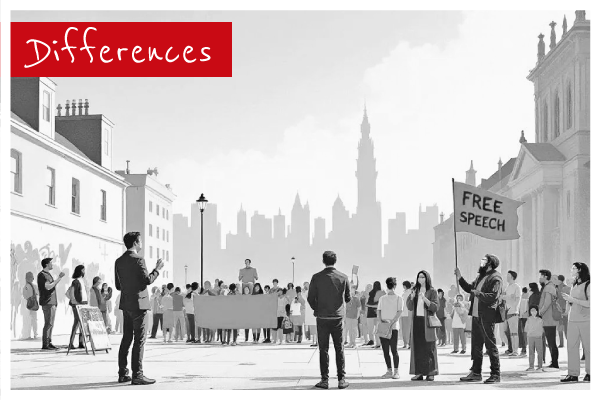
In democratic societies, where people have the right to vote for their elected officials and leaders, and where the rule of law is upheld, freedom of speech is one of the key principles. In part, this is because such societies respect and protect fundamental human rights in a fair and relatively equal manner.
lthough the concept dates back to Ancient Greece, where citizens engaged freely in debates and decision-making, it was not until the Enlightenment period in the late 17th and early 18th centuries that thinkers of the time, such as Voltaire and Locke, emphasised the importance of free speech for the pursuit of truth and progress. One of the most significant developments was articulated through the English poet, polemicist, and civil servant John Milton’s book, Areopagitica, which is considered one of history’s most influential defences of the principle of a right to freedom of speech and expression.
A significant landmark development for free speech took place in the United States in 1791, just eight years after the Revolutionary War ended and the Treaty of Paris was signed. The US government implemented the First Amendment as part of its Constitution, which guarantees the right to free speech and freedom of the press. Throughout the 20th century, many more countries followed by incorporating free speech protections into their constitutions, influenced by international declarations.
The next significant milestone was in 1948, as part of the United Nation, when the Universal Declaration of Human Rights was signed by member countries, in which 30 articles outlines fundamental human rights and article 19 affirms the right to free expression in which it states “Everyone has the right to freedom of opinion and expression; this right includes freedom to hold opinions without interference and to seek, receive, and impart information and ideas through any media and regardless of frontiers.”
So, what are freedom of speech and freedom of expression?
Fundamentally, both are legal rights that are often protected, allowing individuals to communicate their ideas, beliefs, and opinions without undue interference or censorship. Unlike freedom of speech, which focuses on spoken, written, or symbolic means, freedom of expression is a broader concept that encompasses all forms of communication, including art, music, fashion, and other means by which people convey their identity and viewpoints.
Both freedoms emphasise and promote the need for open dialogue, the exchange of diverse perspectives, and the ability to challenge authority, while also balancing the need to prevent harm and protect the rights of others.
So, in summary:
The protection of free speech and expression are defined within the law, and how they are defined and implemented will vary depending on the country; however, in many countries, though free speech is protected, there are limitations, such as when used in
lthough the concept dates back to Ancient Greece, where citizens engaged freely in debates and decision-making, it was not until the Enlightenment period in the late 17th and early 18th centuries that thinkers of the time, such as Voltaire and Locke, emphasised the importance of free speech for the pursuit of truth and progress. One of the most significant developments was articulated through the English poet, polemicist, and civil servant John Milton’s book, Areopagitica, which is considered one of history’s most influential defences of the principle of a right to freedom of speech and expression.
A significant landmark development for free speech took place in the United States in 1791, just eight years after the Revolutionary War ended and the Treaty of Paris was signed. The US government implemented the First Amendment as part of its Constitution, which guarantees the right to free speech and freedom of the press. Throughout the 20th century, many more countries followed by incorporating free speech protections into their constitutions, influenced by international declarations.
The next significant milestone was in 1948, as part of the United Nation, when the Universal Declaration of Human Rights was signed by member countries, in which 30 articles outlines fundamental human rights and article 19 affirms the right to free expression in which it states “Everyone has the right to freedom of opinion and expression; this right includes freedom to hold opinions without interference and to seek, receive, and impart information and ideas through any media and regardless of frontiers.”
So, what are freedom of speech and freedom of expression?
Fundamentally, both are legal rights that are often protected, allowing individuals to communicate their ideas, beliefs, and opinions without undue interference or censorship. Unlike freedom of speech, which focuses on spoken, written, or symbolic means, freedom of expression is a broader concept that encompasses all forms of communication, including art, music, fashion, and other means by which people convey their identity and viewpoints.
Both freedoms emphasise and promote the need for open dialogue, the exchange of diverse perspectives, and the ability to challenge authority, while also balancing the need to prevent harm and protect the rights of others.
So, in summary:
- Freedom of Speech typically refers specifically to the right to express opinions, ideas, and information, generally specific to verbal or written communication.
- Freedom of Expression encompasses all ways in which individuals can express their ideas, beliefs, or identity, including non-verbal, visual, and symbolic forms.
- Closely related to and associated with free speech are the Freedoms of the Press, Freedom of Assembly, and Freedom of Religion, as well as the Right to Information.
The protection of free speech and expression are defined within the law, and how they are defined and implemented will vary depending on the country; however, in many countries, though free speech is protected, there are limitations, such as when used in
- Hate speech and incitement to violence, such as promoting hatred, discrimination and contributing to violence directly or indirectly.
- Defamation and libel, such as making false statements or accusations that cause damage to a person’s reputation
- A way that risks national security, such as the sharing of sensitive information that could incite terrorism
- Promoting obscenity and morality, such as pornography, or those that challenge moral standards, especially in public media
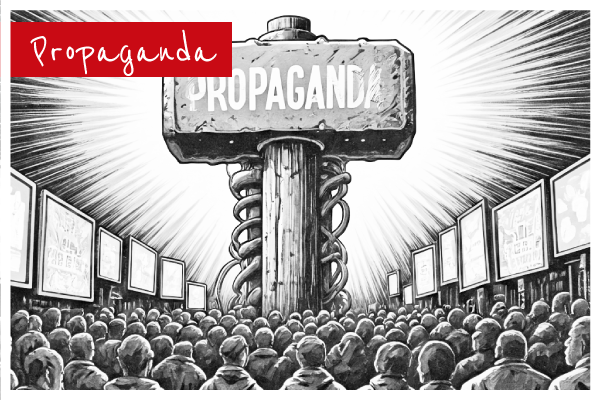
The sayings “information is king” and “knowledge is power” are often used to emphasise the importance of information and how it is utilised. For thousands of years, propaganda has typically been deployed to spread misinformation, falsehoods, and to persuade and manipulate large sections of the population. Actions designed to distract, shift political positions and stances of aspects of society, or simply to subdue and keep control of people.
In countries where those who hold power also control the media, they often use propaganda to gain support for their causes, weaponise general opinion, and even turn people against one another. Typically, the ruling or political class makes up a small proportion of the total population, ranging from 1% to 10% of the total population. Given that those in power are in the minority, they need to control the narrative and public opinion. If they are unable to control and manage communications with those they govern, they risk losing control of the narrative as well as their hold on power.
So, what is explicitly propaganda?
Propaganda refers to information, ideas, or messages deliberately designed to influence public opinion or behaviour, often in a biased or misleading way.
The way propaganda is spread can be done using one or more methods, often combining approaches to achieve the desired outcome or objective. A typical example is name-calling, such as using negative terms, phrases, or labels that can alter the way people perceive a person, group, or idea. An example is dismissive terms, such as ‘Woke’ or ‘Conspiracy,’ where if the label is attached to an opinion, it can result in that opinion or belief being dismissed or discounted, even though there might be legitimacy and truth to what is being said. Another approach is to use emotive words, or words that have a strong meaning and connection, but are applied in a general way. Making statements like “we demand justice” or “are you a patriot” in vague ways, often through phrases or slogans that fail to explain the actual objective.
Primarily, among high-profile individuals or those in the media, one approach is to associate a person or idea with a figure, symbol, belief, or value, all of which can be used in both a negative and positive way. For example, labelling a popular politician a socialist could harm their standing among voters, or associating the right to protest with the woke agenda might cause people to dismiss or ignore the reasons some are protesting. Another example is using testimonials of well-known public figures, celebrities, or experts to leverage their influence and platforms to promote and endorse a product, idea, or political candidate, like a celebrity endorsing a cryptocurrency without understanding it or personally benefiting from its success.
Representation and how someone is portrayed can also be a form of propaganda, such as a politician claiming to be honest, falsely or misrepresenting the challenges and obstacles they have face in their life to make them relatable and present the idea that they understand ordinary or the majority of people within an area, region, or country. It can be used as propaganda if the information presented is untrue or if there is no genuine interest in addressing the problems people face, used solely as a means to gain power and control. Another approach is to employ the tactic of herd acceptance, or getting people to get on board. For example, making people feel as though they are missing out or are going against the majority, such as when everyone is doing it, but why aren’t you?
Propaganda employs various approaches and techniques, often combining multiple methods to persuade or manipulate its audience. Recognising these methods helps critically evaluate information and resist undue influence. Some other notable approaches are omitting facts that contradict a point or position (card-stacking), using fear tactics to influence behaviour or opinions, repeating a message or slogan multiple times to make it more memorable and believable and portraying opponents or groups as evil or immoral to justify actions against them.
Propaganda is an effective tool that has been used for thousands of years. It is a powerful tool for shaping perceptions, influencing behaviour, and maintaining control, both positively and negatively. Whether in the forum of ancient Rome as a means to discredit opponents, by religions to promote their faith and discredit competing religions, or in wars to control and influence what people think and believe about their own governments and what is actually taking place, propaganda is a power communication tool which influences us even today.
In countries where those who hold power also control the media, they often use propaganda to gain support for their causes, weaponise general opinion, and even turn people against one another. Typically, the ruling or political class makes up a small proportion of the total population, ranging from 1% to 10% of the total population. Given that those in power are in the minority, they need to control the narrative and public opinion. If they are unable to control and manage communications with those they govern, they risk losing control of the narrative as well as their hold on power.
So, what is explicitly propaganda?
Propaganda refers to information, ideas, or messages deliberately designed to influence public opinion or behaviour, often in a biased or misleading way.
The way propaganda is spread can be done using one or more methods, often combining approaches to achieve the desired outcome or objective. A typical example is name-calling, such as using negative terms, phrases, or labels that can alter the way people perceive a person, group, or idea. An example is dismissive terms, such as ‘Woke’ or ‘Conspiracy,’ where if the label is attached to an opinion, it can result in that opinion or belief being dismissed or discounted, even though there might be legitimacy and truth to what is being said. Another approach is to use emotive words, or words that have a strong meaning and connection, but are applied in a general way. Making statements like “we demand justice” or “are you a patriot” in vague ways, often through phrases or slogans that fail to explain the actual objective.
Primarily, among high-profile individuals or those in the media, one approach is to associate a person or idea with a figure, symbol, belief, or value, all of which can be used in both a negative and positive way. For example, labelling a popular politician a socialist could harm their standing among voters, or associating the right to protest with the woke agenda might cause people to dismiss or ignore the reasons some are protesting. Another example is using testimonials of well-known public figures, celebrities, or experts to leverage their influence and platforms to promote and endorse a product, idea, or political candidate, like a celebrity endorsing a cryptocurrency without understanding it or personally benefiting from its success.
Representation and how someone is portrayed can also be a form of propaganda, such as a politician claiming to be honest, falsely or misrepresenting the challenges and obstacles they have face in their life to make them relatable and present the idea that they understand ordinary or the majority of people within an area, region, or country. It can be used as propaganda if the information presented is untrue or if there is no genuine interest in addressing the problems people face, used solely as a means to gain power and control. Another approach is to employ the tactic of herd acceptance, or getting people to get on board. For example, making people feel as though they are missing out or are going against the majority, such as when everyone is doing it, but why aren’t you?
Propaganda employs various approaches and techniques, often combining multiple methods to persuade or manipulate its audience. Recognising these methods helps critically evaluate information and resist undue influence. Some other notable approaches are omitting facts that contradict a point or position (card-stacking), using fear tactics to influence behaviour or opinions, repeating a message or slogan multiple times to make it more memorable and believable and portraying opponents or groups as evil or immoral to justify actions against them.
Propaganda is an effective tool that has been used for thousands of years. It is a powerful tool for shaping perceptions, influencing behaviour, and maintaining control, both positively and negatively. Whether in the forum of ancient Rome as a means to discredit opponents, by religions to promote their faith and discredit competing religions, or in wars to control and influence what people think and believe about their own governments and what is actually taking place, propaganda is a power communication tool which influences us even today.
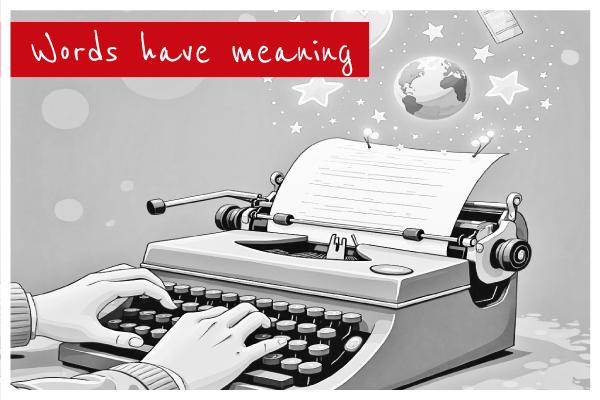
People often do not fully understand the power and impact words can have. A throwaway opinion or half-belief to one person can resonate and even spark a movement in others. The simple truth is that what we say, regardless of our intentions, has meaning and can have an impact on others in a profound way.
An example is the French Revolution. King Louis XVI of France held absolute power, which, during that period, was marred by corruption, inefficiency, and injustice; all of these factors contributed to the growing resentment among the people of France. In the late 18th century, many people within the country were practising Catholics and believed that God appointed the King and that only God could remove him from power. With economic hardship, social inequality, and a financial crisis, as well as enlightenment ideas from philosophers like Voltaire, Rousseau, and Montesquieu, the foundations of society began to be questioned.
The King’s lack of recognition and response to a shifting public opinion led to the formation of pockets of resistance around the country, as campaigns, propaganda and stories targeted the monarchy began to appear. Posters, pamphlets, art and caricatures were published depicting an outdated and out-of-touch monarchy and aristocracy that did not care about the suffering of the working, ordinary citizen.
The Queen, Marie Antoinette, was quoted as famously saying “Qu’ils mangent de la brioche”, or let them eat cake, a statement that was to show how out of touch the ruling class was, that while people suffered from a lack of bread and basic food staples, the response from the Queen showed a detachment from the hardships of ordinary people. However, many historians believe that Marie Antoinette never made such statements, and propaganda like this helped to sway large groups of the population, ultimately resulting in the French Revolution—a powerful example of how propaganda can cause a God-fearing people to rise up and overthrow a regime.
In the modern age, with social media amplifying voices to wider audiences, what we say and its impact have become even more important than ever before. Many often detach their real lives from their online personas. Sharing an opinion or belief that is knowingly made-up, especially when it is about an individual, group, cause, or even nation, can have serious consequences. Although the person creating the false narrative may not intend for it to have adverse effects, once it is released, those behind the narrative are no longer in control, and the consequences can be severe.
An example is the French Revolution. King Louis XVI of France held absolute power, which, during that period, was marred by corruption, inefficiency, and injustice; all of these factors contributed to the growing resentment among the people of France. In the late 18th century, many people within the country were practising Catholics and believed that God appointed the King and that only God could remove him from power. With economic hardship, social inequality, and a financial crisis, as well as enlightenment ideas from philosophers like Voltaire, Rousseau, and Montesquieu, the foundations of society began to be questioned.
The King’s lack of recognition and response to a shifting public opinion led to the formation of pockets of resistance around the country, as campaigns, propaganda and stories targeted the monarchy began to appear. Posters, pamphlets, art and caricatures were published depicting an outdated and out-of-touch monarchy and aristocracy that did not care about the suffering of the working, ordinary citizen.
The Queen, Marie Antoinette, was quoted as famously saying “Qu’ils mangent de la brioche”, or let them eat cake, a statement that was to show how out of touch the ruling class was, that while people suffered from a lack of bread and basic food staples, the response from the Queen showed a detachment from the hardships of ordinary people. However, many historians believe that Marie Antoinette never made such statements, and propaganda like this helped to sway large groups of the population, ultimately resulting in the French Revolution—a powerful example of how propaganda can cause a God-fearing people to rise up and overthrow a regime.
In the modern age, with social media amplifying voices to wider audiences, what we say and its impact have become even more important than ever before. Many often detach their real lives from their online personas. Sharing an opinion or belief that is knowingly made-up, especially when it is about an individual, group, cause, or even nation, can have serious consequences. Although the person creating the false narrative may not intend for it to have adverse effects, once it is released, those behind the narrative are no longer in control, and the consequences can be severe.
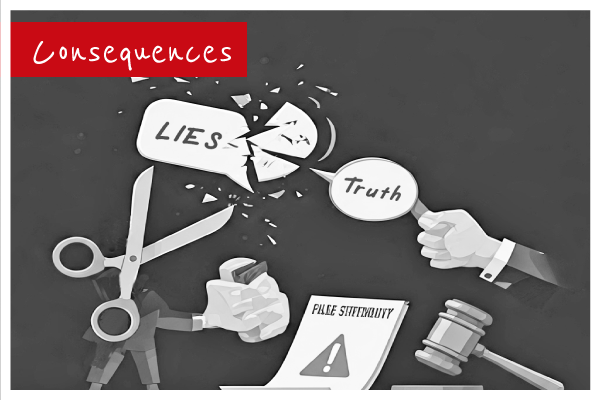
Now that we have understood what free speech means and how it can be used, through means such as propaganda, and how words have an impact, let us now explore the consequences for people spreading misinformation and falsehoods.
The scale and impact of the consequences of propaganda, falsehoods, and knowingly spreading fake news and misinformation will ultimately depend on the size and effect it has on society or those affected. For many, their online opinions and beliefs are shared amongst small audiences or ignored. For online personalities with large followings, credibility issues, lawsuits, or fines are likely to be a concern, but with the resources at their disposal, they are likely to have a significant impact on their lives.
For those affected by the words and actions of people spreading falsehoods and propaganda, the most common mechanism they can pursue is defamation. Defamation is a legal term that relates to making false statements about someone that harm their reputation. Defamation can take two forms: libel and slander. Libel is defamation made through written or published words, images, or other media, and slander is defamation made through spoken words or gestures.
To constitute defamation, the statement must be knowingly false, be published or communicated to at least one other person, damage a person’s standing in the community and be made with some level of negligence or malice, especially for public figures.
Often, defamation lawsuits fail, and enforcement can be challenging due to the protection of free speech, meaning that if a person truly believes or is sharing an opinion, it may be perceived as the truth to them, and it can be challenging to prove that the statement is false, especially when it involves opinions or subjective statements.
There are also circumstances in which statements, even those false, might be protected. For example, statements made in court proceedings are protected by legal privileges. In some countries, politicians are protected by parliamentary immunity, which allows them to make statements in order to perform their duties without fear of legal repercussions or interference.
Another example of protected speech includes statements that are considered truth, those that are clearly opinions, satire, or hyperbole, where the statement is deliberate and exaggerated. Also, if the person making the statement did not do it with malice, meaning that they did not make it with reckless disregard for the truth, and there is no damage or injury caused to the person or persons affected. Finally, the age of the statement is relevant, as statutes of limitations apply, meaning you likely could not claim defamation for a statement made 20 years ago.
Jurisdiction is another significant factor. A statement made by a person in a country different from the one affected has an impact. An example of this is the ongoing defamation lawsuit between the conservative influencer Candice Owen and the first lady of France, Bridgette Macron. Candice, based in the USA, has dedicated a podcast series to making claims about the first lady. The President and his wife, who reside in France, claim reputational damage and have filed a lawsuit in the US against Candice. So even though the Macrons are based in France, in order to stop the claims, they are required to file a lawsuit in the country in which the claims were made.
The globalisation of communications has made enforcement challenging, despite many countries having robust laws in place. However, many more do not, or if they do, they may not enforce or prosecute those who knowingly make false statements about people from other countries. There is also a scale when it comes to free speech; on one side, it relates to online censorship, political repression, and surveillance, and on the other side, propaganda, misinformation, and falsehood presented as fact. Finding the balance is difficult, and many countries struggle to govern in a new, more open and freer online global community.
In terms of a global position, countries advocating strong free speech protection include the United States, Canada, most Western European countries, Australia, Japan, and South Korea. Countries with moderate or limited protections include India, South Africa, and Brazil.
In contrast, countries that restrict or limit free speech tend to be more communist or authoritarian regimes, countries such as North Korea, Russia, Iran, Saudi Arabia and China, which are known for their heavy censorship, control over media, and suppression of dissent.
Many countries around the world recognise and protect freedom of speech to varying degrees, often enshrined in their constitutions or legal systems. However, the extent and limitations of this freedom differ based on national laws, cultural contexts, and political environments, whereas some countries prioritise security, morality, or social harmony over absolute free expression, leading to restrictions. Many of these factors affect the consequences for those breaking the rules and the way the law is enforced.
The scale and impact of the consequences of propaganda, falsehoods, and knowingly spreading fake news and misinformation will ultimately depend on the size and effect it has on society or those affected. For many, their online opinions and beliefs are shared amongst small audiences or ignored. For online personalities with large followings, credibility issues, lawsuits, or fines are likely to be a concern, but with the resources at their disposal, they are likely to have a significant impact on their lives.
For those affected by the words and actions of people spreading falsehoods and propaganda, the most common mechanism they can pursue is defamation. Defamation is a legal term that relates to making false statements about someone that harm their reputation. Defamation can take two forms: libel and slander. Libel is defamation made through written or published words, images, or other media, and slander is defamation made through spoken words or gestures.
To constitute defamation, the statement must be knowingly false, be published or communicated to at least one other person, damage a person’s standing in the community and be made with some level of negligence or malice, especially for public figures.
Often, defamation lawsuits fail, and enforcement can be challenging due to the protection of free speech, meaning that if a person truly believes or is sharing an opinion, it may be perceived as the truth to them, and it can be challenging to prove that the statement is false, especially when it involves opinions or subjective statements.
There are also circumstances in which statements, even those false, might be protected. For example, statements made in court proceedings are protected by legal privileges. In some countries, politicians are protected by parliamentary immunity, which allows them to make statements in order to perform their duties without fear of legal repercussions or interference.
Another example of protected speech includes statements that are considered truth, those that are clearly opinions, satire, or hyperbole, where the statement is deliberate and exaggerated. Also, if the person making the statement did not do it with malice, meaning that they did not make it with reckless disregard for the truth, and there is no damage or injury caused to the person or persons affected. Finally, the age of the statement is relevant, as statutes of limitations apply, meaning you likely could not claim defamation for a statement made 20 years ago.
Jurisdiction is another significant factor. A statement made by a person in a country different from the one affected has an impact. An example of this is the ongoing defamation lawsuit between the conservative influencer Candice Owen and the first lady of France, Bridgette Macron. Candice, based in the USA, has dedicated a podcast series to making claims about the first lady. The President and his wife, who reside in France, claim reputational damage and have filed a lawsuit in the US against Candice. So even though the Macrons are based in France, in order to stop the claims, they are required to file a lawsuit in the country in which the claims were made.
The globalisation of communications has made enforcement challenging, despite many countries having robust laws in place. However, many more do not, or if they do, they may not enforce or prosecute those who knowingly make false statements about people from other countries. There is also a scale when it comes to free speech; on one side, it relates to online censorship, political repression, and surveillance, and on the other side, propaganda, misinformation, and falsehood presented as fact. Finding the balance is difficult, and many countries struggle to govern in a new, more open and freer online global community.
In terms of a global position, countries advocating strong free speech protection include the United States, Canada, most Western European countries, Australia, Japan, and South Korea. Countries with moderate or limited protections include India, South Africa, and Brazil.
In contrast, countries that restrict or limit free speech tend to be more communist or authoritarian regimes, countries such as North Korea, Russia, Iran, Saudi Arabia and China, which are known for their heavy censorship, control over media, and suppression of dissent.
Many countries around the world recognise and protect freedom of speech to varying degrees, often enshrined in their constitutions or legal systems. However, the extent and limitations of this freedom differ based on national laws, cultural contexts, and political environments, whereas some countries prioritise security, morality, or social harmony over absolute free expression, leading to restrictions. Many of these factors affect the consequences for those breaking the rules and the way the law is enforced.
The need and fundamental right relating to free speech are essential and must be protected worldwide; however, equal importance should also be placed on how we use that voice. Applying empathy and restraint means putting ourselves in others’ shoes, using our voice in a way that doesn’t intentionally hurt or harm them, especially when our statements are potentially untrue or unverified.
Many online individuals are aware that their statements often carry little to no repercussions, as pursuing defamation legally is not only costly but also unlikely to yield any recovery of any money spent, given the assets, or lack thereof, for many of these individuals. Coupled with the fact that defamation is intrusive and hard to prove, this means many people will likely avoid pursuing remediation for falsehoods and misinformation.
Factor in the clickbait stories and the financial rewards for creating stories that go viral, it often means that some people misrepresent the titles of stories or make statements that they have not verified or without any consideration of the impact on the people they will likely affect. Consider the example of “they are eating the cats and the dogs” that emerged during the 2024 US election. The statements were based on a viral post about the local Haitian community in Springfield, Ohio. After the post went viral, the media reported that the person who had created the post came out to say it was not true; however, by then, many Haitians in the local area were afraid to leave their homes and took their children out of school for fear of the repercussions.
Empathy and the removal of anonymity, in some instances, are ultimately key. People taking a moment to think before posting, asking themselves: What if people knew it was me behind the post? How would I feel if this were aimed at me? What if someone I loved or cared about received this? Also, the fundamental questions: would I say this to their face and in person, or am I being more extreme because I can hide behind a handle?
There is no doubt that free speech has shaped the world around us, more often in a positive way by highlighting injustice and important causes and movements; however, with propaganda and online attacks, the results can be devastating. Democracies are undermined, people are disconnected from groups or society as a whole, and fractured societies with many people’s lives ruined because of exaggerated stories or falsehoods.
Freedom of speech and expression are and should always be a fundamental and protected right for everyone everywhere; however, next time you use your voice and platform, take a moment to think: Should I say this?
Stay safe, and until the next time.
Many online individuals are aware that their statements often carry little to no repercussions, as pursuing defamation legally is not only costly but also unlikely to yield any recovery of any money spent, given the assets, or lack thereof, for many of these individuals. Coupled with the fact that defamation is intrusive and hard to prove, this means many people will likely avoid pursuing remediation for falsehoods and misinformation.
Factor in the clickbait stories and the financial rewards for creating stories that go viral, it often means that some people misrepresent the titles of stories or make statements that they have not verified or without any consideration of the impact on the people they will likely affect. Consider the example of “they are eating the cats and the dogs” that emerged during the 2024 US election. The statements were based on a viral post about the local Haitian community in Springfield, Ohio. After the post went viral, the media reported that the person who had created the post came out to say it was not true; however, by then, many Haitians in the local area were afraid to leave their homes and took their children out of school for fear of the repercussions.
Empathy and the removal of anonymity, in some instances, are ultimately key. People taking a moment to think before posting, asking themselves: What if people knew it was me behind the post? How would I feel if this were aimed at me? What if someone I loved or cared about received this? Also, the fundamental questions: would I say this to their face and in person, or am I being more extreme because I can hide behind a handle?
There is no doubt that free speech has shaped the world around us, more often in a positive way by highlighting injustice and important causes and movements; however, with propaganda and online attacks, the results can be devastating. Democracies are undermined, people are disconnected from groups or society as a whole, and fractured societies with many people’s lives ruined because of exaggerated stories or falsehoods.
Freedom of speech and expression are and should always be a fundamental and protected right for everyone everywhere; however, next time you use your voice and platform, take a moment to think: Should I say this?
Stay safe, and until the next time.

Discover all of the topical articles and the latest community news. Whether you are looking for news stories, articles reflecting topical subjects written by people from the community or the latest trends. Gayther is here to provide you with the information you need when you need it.
Learn more about how individual countries and regions around the world treat members of the LGBTQIA+ community. From the status and laws of same-sex marriages to gender identity recognition, this easy-to-use equality index provides a score and breakdown for every country worldwide.
Learn more about the exceptional LGBTQIA+ community, discover the community’s history, the ongoing movement for equality, the size of the community and how much it contributes to the world economy, frequently asked questions and much more.



IMPORTANT DISCLAIMER: All published articles have been written by members of the general public. Many will likely not be journalists nor be affiliated with any professional bodies associated with members of the media. The articles will likely be based on the authors’ own opinions, views, and experiences. Gayther does not endorse or accept any responsibility or liability regarding any materials within the news and media pages. This page may contain external links to third party websites; Gayther provides these links for your convenience and does not endorse, warrant or recommend any particular products or services. By clicking on any external links, you will leave Gayther and be taken to the third-party website, which you do so at your own risk and by accessing the site, you will be required to comply with the external third party’s terms and conditions of use and privacy policies
Discover all of the topical articles written by people from across the community and friends, all sharing their stories, opinions and experiences