








TWO PART SERIES
Navigating Copyright Claims: Know Your Rights and Next Steps (Part 2)
- Peter Williams
- Average Reading Time: 23 minutes
- Business & Events
- articles, guides, petercw
In the two-part series, we are exploring copyright protection, what it is, what it is not, and the steps to follow should you be notified of an infringement. In part one, we provided a general overview of copyright protection and intellectual property rights. Now, in part two, we will focus specifically on copyright infringements.
Often, when an individual or company creates a website, launches a campaign, or writes a blog, they use images to reinforce the message, which achieves the desired impact. Though the pictures alone are not the sole driver, they do, however, help to support achieving the desired outcome. You are working on your project and find the perfect image, obtain the relevant permissions, only to find months or years later, an unknown party contacts you stating they belief a possible infringement has occurred.
When it comes to copyright infringements, it traditionally started with a letter to your registered or public address with a request to cease and desist; however, over the years, there has been a rise in electronic communications, whereby you receive an email stating that an infringement has occurred and that you can either provide information as evidence to prove you have a licence or pay two amounts, the first relating to compensation for the infringement period and the second a licence for the first year, effectively for current and future use.
The email often comes from a third-party company that facilitates, allegedly, at this stage, for the copyright owner, directly or indirectly. The email will often come across as threatening, with deadlines and statements that if you do not comply, legal action will be taken.
You search the internet to learn more about the company that sent the email, only to find mixed reviews. You might be confused, as you believe you have a licence or permission to use the image and just want the problem to go away as quickly as possible. Also, at this stage, if you don’t remember when you got the licence, panic might be setting in, and you likely will go into fight or flight mode.
Stop and wait for a moment, even if you have proof of a licence, should you not first check whether the claim is valid?
Before we start, this article and episode are for entertainment purposes only. If you are facing any legal challenges, you should seek legal counsel in your country familiar with cases such as yours. I am not a specialist in Intellectual Property, nor am I giving advice, as the article and episode are general and do not take into account your personal circumstances.
Now, let’s start looking at what constitutes a copyright infringement.
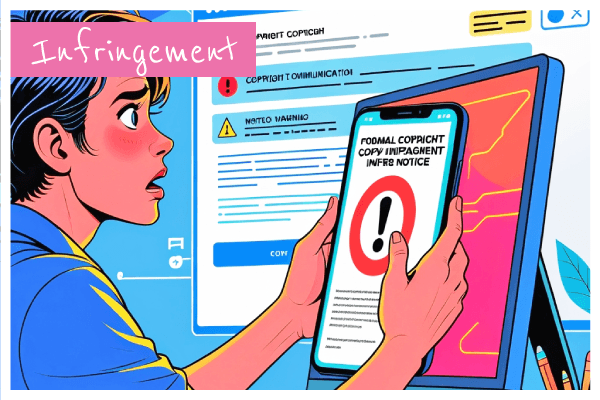
The infringement period is technically the duration from when you first used the material (whenever they believe that to be) to the point at which you removed the material (stopped using it) or when you obtained permission in the form of a licence or received explicit approval from the copyright owner.
Though a copyright owner and protection might be registered in a country different to your own, claims can be made across the globe; however, they will be subject to the laws and definitions used by the country in which the infringement occurred (the country you are located). Many countries around the world follow similar structures and guidelines relating to copyright protection and many have signed up to international treaties such as the World Trade Organisation, or WTO’s Agreement on Trade-Related Aspects of Intellectual Property Rights, in which 166 countries abide by and the Intellectual Property Rights Office, or IPRO’s Berne Convention for the Protection of Literary and Artistic Works, in which 181 countries agree to follow the set of legal principles.
An infringement may not specifically relate to whether a person or organisation holds a licence; it could also be that the material is not being used in accordance with the terms of the licence. For example, some licences might restrict an image from being used as part of a trademark, in a television advertisement or limit the number of copies in print.
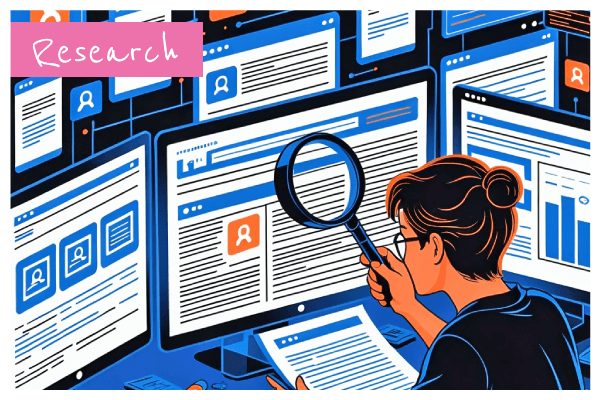
Start by using the image shown or featured in the infringement notice and upload it to TinEye. The tool searches the internet and returns a result highlighting the number of hits or times the image was found. The tool enables you to filter (by best match, newest, oldest, etc). By applying the oldest filter, you can view some of the earliest links related to the image in question. Begin clicking on the links, especially where it is featured on imaging platforms such as Adobe Stock, Shutterstock, iStock, Alamy, Envato and Pixabay.
In the sites where the images are featured, begin looking for the name of the author or contributor. Not only will the name likely be the same across the sites, but you are likely establishing the copyright owner. The process may also help you remember where you downloaded or purchased the image from. By establishing that the same name appears across all of the sites, you will likely be able to search for the copyright owner, and if they are a professional photographer or graphic designer, they will likely have professional websites or be featured on freelance services, with contact information.
Ask yourself: Is the name you found mentioned in the copyright infringement?
Now for the response, when contacting the third-party company, and the claim, remember:
- You likely have not heard of or directly dealt with the third-party facilitator before
- They may not be authorised to carry out the action
Like with all of the lessons gleaned from all good police dramas, you should only share what you need to and do not volunteer information that could be used against you. For example, avoid statements like, I have been using the image for the past 10 years, why are you contacting me now? as you would be actually helping them with their claim.
Start with the basics,
- Inform them that you intend to comply; however, you need to establish the validity of the claim before providing any information.
- Asking who they represent and who they believe owns the copyright
- At what date do they think you first infringed the copyrighted material
- How were the licensing and compensation costs calculated
These are all reasonable questions, and even if you have proof of your licence ready, you should validate that they represent the right parties. The third-party company, which is facilitating the process, will likely believe they are acting in good faith and on behalf of authorised parties; however, a simple PDF document that appears to be legal is not evidence of copyright ownership, nor is it necessary or sufficient due diligence with regard to compliance.
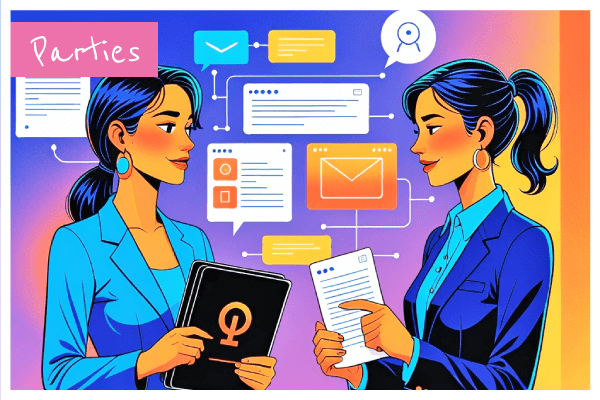
Let us now look at high-level definitions of all of the parties likely involved in copyright protection:
- Copyright owner – the person or organisation who owns the rights to the image. Likely the individuals or businesses that created the material and who, in most cases, will grant licences and outline the terms of how the material can be used
- Exclusive Licensee – the copyright owner may grant an exclusive licence to a person or organisation, which means only they are allowed to use or sell the material. Think of the paparazzi taking a picture of a celebrity for thousands of dollars. By selling the picture for large sums, they will likely grant an exclusive license, allowing them to use the photograph in their publication exclusively. Platforms such as Getty Images also offer exclusive licenses
- Non-exclusive Licensee – If the image is featured on multiple imaging platforms (free and paid), no one platform likely has exclusive rights to use or sell the image. Typically, most stock images are issued on a non-exclusive basis, and imaging platforms (Adobe Stock, Shutterstock, etc.) will sell licences on behalf of the copyright owner
- Third Party Facilitator – likely the company or law firm acting on behalf of their client, the copyright owner or exclusive licensee. Effectively, the company or firm issuing the infringement email or cease-and-desist letter
- Consumer Licensee – the end customer, people like you, who are using the image or material subject to the terms of use. When you download or purchase material, you are likely buying, obtaining permission or the right to use the material subject to the terms and conditions; however, only the copyright owner or exclusive licensee (if applicable) owns the image or has the exclusive right to govern how it is used.
- Creative Commons – the copyright owner may also grant free licences, often after the material has been in the public domain for a long time. As long as it is uploaded by the copyright owner, a free licence, such as CC0, is a valid licence, regardless of whether it is still available for sale on other services.
Remember, the copyright owner or exclusive licence holder is typically the only authorised party to initiate infringement claims or, more importantly, decide how and who is authorised to use their material. Anyone bringing a claim without authorisation may be committing a crime known as false representation. Parties knowingly processing or participating in a false claim could also be considered facilitators of false representation, both of which are considered fraud and criminal offences or crimes in most countries.
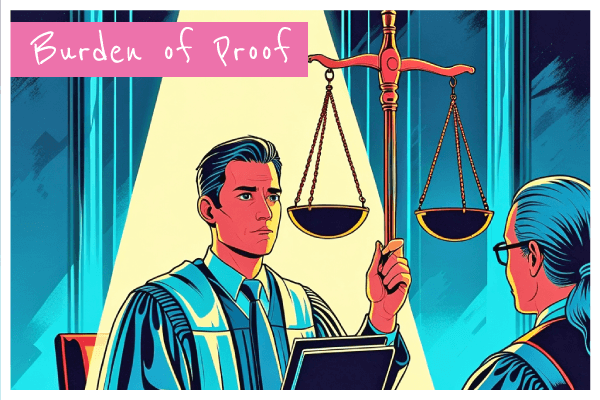
Straightforward copyright claims are usually handled by civil courts, meaning that it is not criminal, so typically no criminal records or risk of any prison time. The amount being cited as compensation will also determine the type of civil court, with most claims being below a certain threshold and eligible for small claims.
In most countries, the plaintiff or the person or organisation bringing the legal case to court and behind the claim, has the burden of proof. Simply put, means they have to provide evidence to support their claim.
Evidence such as proof of copyright ownership, evidence of originality, licensing arrangements and specifics relating to their claim against you, for example, how long they believe the image has been used. Should they claim a first featured or date close to the infringement claim, it is likely that they carried out limited research or investigation.
Volunteering information early in the process, such as the duration of your image use or any generated revenue, can harm your case. You should only provide this information when instructed by your lawyer, ordered by a court or when making calculations for remedial actions.
Now, think back to the questions we asked earlier in the process. What if they ignore or fail to answer some of the important questions? The lack of response could be used as evidence should the case go to court.
In reality, taking cases to court, especially across legal jurisdictions, is costly. Given any likely compensation (if applicable) relating to infringements in straightforward cases will be low. Most parties will hope for a quick resolution or settlement to avoid escalation. If you are concerned about potential risks, you can assess the party’s track record in successfully litigating similar cases in your country by searching court records for any party names mentioned in the infringement claim.
One scenario could be that you downloaded an image in good faith, after someone uploaded a copyright-protected image to a free service, not realising they were violating the terms of the copyright. Another possibility is that you did not fully understand the copyright rules or were unable to locate or remember the purchase details.
The first decision you need to make is whether you want to use the image going forward. If you do not wish to use the image, remove it immediately from your site and server, leaving no trace. If you do want to continue using it, use the reverse search results from before to find a recognisable platform and purchase a licence. You likely do not need to buy a licence through a third-party facilitator, even though it is implied that you should. Typically, the licensing cost through the third-party facilitator is often higher and inflated than that available on other imaging platforms. The infringement will only relate to the period in which the image was used without permission. The moment you remove or purchase a licence, the period is fixed and set, as you now either have permission to use it from the date of purchase or it is removed from your site and server.
Next, you could reach out to the copyright owner, using the information you established in the what constitutes an infringement step, to confirm that they own the image and establish if they are behind the claim. If they confirm ownership and are unaware of the claim, it could be either someone operating within a legal definition that might not apply in your country, or it could be a case of false representation. In both scenarios, the copyright owner may not receive compensation or have approved the issuance of licences through a third-party facilitator. If they are not acting on behalf of or with the approval of the copyright owner, it could render any licences you purchase and remedial actions invalid and potentially fraudulent.
Also, by reaching out to the copyright owner, and if they confirm they are behind the claim, you might be able to agree on a quick and fair settlement. Remember, the relationship is between the copyright owner and the third-party facilitation company, and you are likely under no obligation to deal with them if the copyright owner steps in.
So, if everything is above board and the parties have been verified, in the spirit of being fair, you could look at the average cost of the licence across all of the imaging platforms. It would be reasonable to counter the claim with the average cost if you generated no money from the image, considering it as a settlement for the infringement period. For example, if the image costs on average £25 across all imaging platforms, it might be a reasonable counterclaim, as you can show how it was calculated. If you used the image for merchandise and made money from it, you would likely need to agree on a fair amount. You may also have to factor in any time or costs the copyright owner has incurred in facilitating the copyright infringement process; however, at this stage, it will likely be limited or relatively low.
Compensation and remedial actions will likely be based on fairness. If the copyright owner makes little money for their images and the image was not excessively or prominently used on your site, it might be difficult for them to evidence a significant claim for losses, loss of earnings and revenue. With all compensation claims, they would likely need to show how they calculated the amount in court.
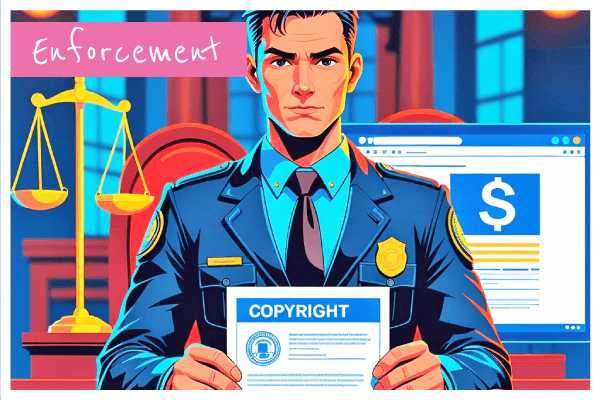
- Ensure that their claims apply or qualify under the law of the country where you are located
- Initiate court proceedings in that country, likely having to engage with a local law firm familiar with the laws in that country.
The problem many face is that despite consistent standards and rules regarding intellectual property rights and copyright protection, individual countries typically have unique requirements. For example, for images, in the United States, copyright protection is not automatic, meaning you are likely required to have registered it, whereas in many countries, especially in Europe, copyright protection is automatically applied without the need to register.
Most countries also require claims to be brought by or on behalf of the copyright owner or exclusive holder; however, some countries might allow non-exclusive license holders to file claims. The reality is that the rules in one country may not apply in another, and the whole process can be costly, which is not justifiable given the small amount of compensation sought, if any.
Let us now look at licensing conditions and terms:
- Royalty-free – typically means you obtain a licence once, and are likely not required to pay any ongoing royalties or additional fees
- Perpetual Licence – typically allows the licensee to use the image indefinitely
- Subscription Licence – typically, when the licensee is required to pay a regular fee, i.e. each month or year, to continue using the image
- General Public Licence or GNU – typically an open-source licence for unrestricted use
- Creative Commons Licence – various licences and permitted uses, and the rights granted by the copyright owner
- Usage-based Licence – typically licences granted based on specific uses and purposes, such as online only or in print form, for example, no more than 1 million copies.
Stock, royalty-free images that are typically issued as non-exclusive licenses can be free or require a one-time licensing fee and likely are subject to restrictions and conditions outlined within the terms of the image platform, where the license is purchased. The terms and conditions relating to permitted use will not be the same across all platforms.
Suppose you are asked to pay a subscription licence fee or an inflated licensing fee, especially where the image is available on imaging platforms. In that case, you should be able to purchase a license from one of those platforms, as the infringement only relates to the period you do not hold a license until you have bought one from a reputable source.
Finally, whether knowingly or unknowingly purchasing a licence after being made aware of an infringement would likely be considered reasonable remediation and one that not only caps or limits the infringement period, but also could help you look favourably in court. Ultimately, it shifts the focus to the infringement period and compensation (if any). In some cases, purchasing a licence retrospectively satisfied the copyright owner and resulted in the copyright infringement claim being dropped.
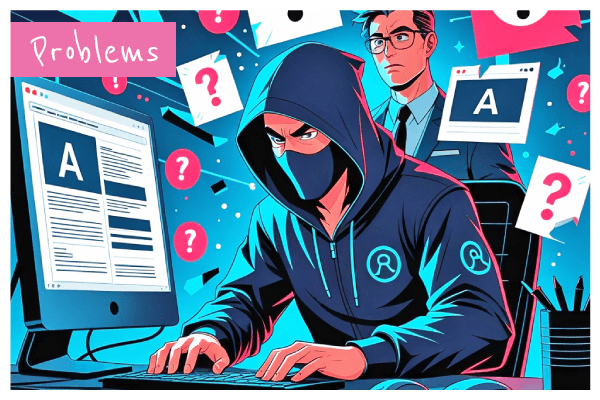
The difference is a legitimate process that malicious or poorly informed actors can exploit. People use these legitimate processes because they do not understand copyright protection, or they are doing it to make quick money. However, some of the claims might also be genuine.
The third-party facilitators are often genuine companies, and many might be acting in good faith, trusting that when these individuals or companies sign up for their service, they are doing so with all of the appropriate approvals and a legitimate legal position.
Now, when initiating a legal process and threat, in some cases, you would hope that these types of companies would carry out more in-depth due diligence, typically, more than just asking the person making the claim to sign a statement, because pleading ignorance or hiding behind an agreement is not always a sufficient defence.
The bad actors may also go undetected if third-party facilitators perform only high-level checks, and most respondents pay the requested settlement fees or provide proof of their licenses. However, who is actually verifying the validity of the claims?
The fight or flight response that many experience when receiving a threatening message will likely result in them paying quickly to avoid any problems down the road; however, if they pay, what happens if they are contacted by a different third-party facilitator making the same claim? Only to find out that any amounts they paid previously were fraudulent and carried out by bad actors.
Though some genuine copyright owners will use the same services as the bad actors, the issue is that many of these thirty-party facilitators are likely working on a model of high impact, limited effort in order to make a profit; however, that does not mean you cannot check the validity of their claim before providing any evidence or agreeing to a settlement.
It often does not help that when you search for the term copyright infringement, you will frequently see conflicting information that may cause fear and concern, stating penalties from as low as £50 to millions. Though high awards do occur, they are usually linked to huge losses or profits being made from the infringed material. The counterfeit production of goods or use of materials that would typically generate significant revenue for the copyright owner.
- Limit what you say; the more you say, the more evidence you provide to support their claim
- Copyright protection rules vary by country, so investigate the rules that apply in your country
- Typically, only the copyright owner or someone holding an exclusive licence can take an infringement case to court
- Before providing any information, you should ask for confirmation relating to who they represent and the details they believe relate to your infringement
- Use a service like TinEye to reverse look up the image, using the same image they provided in their communication/notification
- Look for the earliest entries in the reverse image lookup results. Check the author’s or contributors’ names to see if they are consistent across all imaging platforms
- If you downloaded an image from a free service like Pixabay and the copyright owner uploaded it, that is also a legitimate license, even if it is also available for purchase on an image platform
- If you unknowingly used a copyrighted image, delete it from your site, remove it from your server, or purchase a licence from a reputable image platform like Adobe Stock, Shutterstock, or iStock
- Deleting or purchasing a licence will most likely stop the infringement period (in most countries) to the date on which the action was carried out, but it does not resolve any claims of past usage. There have been situations in which purchasing a licence resolved the claim in its entirety
- Suppose the copyright owner is insisting on compensation. In that case, the amount requested should reflect any potential loss of revenue. If you are using an image on a low-traffic blog and the copyright owner provides the licence for a fixed fee, then these would all be factors to help with your counterclaim. If you had paid the licensing fee when you first used it, that would have been the revenue they would have received at that time, which they have been missing out on throughout the infringement period. The argument and counterclaim might be different if you made any money from the material. You may also have to factor in any time or costs the copyright owner has incurred in facilitating the copyright infringement process; however, at this stage, it will likely be limited or relatively low
- Anyone, including those facilitating the process, who knowingly acts as a bad actor without proper authority or approvals is committing a crime known as false representation and the facilitation of false representation, which could result in criminal prosecution for all parties involved in the crime (the bad actors)
- Asking basic questions and carrying out research does not hurt your position; it only helps it
- Finally, you need to establish who you are dealing with before handing over any money or evidence
The article and episode, though comprehensive, have been structured in a way that allows you to read all of it or go to specific sections if you are looking for a particular theme or clarity on a specific subject.
The article’s objective is not to help people avoid infringement, but rather to understand their rights and the measures that ensure a fair outcome for all parties involved.
In addition to highlighting how bad actors can use legitimate remedial processes to scam people and organisations out of money, the lines between the genuine and bad actors can be blurred, as most people will only do one of two actions: show proof or pay.
There is a reason many small to medium businesses are targeted with these types of claims: it is because they likely know that copyright protection can be seen by many as complicated, and most people will want the problem to go away quickly.
The third option should be the first and only option in some cases, which is to make sure you know all of the parties involved in the alleged infringement, that they have the authority to make the claim, and ultimately, to understand your rights.
Stay safe, and until the next time.